Green Boots Mt Everest

Green Boots Mt Everest is believed to be the body of Tsewang Paljor, an Indian climber who died on climbing Mount Everest disaster in 1996. The body is known as “Green Boots” because Paljor was wearing green Koflach mountaineering boots. The body of Tsewang Paljor, also known as “Green Boots on Mount Everest”, is still on Everest because it was moved to a snow burial site on the mountain’s slope.
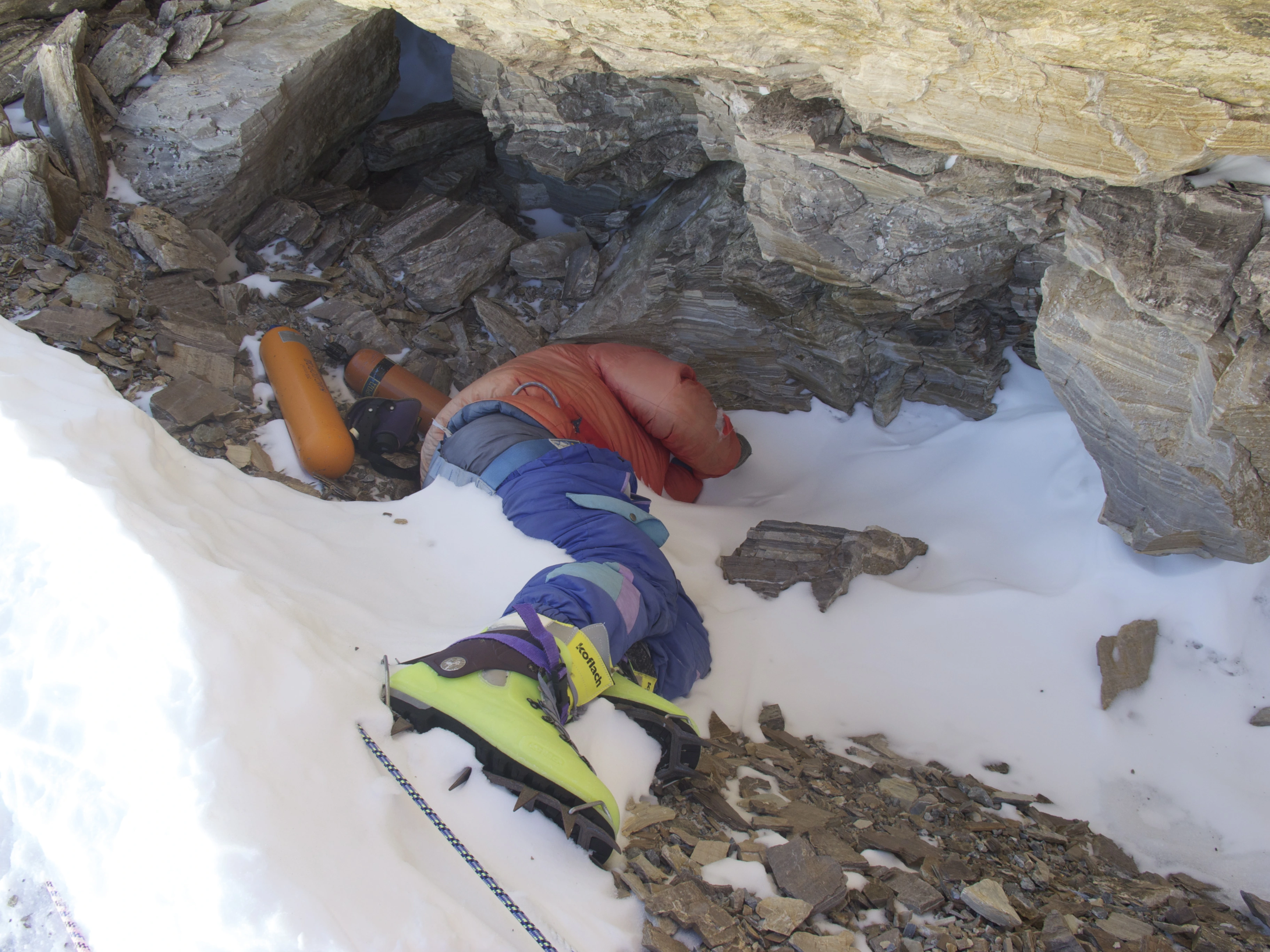
Green Boots Mt Everest.
Green Boots Mt Everest-A Tragic Story of Climbers of Everest.

Keynotes of about Green Boots Mt Everest

The body of Tsewang Paljor was found in a cave on the Northeast Ridge of Mount Everest in 1996. The body became a landmark for climbers on the Northeast Ridge route. In 2014, the body was moved to a snow burial site on the mountain’s slope. In 2017, mountaineers found the body again and covered it with snow. The body is still on Everest and is easily recognizable by climbers.

Green Boots Mt Everest Facts

Tsewang Paljor was an Indian member of the Indo-Tibetan Border Police expedition (ITBP). He died in the 1996 climbing disaster on Mount Everest. The 1996 Everest tragedy was one of the deadliest historical disasters with eight climbers dying. The tragedy led to a radical transformation in the way excursions are made at the world’s highest peak.

Green Boots Mt Everest is the body of an unknown climber, found on the north east ridge of Mount Everest. The green Koflach mountaineering boots on his feet are the term “Green Boots” first seen. Up until it was moved in 2014, all excursions from the north side discovered the body curled in the limestone alcove cave at 8,500 meters (27,900 feet). Nearly every climber who ascends the top encounters this enigmatic corpse known as Green Boots Everest.

A Tragic Story of Green Boots Mt Everest

British climber and filmmaker Matt Dickinson captured the first known video footage on Green Boots in May 1996. The video was used in the 1996 Brian blessed film Summit Fever. The unnamed climber is identified as being from Nepal by the film’s narrative. The body gained notoriety over time for its location on the north route as well as its connection to David Sharp’s passing. Members of a Chinese expedition moved Green Boots in 2014 to a less obvious site.

Years later, his body was discovered on the peak’s northern crest, or at least that is what the search team believed when they discovered it. In actuality, the body had been lying there eerily for so many years and had a pair of green boots on it. The body had been given the moniker Green Boots Everest because of the color of the boots. Many people still today hold that Paljor is the rightful owner of the body, while other beliefs contend that this is not the case.

Green Boots Mt Everest, Found in 2001

First time, Green Boots were found on Mount Everest in 2001. The Sherpas at the time thought that the body belonged to a Chinese mountaineer who had passed away around six months prior. Later, it was discovered that the body belonged to a person who had passed away in 1996, on the Everest disaster, an avalanche that killed the lives of eight climbers, climbing Mount Everest. It was rumored that Tsewang Paljor, who was a member of the first Indian expedition team, attempt to climb Everest, was in reality the Green Boots in Everest.

In 1996, an Indian climber by the name of Tsewang Paljor became disoriented while attempting to scale the Everest. The 28-year-old Tsewang Paljor, an Indo-Tibetan climber from Sakti, a small mountain town in North India. He had the confidence to realize his aim of becoming the first Indian to climb Mount Everest from the North Side because he was a border officer who had grown up in the Himalayas.

Due to his history in climbing and job as a border police in the high altitude of the border between India and China, Paljor was confident that Everest was not a serious problem. Along with reaching the summit, his goal was to become the first Indian to climb Everest from the North Side. Despite being informed that the weather is getting worse, Paljor and two of his co-workers decide to press on rather than give up.

Although several Indian teams had before scaled the mountain, the six-person Indian team was the first to try the ascent from the eastern ridge. The Indian Indo-Tibetan Border Police (ITBP) expedition sent the climbers on the northeast route. It was the first Indian ascent of Everest from the east side, and Commandant Mohinder Singh oversaw the trip. Harbhajan Singh, the sole survivor of the Indian mountaineering expedition, was unable to reach the peak of Mount Everest due to weather conditions, which he stated were worsening.

Green Boots Mt Everest Of Tsewang Paljor

Paljor died away at the age of 28. On May 10, 1996, just below the top, Subedar Tsewang Smanla, Lance Naik Dorje Morup, and Head Constable Tsewang Paljor were stuck in a blizzard. The storm appeared to be lethal, so three of the six people made the decision to head back. The other three, including Paljor, were more resilient and made the decision to press on and reach the summit however they could. Smanla, Morup, and Paljor made the decision to attempt the summit. The three climbers radio messaged their expedition leader at 15:45 Nepal time to let him know they had reached the summit.

They left a gift of khatas, pitons, and prayer flags. The leader Smanla made the decision to spend more time here for religious ceremonies and gave the other two instructions to descend. After that, there was no further radio contact. Team members who were still in the camps below noticed two head lights moving just above the second step, which is located at 8,570 meters (28,117 feet). None of the three were able to return to high camp, which is located at 8,300 meters (27,231 feet). The condition that led to their death is unknown due to the poor weather.

Later, there was debate over whether or not and a group of Japanese climbers from Fukuoka had seen the missing Indian climbers and maybe neglected to save them. At 06:15 Beijing time, the group left their camp at an elevation of 8,300 meters (27,231 feet), and they arrived at the summit at 15:07. They came across other climbers on the trail along the way.

They thought these others, all of whom had goggles and breathing masks under their hoods, were members of a climbing party from Taiwan, unaware of the missing Indians. They started their descent at 15:30 and claimed to have seen an unknown object above the Second Step. They did radio message to report spotting one person on a fixed rope below the first step.

Shigekawa, one of the climbers, then greeted an unidentified man who was standing close. They only had enough oxygen at that point to get back to C6. The Fukuoka party learned that three men were missing from an Indian in their group at 16:00. They proposed to assist with the rescue, but it was turned down. They had to wait until May 13 to send a second party to the summit due to severe weather. Although they came upon many bodies at the First Step, they kept going to the peak.

Regarding the acts of the Fukuoka team, there were first some misunderstandings and harsh words, which were subsequently rectified. The Indian team allegedly stated that the Japanese had promised to assist with the search but had instead moved forward with their summit attempt, according to Reuters.

The Indian-Tibetan Border Police accepted the Japanese team’s denial that they had abandoned and refused to assist the climbers who were near death while ascending. Captain Kohli, a representative of the Indian Mountaineering Federation, eventually withdrew his prior criticism of the Japanese and acknowledged that the Japanese had not met the Indians on May 10.

While it is generally accepted that Green Boots contains the remains of Head Constable Tsewang Paljor, a 1997 article titled “The Indian Ascent of Qomolangma by the North Ridge” written by the expedition’s deputy leader P. M. Das in the Himalayan Journal suggests that Lance Naik Dorje Morup, aka Dorje, might actually be the person buried there. At 19:30, two climbers were sighted descending by the light of their headlamps, according to Das, however they quickly disappeared from view.

The expedition’s second summit group’s leader radioed base camp the following day to report that they had seen Morup moving slowly between the First and Second Steps. Das stated that Morup “had refused to put on gloves over his frost-bitten hands” as well as “was finding difficulty in unclipping his safety carabineer at anchor points.” Das claims that the Japanese team helped him move to the following rope stretch. The body of Tsewang Smanla was later found by the Japanese team above the Second Step.

Morup was still making slow progress as the gang arrived back at their starting point. On May 11, in the late afternoon, Morup is thought to have passed away. According to Das, Paljor’s corpse was never discovered. Smanla and Morup’s bodies were also discovered by a second ITBP team while they were leaving the top. Morup was found by them “lying under the shelter of a boulder near their line of descent, close to Camp 6” with his bag by his side and all of his clothing in situ, according to Das.

By the beginning of the twenty-first century, Green Boots joined the group of about 200 bodies that were still on Everest. When the phrase “Green Boots” first appeared in Everest slang is unknown. As all the excursions from the north side ran into the climber’s body curled up in the limestone alcove cave over time, the phrase eventually spread. At a depth of 27,890 feet (8,500 meters), the cave is covered in empty oxygen tanks. It is down the way from the first step.

Francys Arsentiev, who perished in 1998 after attempting an unsuccessful descent from Everest after summiting, is another climber who has failed and earned the moniker “Sleeping Beauty”. She died where she fell, and her body was on display until 2007, when it was formally hidden.

In “Rainbow Valley,” a region below the summit where bodies covered in vividly colored mountaineering gear are scattered, there are further bodies. Hannelore Schmatz, known as “the German woman” because her prominent placement on the south path, is yet another identified corpse. She reached the summit in 1979 but passed away while descending at an altitude of 8,200 meters (27,000 feet). She stayed there for a long time before being blown further down the mountain.

Climber Mark Inglis and his group discovered British mountaineer David Sharp in a hypothermic condition in Green Boots’ Cave in 2006. After radioing for assistance in helping Sharp, which he was unable to give, Inglis continued his ascent. A few hours later, Sharp passed away from intense cold. On that day, some thirty other climbers would have passed the dying guy; it has been conjectured that those who saw him thought Sharp was Green Boots and gave him no mind.

Green Boots is starting to take on the unmistakable significance of Everest’s inherent dangers. For climbers who have their sights set on the highest peak in the world, the figure known as Green Boots serves as a somber reminder. The chilling sight of his ultimate resting place brings home to us the severe conditions of the mountain. He vividly described the possible repercussions of being unprepared.

For more than 25 years, Green Boots, who is thought to be Tsewang Paljor, has left his silent warning in the history of mountaineering. His experience is not unique; the mountain’s harsh terrain has claimed the lives of over 200 climbers. Their carcasses are uncannily preserved in the high-altitude “death zone.”

Many of these fallen climbers go unharmed because of the costly, risky, and challenging process of recovering them. They were unintentionally creating a high-altitude cemetery on Everest. Within the climbing community, this phenomena has sparked discussions. In essence, it discusses the validity of leaving these bodies where they are from an ethical standpoint. It has prompted demands for modifications in how Everest’s fallen are handled.

Despite the assertions made by several parties, it is impossible to point the precise identity of Green Boots in Everest. The corpse of Green Boots Everest was reported missing from its original location in the year 2014. They had begun to think that the body had most likely been buried beneath the snow. A body was later discovered hanging on the cliff in 2017. Many people believed that the body was Green Boots Everest, moved here from its original location on the ridge. But generally, it was difficult to be certain.

Further Answer and Questions(FAQS)

Is Green Boots still on Mount Everest?

Green Boots is among the roughly 200 corpses remaining on Everest by the early 21st century. It is unknown when the term “Green Boots” entered Everest parlance. Over the years, it became a common term, as all the expeditions from the north side encountered the climber’s body curled up in the limestone alcove cave. The body of “Green Boots, is still on Mount Everest in 2024. While there were reports in 2014 that the body was no longer visible, it was later confirmed to be present again in 2017, with more rocks surrounding it.

What is the identity of Green Boots Everest?

The Green Boots in Everest is the dead body of a climber on the Northeast Ridge route believed to be Tsewang Paljor. He was an Indian climber and Indo-Tibetan Border Police officer. The infamous name came from the green mountaineering boots he wore.

How cold is the death zone on Mount Everest?

Above 8000 meters, considered the death zone of Everest at the summit the temperature fall is recorded to be -60˚C. This temperature of Everest is resulted due to excessive high altitude and low air pressure making the air very thin to breathe properly.

What is Rainbow Valley Everest?

Rainbow Valley exists as a dark side of Everest despite being commonly known by its name. Rainbow Valley stands as a morbid memorial to all those who perished within the lethal area of the mountain. The frozen clothes of dead climbers stay in the area for a long time. This is why the place is called Rainbow Valley.

What is the death zone on Mount Everest?

The altitude above 8,000 meters (26,247 feet) consider the “death zone” on Mount Everest where the oxygen level is so low that humans cannot survive for extended periods without supplemental oxygen. This area is known for its extreme conditions and high mortality rate.

Characteristics of Death Zone on Mount Everest

Low Oxygen-At this altitude, the atmospheric pressure is significantly lower, resulting in a much reduced oxygen level.

Extreme Conditions-The death zone is characterized by frigid temperatures, strong winds, and the physical and psychological toll of the extreme altitude.

Physiological Challenges-The body struggles to adjust to the low oxygen levels, leading to conditions like high altitude pulmonary edema (HAPE) and high altitude cerebral edema (HACE).

Risk of Death-Prolonged exposure to the death zone without supplementary oxygen can result in death due to organ failure or other complications.

Consequences for Climbers

Physical Strain-The physical exertion of climbing in the death zone, combined with the low oxygen, puts a tremendous strain on the body.

Cognitive Impairment-Low oxygen levels can impair cognitive function, leading to poor decision-making and increased risk of accidents.

Psychological Effects-The isolation, stress, and fear of the death zone can take a toll on climbers’ mental state.

Limited Time to Acclimatize-While climbers can acclimatize to some degree, complete acclimatization to death-zone altitudes is impossible.

Summits in the Death Zone-The summit of Mount Everest, and other “eight-thousand” peaks, lie within the death zone.

Use of Supplemental Oxygen-Most climbers use supplemental oxygen above 8,000 meters to mitigate the effects of the low oxygen levels.

Strategic Timing-Climbing expeditions often plan their summit attempts during favorable weather windows to minimize exposure to the death zone.

Risk Mitigation-Climbers must take various precautions, including proper acclimatization, careful planning, and adherence to safety protocols, to reduce the risk of injury or death in the death zone.
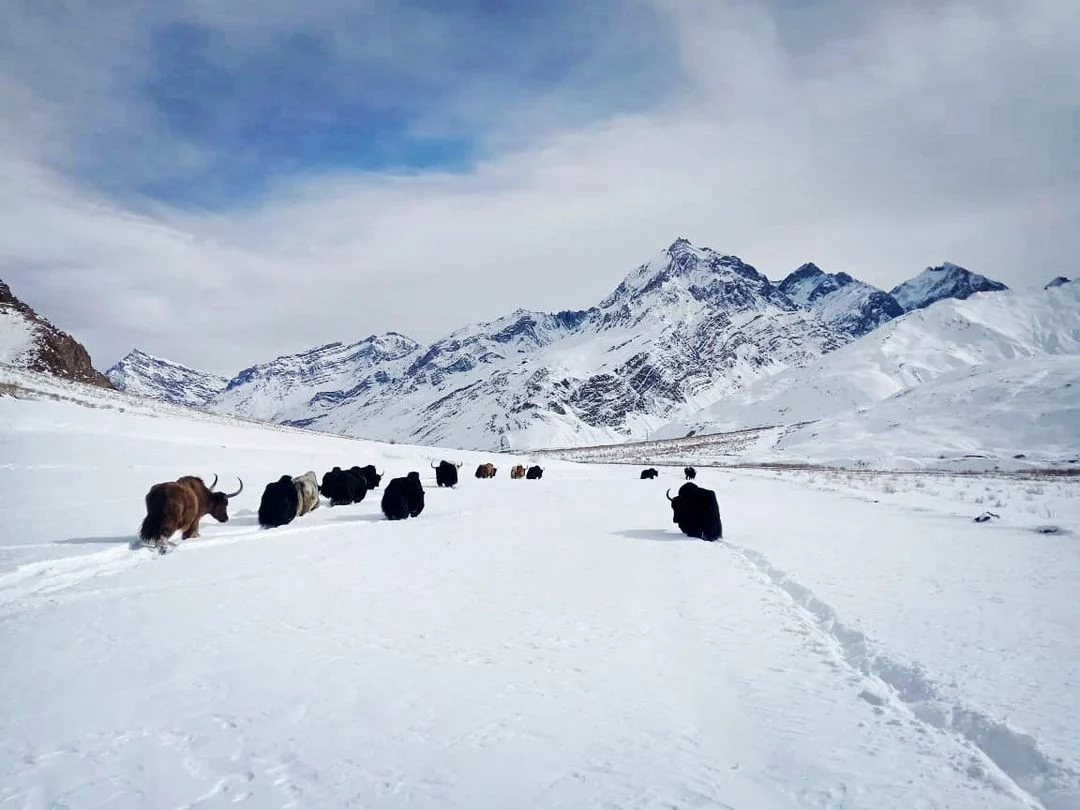
Yaks in the Himalayas

Yaks in the Himalayas are a crucial part of life in the Himalayas, serving as a vital resource for food, transportation, and even fuel. Yaks are also of significant cultural and religious importance in Tibetan Buddhist and Hindu traditions. They provide milk, meat, and hair, which is used for clothing, tents, and other items.

Yaks are used to carry goods, valuables, and even household items. Some farmers use them for ploughing fields, and others use them as riding animals. In areas with few trees, yak dung is a primary source of fuel for heating and cooking. You will find yaks in Langtang, Everest, Annapurna Circuit, Dolpo and Kanchenjunga trekking trail of Nepal.

Yaks in the Himalayas
Yaks in the Himalayas of Nepal.

Yaks are associated with religious traditions in Tibetan Buddhism and Hinduism. In Tibetan Buddhism, they are often depicted in religious art and are seen as symbols of abundance and prosperity. In Hinduism, the ceremonial fly whisk is made from yak tails.

Yaks are uniquely adapted to the harsh high-altitude environment, with thick fur and the ability to thrive on the sparse vegetation found in those areas. Yak herding is a way of life for many people in the Himalayas, deeply intertwined with their identity, traditions, and resilience.

Yaks are high-altitude Himalayas mammals with long hairs and horns that can survive in cold places and mostly higher elevations on earth. The yaks ascend to around 6,100 m due to their disease susceptibility and thick coats, yaks prefer to dwell at high altitudes. Yaks can’t survive below 10,000 feet above sea level regularly.

Yaks often have huge lungs because they need more oxygen at higher elevations. Yaks can weigh as much as 550 kg. The males of the species are typically referred to as “Yak” and the females as “Nak”(Dzopkyo) by the Sherpas of Nepal. However, “Yak” refers to the entire species as outsiders.

Yaks have made it feasible for the renowned Trans-Himalayan trade route between Nepal and Tibet to exist. One yak can travel across treacherous paths and snow-covered high Himalayan passes while carrying up to 100 kg of cargo.

Yaks are used as beasts of burden and to plow fields, provide meat, milk, and butter, as well as wool for clothing and dung for fuel. They are utilized to manufacture a variety of objects from their bones. Yak hair creates tents, sacks, ropes, and blankets. Nothing goes to waste; the horns are used to decorate roofs and doorways.

The fresh blood of a yak is frequently used as medicine by locals in the isolated mountains. They think that blood can treat a variety of illnesses. As a result, people travel to the pastures twice a year to drink fresh yak blood that has just been drawn. One glass of blood costs them roughly $1. Yaks are portrayed as the high-altitude gods’ messengers in Tibetan mythology.

Yaks and cows are hybridized. The male and female hybrid progenies are dzo and dzomo (female). They are easier to manage than yaks and can survive at lower elevations.

Domestic Yaks Information and Facts

Domestic Yaks raised for domestication tend to be smaller; males typically weigh 600–1,100 pounds, while females weigh between 400–600 pounds. Male wildlife can weigh up to 2,200 pounds. Domestic males can reach a maximum height of 44 to 54 inches at the withers, while females can reach a maximum height of 41 to 46 inches at the withers. Females have a tiny, hairy udder, along with four teats.

The male scrotum is comparable in this regard. The large size and hairy coatings provide insulation from the cold. Domestic yaks can have a variety of coat colors, including black, white, brown, and pied. They could have white, grey, and brown spots or speckles and be grey, black, or brown. Domestic yaks have shorter faces than wild yaks, but they have skinnier narrower foreheads.

About Wild Yaks in the world

The wild yak is found in herds of up to 300 animals, mostly made up of females and their young and only a few males. Before the mating season, most males live alone or in smaller bachelor groups of around six. At that point, they usually rejoin the more fabulous herd. However, they can turn hostile while protecting the young or during ruts, when males frequently fight among themselves to maintain supremacy.

They typically avoid people and may flee. Non-violent displays and aggressive actions like bellowing and horn-scraping are also standard during ruts. Bulls will continually attack one another while keeping their heads down or engaging in horn combat.

During the channel, males frequently wallow in dry soil and scent-mark with feces or urine. Wild yaks normally have very little color variation in their coats. The majority of their coats vary in color from jet black to dark reddish brown to dark brown.

Then there was the rare instance of the wild yak with the golden-brown coat. Wild Yaks have short, broad, and convex foreheads. Its forehead is bigger than the domestic yak’s, although its head is not as long.

Characteristics of Yaks

At its withers, the domestic yak is a huge animal that can weigh more than 1,000 pounds and stand between 3.5 and 4.5 feet tall. Yaks are large animals with broad foreheads and nostrils. Yaks have real horns, just like all bovids.

A yak’s horns project upward and laterally from the top of the animal’s head. While horns are constructed of a boney interior structure coated by a keratinous covering and are retained throughout life, antlers are made of bone and shed annually.

The yak’s coat can be any combination of white, black, brown, or these hues. It usually has long, skirt-like fur around the ventral torso and legs, and a shorter top. The yak’s tail is made up of long hairs, just like a horse’s tail is. This contrasts with the bottoms of cows and bison, which only have a tuft of lengthy hair at the end.

Bovids are even-toed ungulates, which means that each of their two toes is visible as a split in the middle of the hoof. In contrast, horses, zebras, and other odd-toed ungulates have one or three toes (such as rhinos). Yaks are incredibly sure-footed, especially when carrying huge loads down rocky, narrow paths. They stride boldly up mountain roads with a fall of a thousand meters and through raging streams.

Yaks are social animals that prefer to live in herds. They are prone to panic. When one yak waves of panic frequently, the herd does the same. Sometimes, herders purposefully scare the yak in the lead so that it will clear the path and behave as a snow plow.

Yaks typically sleep while standing. They can feed near the ground thanks to their large nose and square tongue. They are more adept than other animals at digging for grass beneath cold snow. Some yaks spend so much time grazing alone that they develop semi-wild characteristics.

Uses of Yaks in the Himalayas

In the Himalayas, yaks are undoubtedly the most significant species of mammal. They supply food and hair that can be used to make tents, garments, and other items, as well as carry goods, valuables, and household items. Some farmers use yaks to plow their fields, and some nomads travel on their steeds. In a place with no trees, yak dung is used to start fires (many Tibetan houses have piles of drying yak dung next to the walls).

Fabric is made from the hump hair and undercoat. Capes, jackets, and hats are constructed from the skin with hair. Boots and bottoms can be made of thick leather thanks to the thick hide. Eaten is yak meat. Butter from yak milk is used to make tea, light lamps, and make cheese and other dairy products (See Below). Yak skin is even used for boats in Lhasa.

The coarse belly hair is spun into ropes, turned into tent covering, and woven into blankets and other items. Yak hair rope with black and white braiding is quite expensive. One nomad explained to National Geographic why he preferred his yak wool tent to a house, “If the yaks are in distress, you can hear them at night from within a tent. And during the day, everything is visible. It’s too dark in a house.”

Herders make a consistent living by selling yak fur and hair. The plush undercoat is spun into “Chara,” a type of felt used to manufacture purses, blankets, and sweaters made of “yak cashmere.” Tibetan medicine makes use of the yak heart. Bones can be used to make glue. Yak tails’ white tips were removed and used as decorative tassels by the Chinese. The tails are employed as flyswatters in India.

Yak hair is used to create the wigs worn by Bunraku puppets in Japan. In the United States, yak hair was frequently utilized for Santa Claus beards in the 1950s. There is yak cashmere. Once a year, a yak race takes place in Qinghai. The yaks don’t run; instead, they stop along the road to munch grass, which slows down the race.

Products of Yaks in the Himalayas

The yak provides for almost all of the needs of the ranchers and their families. Yaks produce milk, hair and down, draught power, and manure for fuel during their lives. After slaughter, they have meat and various goods from their organs, non-consumable body parts, and hide. The herders and their families use the majority of these items. However, some are also marketed. Most articles can generate income, as can the sales of pack animals and animals for breeding.

Yak production is financially beneficial when yak herds are close to hill towns and villages since there is a quick market for the goods. Currently, most goods sold by the yak are primary or nearly primary goods. Thus, the economy based on the yak needs to reap the benefits of processing or producing more complex goods.

Butter and different kinds of soft cheese, which the herders make, are sold or bartered for other essentials. In some cases, as in some regions of India (Chapter 11, part 3), they are used to pay grazing field rent. The beginnings of advances aimed at opening up new markets for pastoral people may be seen in factories constructed in China and Nepal for the production of yak leather items and textiles, as well as factories erected in Nepal for the production of hard cheese made in the Swiss style.

These changes result from national efforts to improve the quality of life for those who live in these isolated mountain regions and boost the local economies. We briefly explain their history and, for the most part, contemporary uses. What follows is generally applicable to areas of China that produce yak. However, yak herders in most places likely use the same traditional techniques for creating and utilizing yak products.

Milk Products of  Yaks in the Himalayas

Despite the low milk production of individual yak females, there are a large number of them. Therefore, a significant amount of milk is produced overall. Milk is typically consumed in sections of the nation where yak is most prevalent and in areas with alpine pastures.

Outside the main territory, in areas where yak have just recently been brought, there is no tradition of using milk from yak or hybrid offspring produced by mating yak males with local cattle females. These “local” hybrids have only a tiny amount of milk and are primarily utilized for draught (as distinct from the combinations of “improved” dairy breeds of cattle and yak cows).

Yak milk is now highly valued in China and, as a result, makes up a significant portion of the herders’ revenue.

Raw Milk

Whole milk is typically consumed by the sick or frail, though it is also given to young children and the elderly. Some of this milk is consumed raw since it is thought to be more nutrient-dense that way, but most of it is boiled first because it is advised for health and hygiene reasons. According to the findings, yak milk output has a high solids content of roughly 18%, including about 7% fat. Since whole milk tastes relatively sweet even without adding sugar and has a pleasant, sweet-smelling aroma, herdsmen never add sugar when drinking it.

The beverage known as “milk tea,” a concoction of tea and milk, is mainly made with raw milk and is consumed throughout the year. The shepherds and their families consume this frequently. The beverage is yellow and contains 20% or more milk during the warm months when plenty of milk is available or when served to guests.

The light tea that herders and their families choose to consume contains only 5% milk, making it milky white with a hint of yellow. The Milk tea is made by steeping tea leaves (cut from a tea brick) in water and boiling it for a little while. Then, the needed amount of raw milk is added, and the boiling process is repeated for a short time. Some folks might salt the food a little. Although no sugar is ever added, milk has a mildly sweet flavor. The main dish in Tibet is Zumba (also known as tsampa).

It is typically formed into balls for eating and is produced from roasted oat, barley, or a combination of the two flours. Tibetans may add some Zumba to the brew for themselves and their guests to make it both a snack and a beverage. Herders consider milk that has been boiled with mushrooms to be a delicacy.

The milk-mushroom stew typically contains salt, and boiling is supposed to protect from poisoning if the incorrect mushrooms have been used. Although skimmed milk is also used in place of whole milk to enhance the amount of butter made from the milk supply, whole milk is often used to make tea. In pastoral areas, it is customary to utilize raw milk to raise small yak calves, lambs, or children who have lost their moms or are unable to adequately suckle milk from frail mothers. Sometimes, in addition to meat, pets like cats and dogs are provided access to yak milk. Additionally, raw milk is sold to factories that make milk powder, butter, and other milk products.

These factories were recently erected. In towns and villages, some milk is sold for immediate consumption. In highland areas, it can be bartered for food grains.

Butter

The main byproduct of yak milk is butter, a staple sustenance for the local population. Additionally, it is the leading milk product sold by herders. The percentages of water, protein, and fat in raw butter range from 12 to 15%. (About 3 percent of old butter is water.) Herders pay close attention to butter production since it is thought to be a good indicator of the caliber of yak milk.

Yak butter is often made in China using one of two methods. The butter is either pressed in a hide bag or traditionally churned in a wooden bucket, which is still the most common process.

In some places, milk separators are in use, which lessens the labor-intensiveness of making butter. The best butter is made from cream that has been separated in this way before being churned since it has lower water content and longer shelf life. Butter is a common ingredient in many cuisines, including Zumba, pancakes, and fried items.

Additionally, depending on the region, it is put into milk tea and eaten salted or unsalted. In some places, butter is used for raw milk in tea when it is unavailable. Some people reportedly prefer butter, especially herders in the pastoral regions of Tibet and Northwest Sichuan.

Melted butter and toasted flour can also be combined in equal parts. Once kneaded, the mixture is kept till use. When necessary, this dough is either blended with nuts like peanut, sesame, walnut, soybean, or Chinese dates or melted into salted or sugared water and eaten that way. These components flavor the cuisine and make it a favorite among Tibetans when serving visitors.

Yaks in the Himalayas Dog Chew-Chhurpi

Nepal was one of the first nations in Asia to develop a cheese business, and up until the 1980s, it was the only nation in the world making yak cheese. It has been more than 40 years since the yak cheese industry in Nepal was established.

The milk of Nak (a female yak) and Chauri (a female hybrid) is currently used to make hard Gruyere cheese in the Swiss manner. Yak cheese production is now being attempted in Bhutan, Mongolia, India, and Pakistan.

Yak Chhurpi

Yak milk mainly makes Churpi (a hard, dried cheese). Churpi made from skim milk is prepared and stored in untanned bags. Outside of herding communities, these items have no commercial value.

Milk cake

Although skimmed milk is occasionally used, whole milk makes up most of this product. It produces something like “milk residue,” but it is firmer and has a cake-like appearance. It is one of the dishes served to guests and is typically eaten with butter and sugar, which the herders find to make it even tastier.

Whey

In pastoral areas, whey is mainly used to make cheese, butter, and buttermilk residue. However, in agricultural and rural settings, pigs can be fed with it. The traditional method of manufacturing leather also uses whey.

Sour milk

During the year, but particularly during the warm season when milk is produced in significant quantities, sour milk is a favorite among herders and their families. A pail is filled with freshly boiled milk, which is then combined with a small amount of sour milk until the temperature drops to 40°C at 50°C. Then, to keep the pail warm, it is covered and wrapped with wool.

The milk will have soured five or six hours later during the summer season and longer throughout the winter. Skimmed or whole milk can be used to make this product; the former has a richer flavor and color.

Meat and Meat Products

The meat of the yak is a valuable source of protein for the herders and their families, but it is also sold. The heart is consumed even in places and nations where religious taboos prohibit animal slaughter, but professional butchers, not the animals’ owners, perform the killing. Every year, many yaks are killed, usually right before the start of winter when they are at their healthiest.

While much of the meat is frozen in nature’s “deep freeze” and stored that way, some of it is consumed fresh. Additionally, dried meat keeps longer than frozen beef.

Although a few yaks may die or be killed. The herders and their families consume meat for four to five months after a sheep is slaughtered. As a result, yak is not intentionally destroyed in the spring or early summer because they are in poor health and very lean at that time. Therefore, herders rarely consume meat from April through July, though dried yak meat is still accessible.

Himalayan Fresh Yak Meat

Yak “beef” is of the highest grade in the autumn because the animals were in excellent health then. The herdsman’s procedure of butchering and eating is pretty straightforward. The carcass is divided into large cubes and briefly cooked in fresh water.

The supper is more lavish when guests are present: Both sheep and yak rib meat that has been boiled is presented; it is put on a platter and eaten with the hand.

Using a Tibetan knife and salt, the heart is consumed. At the same time, milk tea is consumed. A steamed bun with chopped yak meat may have been seasoned with salt, sauces, and grease. Because the flour combination has not been fermented, the bun’s casing is thin. Yak meat from frozen, defrosted packages tastes identical to fresh.

Air-Dried Meat

Before winter, the upland ranchers slice yak meat into 30 cm-long, narrow strips roughly 4 to 5 cm wide and hang it to dry from ropes made of woven hair. It only takes a few days to dry. The meat that has been air-dried will last for one or two years if it is hung in a tent or kept in hiding bags; this is a longer storage time than the meat that has been naturally frozen.

The meat is quite dry and flavorful after being air-dried. Some dried meat is consumed whole, except by ripping or cutting the strips into smaller pieces. Milk tea is consumed in addition. There are two primary ways to prepare dried meat. One method is to roast it by burying the meat in a yak dung-fueled stove until the meat begins to smell good. Then it is removed, cleaned, and divided into bits. The other approach involves soaking the dried beef for several hours before boiling it. Typically, salt and condiments are not added.

Smoked Meat

In contrast to air-dried beef, smoked “bacon-beef” is made from fresh meat strips that are first salted for one or two days in a container before being smoked over the stove in the herdsman’s tent.

Once more, you may eat this either raw or cooked. The flesh used to make the smoked meat is taken from yak that has died of old age, sickness or were murdered by wolves. It is produced throughout the warm and wet seasons.

Corned Beef

Salted “bacon beef,” sometimes known as corned beef, is a delicacy in the yak-farming regions of Yunnan province, China. Meat strips from frozen are massaged for one to two minutes. Salt and other seasonings are added once the meat has softened. The meat is rubbed until it is moist, at which point it is placed in a jar and covered with paper or cloth to seal it.

The salted meat is removed from the pot after 18 to 21 days and allowed to air dry for roughly seven days. The most excellent corned beef is reddish in color, savory, and delicious. It can be served with Zanba and milk tea after being boiled, steamed, or fried.

Sausage

Blood and meat are the two primary varieties of sausage stuffing. The yak’s cleansed big or small intestine is used as the casing for the sausages. When the yak is killed, sausage is created, especially the blood sausage.

Leather

The leather from yaks is mainly used to make shoes and boots but also to make bags, belts, and saddles for horses. Although the yak possesses thick grease deposits in the skin’s layers that help the animal survive in the frigid Himalayan climate, manufacturing yak leather is difficult.

Yak leather has a denser fiber structure than regular cow leather because of the unfavorable life conditions (cold, wind, snow) that Tibetan animals must endure. As a result, yak leather must only be half as thick to be as robust and heat-insulating as bovine leather. Because of the more significant production costs, as a result, good yak leather is costly leather. Age and gender are other factors that affect the leather’s quality.

The fibers are thicker, coarser, and more irregular with age (much like in cattle). However, as the skin becomes uneven and fibrous in deeper layers, this is a pretty ugly situation for the leather quality. China is the biggest exporter of yak leather. The hides can come straight from the nomads or from slaughterhouses. Yak skin ranges in size from 2.5 to 4 square meters. Comparatively, a cow’s skin is around 5 square meters.

Wool

Yak wool is a gorgeous long fiber that typically has a diameter in the 18-micron range, making it incredibly soft and firm. All things being equal, it will last longer even though you give up a little softness compared to cashmere.

Yak wool, like the majority of natural wools, is prized for its ability to wick away moisture and regulate body temperature. Due to the unique mix of these qualities, it is used in various high-end performance equipment. Three natural hues of yak wool are available: platinum grey, dark chocolate, and light milk chocolate.

these colors will vary slightly from year to year and batch to batch because they merely blend the tints closest to the goal color. For instance, if your yak is white, its wool will fall within platinum grey. A yak could end up with either hue if it is between two shades of brown.

Surprisingly, the colors appear uniform, albeit the grey shows a little more mélange. As yak wool is more difficult to dye than other fibers like cashmere and sheep’s wool, it is typically exclusively marketed in natural colors.

Mountain Adaptations
Yaks live in high-altitude regions, especially the abrasive Himalayan mountains. While many animals would not be able to survive in these climatic conditions, years of evolution have helped this bovid become a creature that prevails in an otherwise tricky environment by strengthening its resistance to freezing temperatures and preventing low oxygen levels.

Temperature Adaptations
Himalayan yaks are adapted to frigid climates and can endure periods of -40 degrees Fahrenheit because of their exceptionally thick coats, which are good at holding heat. Yaks don’t get much from evaporative cooling since they don’t have enough sweat glands, and their fur traps too much heat.

Yaks may suffer in somewhat warm situations because of their exceptional ability to insulate and survive cold temperatures. Managers who keep these animals as livestock may relocate their herds to higher elevations during the warmer months to keep the animals from suffering heat stroke.

Oxygen Adaptations
Overcoming the thin atmospheric conditions that might result in low oxygen levels in the body is one of the biggest challenges of living at high elevations. Yaks have larger lungs and blood rich in red blood cells and hemoglobin to make up for this. With each breath, the lungs can be expanded to accommodate more air, and the body can carry oxygen more effectively, thanks to an increase in hemoglobin and red blood cells.

Facts of Yaks in the Himalayas

  • Although a small, fragile wild yak population remains, most yaks are domesticated.
  •  Animals that herd is yaks. Herds can number in the hundreds, though they are frequently much less.
  • With a decreased proportion of adult males, the herds mainly consist of females and their young.
  • They spend a lot of time grazing on mountain plains, where they consume grass, herbs, and wildflowers.
  •  Yaks are the only mammals to live at such a high elevation.
  • Like other cow species, the yak has several stomachs, which it uses to extract all the nutrients from the vegetation it eats efficiently.
  • Yaks can break through snow to reach vegetation buried beneath it because of their complex, big horns. They’ll also defend themselves by using their horns.
  • They have a thick undercoat protected by outer hair that almost reaches the ground and is often dark brown to black.
  • A yak can endure winter temperatures as low as -40 degrees Celsius (-40 degrees F).
  • They will bundle up with their calves in the warmer center throughout the night and during snowstorms to avoid becoming too chilly.
  • In June, yaks typically give birth. Every other year, a female yak gives birth to a single calf. The mother will look for a remote location to offer delivery. The calf can walk within 10 minutes of being born, and the pair will re-join the herd.
  • Although moms can be very protective of their young and can bluff charge if they feel threatened, yaks are generally very friendly, and there hasn’t been much recorded hostility from yaks against humans.
  • Contrary to popular opinion, when properly cared for in pastures or paddocks with sufficient access to fodder and water, yaks and their dung have little to no discernible smell.
  •  Yaks grunt and are not known to make the distinctive lowing (mooing) sound that cattle do.
  •  The Tibetan Wolf has traditionally been the primary natural predator of the wild yak; however, in some regions, reports of Brown Bears and Snow Leopards preying on Yak have also been made.
  • The destruction of their habitat and excessive human poaching put wild yak in danger.
  • Down is the term used to describe the undercoat that yaks naturally shed each winter. This one is one of the silkiest, softest, and warmest natural fibers. Compared to cashmere, which results in overgrazing, it is just as smooth and far more sustainable than cashmere, which results in overgrazing.
  • Yak down is incredibly rare and a sustainable, renewable fiber.
  • Each yak produces only approximately a kilogram (2.2 lbs) of fiber annually. A little German Angora rabbit could have nearly the same amount.
  • Yaks are quicker than they seem to be. Yaks are not only utilized as racehorses during traditional festivities in some cultures, but their wild counterparts are also very agile for such enormous animals.

Yak Lifespan, Babies, and Reproduction

Although females can go into estrus up to four times a year, mating usually occurs in the late summer or, depending on the local conditions, even into September. Between 257 and 270 days pass during gestation, and a single calf is born in May or June.

Twin births are uncommon. Females choose a remote area for delivery but immediately reunite with the herd because calves can usually walk within 10 minutes of labor. Most females only give birth every other year, yet, births may be more frequent if food is abundant.

Yaks for trekking in the Himalayas

The yak is a valuable companion when hiking through the Himalayas. You may load bags, tents, cameras, and other everyday needs on its back. The yak can traverse the plateau’s mountains. It makes sense that the yak merits the “boats on the plateau.”

Himalayan yaks serve as load-carrying animals in addition to being animals that assist with agriculture. When traveling in the Himalayas, they come in handy for hauling bulky goods and gear. Especially on Mount Kailash Kora and from Everest Base Camp to Advanced Camp, yaks are used for trekking.

How many yaks are left in the world?
Only 10,000 wild yaks survive now, down from as many as a million just fifty years ago when they roamed the Tibetan plateau due to interbreeding with cows, habitat loss, and human-caused poaching.

Where do Yaks live?
The alpine tundra, grasslands, and chilly desert parts of the Tibetan plateau are where the Yaks reside. These altitudes range from 4,000 to 6,100 meters.

Are yaks dangerous?
Even though moms of yaks can be very protective of their young and can bluff charge if they feel threatened, yaks are generally pretty friendly animals, and there is very no evidence of their acting aggressively against humans.

What do yaks eat?
Yaks graze on grasses, herbs, and lichens primarily in the morning and evening. They also consume ice and snow as a source of water. Wild yaks, however, must travel a great distance to find enough food because there isn’t much vegetation nearby where they live.

Yaks-good pets or bad?
Yaks are valuable farm animals in their range, but they might not make suitable pets. Yaks are more prone to violence than domestic cattle and cannot survive in warmer climates.

What distinguishes the yak from the cow?
Since “cow” refers to a female and not a particular species, a yak can be considered a cow. Yaks differ significantly from domestic cattle, though. Yaks can endure cold, high-altitude conditions that would be fatal to ordinary cattle thanks to a variety of adaptations (including long coats and larger lungs).

Hence, Langtang Valley, Annapurna Circuit and Mustang are some of the best places to see yaks in the Himalayas.  Tibet Mount Kailash Mansarovar region  are also a good travel destinations to view herds of yaks.

Free Trip Planner
kathmandu package trips.
Jitendra Gurung Tour Leader
Request for Assistance ⮞