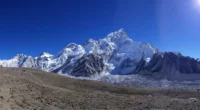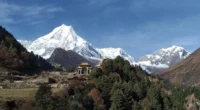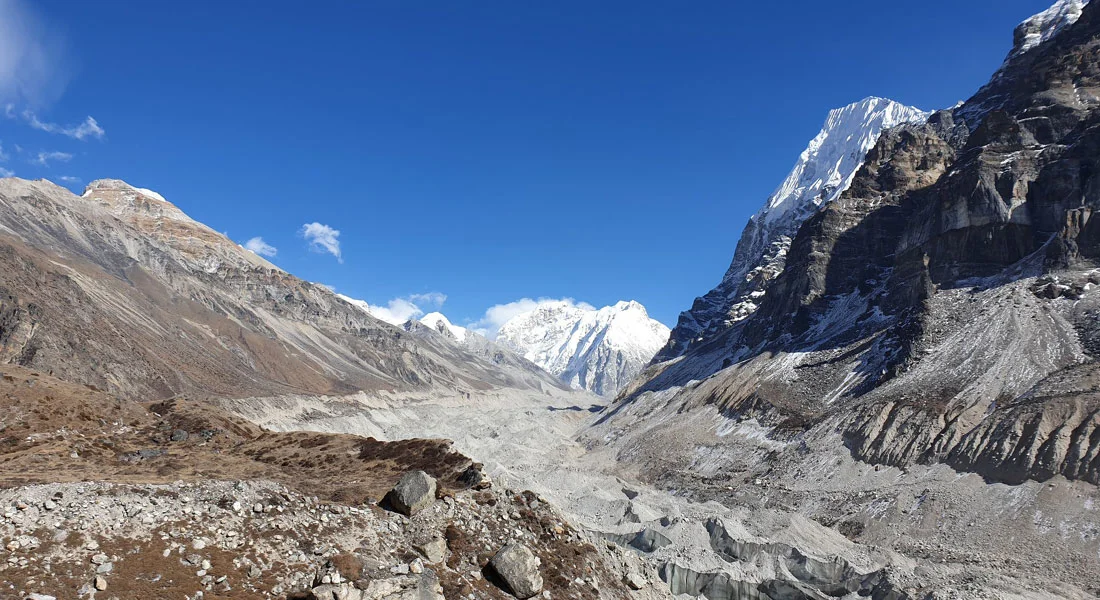
Mount Kanchenjunga also spelled Kangchenjunga is the third-highest mountain in the world lies in the border of Nepal and India-Sikkim. Until 1852, Kanchenjunga was assumed to be the highest mountain in the world. It was officially announced in 1856 that Kangchenjunga is the third-highest mountain in the world.
Mount Kanchenjunga was first climbed on 25 May 1955 by Joe Brown and George Band, who were part of the 1955 British Kangchenjunga expedition. In 2016, the Kanchenjunga National Park was declared a UNESCO World Heritage Site.
Mount Kangchenjunga Climbing Routes
There are four climbing routes to reach the summit of Mt Kangchenjunga, three of which are in Nepal from the southwest, northwest, and northeast, and one from northeastern Sikkim in India. To date, the northeastern route from Sikkim has been successfully used only three times. The Indian government has banned expeditions to Kanchenjunga; therefore, this route has been closed since 2000.
Myth about Kanchenjunga
Kanchenjunga is said to be home to a mountain deity, called Dzö-nga-“Kangchenjunga Demon”, a type of yeti or rakshasa. The people of Sikkim and in Nepal, Kanchenjunga means a valley of immortality hidden on on the slopes. In Tibetan, the valley is known as Beyul Demoshong. In 1962, a Tibetan Lama by the name of Tulshuk Lingpa led over 300 followers into the high snow slopes of Kanchenjunga, to ‘open the way’ to Beyul Demoshong.
Explore the majestic landscapes of Kanchenjunga, the world’s third highest mountain in Nepal. This is the Himalayan paradise filled with natural wonders. You can visit North and South Base Camp of Mount Kanchenjunga through Kanchenjunga Circuit Trek in Nepal. The Kanchenjunga trek is one of the finest in the Himalayas.
Kanchenjunga Package Trip caters all travel information of Kanchenjunga Base Camp Trek Itinerary and cost. Kanchenjunga Package Tour offers a great view of Kanchenjunga, the third highest mountain in the world with good food and teahouse accomodation. Trek to both the North and South Kangchenjunga base camp in Nepal: Ramche and Pang Pema, and enjoy spectacular views of Makalu, Chamlang, Everest and Kangchenjunga, joining Kanchenjunga Hike.
Kanchenjunga Base Camp Trek
Kanchenjunga Base Camp Trek in Eastern Nepal is neglected by the trekkers due to its remoteness and difficult access. Kanchenjunga, the ‘five treasures of the snows’ is one of the most difficult and dangerous peaks in the Himalayas. The third highest peaks in the world, Mt Kanchenjunga is the hardest to reach, hiding away at the end of a maze of contorted valleys.
Peaks such as Khumbakarna (Jannu), Mera, Pathibhara Chuli, Chang Himal (Wedge Peak), Kabru, Talung and Rathong are seen from airy ridges and high notches en route to the base camp. The forests are enticing, mysterious, enchanting and pristine – even though they do seem to dominate a little too much of the march in. The region is a naturalist’s paradise.
Attractions of Kanchenjunga Trek
It’s not just jaw-dropping scenery; there are many other dimensions: the local people, the culture, the challenge and remoteness of the countryside, together with the plants and animals makes it a world class trek. Kanchenjunga (8586m) is the third-highest mountain in the world. Kanchenjunga was first climbed by Joe Brown and George Band in 1955 from the South Base Camp. This creates two objectives for the trekker, with different perspectives of the mountain and its surrounding peaks and glaciers from the Nepal side.
Kanchenjunga Trek is also attractive because it is little visited by tourists compared with Annapurna or Everest and there are few tea houses and lodges. The entire district was closed to trekkers until 1989 and eastern Nepal probably sees no more than 500 trekkers each year undertaking the Kanchenjunga.
The Kanchenjunga Trek route ascends through five of Nepal’s climatic zones (tropical, sub-tropical, temperate, sub-alpine and alpine). It progresses from the hot and humid lowlands of the Nepal–India border (the Terai), up through the foothills through a progression of habitats – past the rice paddy terraces on cultivated hillsides and black cardamom plantations, then bamboo, rhododendron, pine and larch forests and on to more familiar terrain higher up as the mountains and glaciers are reached.
The houses in the villages are adapted to weather conditions in these zones, with thatched roofs lower down, then tin roofs and finally simple timber-planked roofs held in place with numerous heavy rocks. The birders in our party were kept busy and there were plenty of plants and wildlife to see, including orchids, gentians, edelweiss, blue sheep, lizards, geckos, frogs, cicadas, butterflies, moths, spiders and some slippery leeches.
The villages lower down are predominantly Limbu and Rai and the trails between the settlements is dotted with poignant carved memorial stones often set in Chautaara (trailside resting places often used by porters). The higher villages at Pangpema and Ghunsa is home to people from Tibet and is complete with Buddhist gompas, chortens and mane walls, with many prayer flags in evidence.
Facts of Kanchenjunga Trek
Number of days: 20 to 22 days
Trek Distance: Approx. 210 km
Highest point: 5143 m
Difficulty: Demanding
Required permits: Two
Average cost: USD 90 – 110 per day
Accommodation: Teahouse
Highlights: Kanchenjunga North and South Base Camp, Sele Le Pass
Kanchenjunga Base Trekking Routes
There are two primary trekking routes in the Kanchenjunga region. Kanchenjunga Base Camp Trek that takes you to the base camp of the majestic Kanchenjunga. The trek is a challenging one and usually takes around 18–20 days. Along the way, you’ll traverse through lush forests, remote villages, and beautiful alpine landscapes.
The others Kanchenjunga Circuit Trek offers a more extensive and less-traveled route around the entire Kanchenjunga massif. It takes approximately 25–27 days and is known for its untouched wilderness and pristine landscapes.
Difficulty of Mount Kangchenjunga Trek
The Kanchenjunga Trek is more difficult than the Everest Base Camp Trek due to the incline, remoteness, and rugged nature of the trails. You will reach an altitude of 5300m, which will challenge many. Altitude sickness can be common. The route has lots of undulation with several days purely walking upstairs on stairs. These days of ascent are tiring and also require the body to adjust quickly.
Permits for Kanchenjunga Circuit Trek
Like many trekking destinations in Nepal, you’ll need the permits to explore the Kanchenjunga area. You’ll need both a Restricted Area Permit (RAP), a TIMS card and Kanchenjunga Conservation Area Entry Permit. The RAP-basic permit cost ranges from 10 USD to 50 USD per week, it depends on seasons. The permit for Kanchenjunga Conservation Area will be around NPR 3000.
Best Seasons for Kanchenjunga Trek
The best time to trek in the Kanchenjunga region is during the spring (March to May) and autumn (September to November). During these months, the weather is generally stable, and the skies are clear, providing stunning mountain views. The time of year that you trek will have a huge influence on your hike.
October and November: This is the best time. It’s not too hot at lower altitudes and not too cold at higher altitudes. The mountains are clear and it is the best time to trek Kanchenjunga.
April to May: This is considered the second-best time to visit. The rhododendrons are in bloom on the lower part of the trail. It might be hot and humid at lower altitudes. But with the same great views as you get in October and November, mountain scenery makes up for a few days of sweatiness!
June to September: It does not recommend you to trek at this time of year. It’s raining and there are chances of landslides on the lower parts of the trail. It’s likely be cloudy most of the time. And let’s not even think about those leeches.
December to March: This is the winter season. The Sele Le Pass will be blocked because of snow. Teahouses on the northern and southern base camps are closed. The Kanchenjunga Trek is strongly not advisable in the winter.
Is guide necessary for trekking to Kanchenjunga?
While it’s possible to trek in the Kanchenjunga region independently, hiring a local guide and porter is highly recommended. They can provide valuable insights into the culture, navigate the trail, and ensure your safety and comfort throughout the journey.
Accommodations on Kanchenjunga Trek
There are basic homestay style tea houses and lodges throughout the route. Fancy lodging and dining facilities are not available. Most tea houses have basic rooms with twin beds, hard mattresses, and blankets. Carrying sleeping bag, mattress and travel liner will keep you warm, on cold nights.
No Camping required as the basic tea houses are available along the way to Base Camp. For larger groups, you either have to split between the tea houses or go camping. When you are staying at the tea houses, the rooms are basic with shared toilets and bathrooms. The toilets have Nepali style commodes. For bathing, tea houses can arrange you a bucket of hot water.
Packing Lists for Kanchenjunga Trek
Please pack pretty light and manage to wash most of your clothes each afternoon/night for the first half of the trip. In the latter stages of the trip, it is pretty cold and wear warm gear basically nonstop while at the teahouses. There will be no real need for multiple outfits. This is just a guide and it works quite well. You need a sleeping bag as there are not blankets in each guesthouse and when gets cold you also need a good down jacket.
1 pair of pants that maybe convert to shorts
1 pair of shorts
1 Warm or thicker pair of hiking pants
1 Long sleeve quick-dry shirt
1 Long-sleeve thermal shirt
2 Short-sleeve t-shirts
1 Thermal long underwear
4 pairs of quick-dry underwear
1 Lightweight down jacket
1 Heavy-duty summit down jacket
1 Beanie
1 Cap
1 Sunglasses
1 Neck Buff
1 Gloves
Hiking boots
Micro spikes
Headtorch
1 pair Gaiter
1 pair of warm summit socks
2 pairs of regular socks
1 Sunscreen
1 Trekking poles
1 Water filter
1 Power bank
What size of backpack you need to bring to trek to Kanchenjunga?
All of this should fit into a backpack no bigger than 50L and should be less than 14kg.
How is Wi-Fi Connection during Kanchenjunga Trek?
Unlike many treks in Nepal there is almost no Wi-Fi on this route. NTC sim card work for the first day and a half on the trek but once we reached Tashigaun, the connection is over.
Be prepare not to have electricity, hot water, or wi-fi on the trek even if a place has all the facilities. Often something doesn’t work and there is no power in the village, it is a cloudy day and a solar panel couldn’t warm water in the shower, they ran out of Internet cards, there is no running water because pipes are frozen. I’d recommend asking if everything works fine before checking in.
What is the situation of Electricity?
This is the least power. Most places run off solar and didn’t have places to charge items for the clients. It is possible but you need to pay for a fee like in other teahouses around Nepal.
Kanchenjunga Circuit Trek Cost
The Kanchenjunga Trek cost ranges from USD 1850 to USD 3550, it depends on the length of trek and the services. Basically, the price covers your transport, accommodation, food, guide fees, porter and trekking permit fees. Any kind of drinks such as beer, snacks, hot showers, recharging your phone or camera, tipping the guide and porter are not included in the package price.
Meals on Kanchenjunga Trek.
You will find a quite basic meals in Kanchenjunga Trek like Dalbhat, bread, soup, tea or coffee. You will not get varieties of meals like treks in Nepal such as Annapurna and Everest.
1. Breakfast-
Eggs and toast or chapattis, and Tibetan bread are pretty guaranteed. Porridge and pancakes may be also on the menu.
2. Lunch-
Lunch will be on the trail itself as you move between overnight stops and most definitely dal bhat!
3. Dinner-
Probably dal Bhat, you will be hungry enough to enjoy it! You can also expect to see noodles, egg curry, fried rice, fried potatoes, and momo (Delicious packets of meat or vegetables) on the menu.
4. Drinks-
Tea is the thing on the trails. Great first thing in the morning and last thing at night and in between too! Instant coffee is also available as is hot lemon. Soft drinks such as coke and fanta are often available. Bottled water may be available in some teahouses. Or they will boil water for you at a cost. Beer and Tumba (Fermented millet local hot drink) are on the bar list.
Travel Insurance for Kanchenjunga Trek
Nepal can be a dangerous place for trekking or hiking because the high altitude can lead to many illnesses, weakness in trekkers, and misjudgments. There is also a risk on trails for rock falls, avalanches and other mishaps. Your regular travel insurance probably won’t cover you at high altitudes and won’t cover a helicopter evacuation. There is a solution though. You will need insurance coverage from your home country ensure it is valid for high altitude trekking and helicopter rescue.
Travel insurance is necessary for Kanchenjunga Trek. It is nice to provide the name and the phone number of your insurance company. You are required to provide your own insurance coverage from your home country. This should be valid for high altitude trekking and helicopter rescue. It’s actually required when applying for the TIMS card hiking permit to have insurance. Getting injured or sick at isolated locations, especially at altitude evacuation can be very complicated and expensive. Travel insurance with coverage for emergency medical, lost luggage, trip cancellation and helicopter rescue/evacuation.
Tips to guide and porter
The guide and porter will expect a tip. This can reflect your overall satisfaction but it should be in the region of USD 200 for the guide, USD 150 for a porter. This amount is shared between the trekkers in your group.
Safety
You have already done the groundwork regarding the safety record of the trekking company, and you have bought your insurance. The guide will be carrying a first aid kit. But we recommend you also carry your own, particularly if there are special medicines you require. Probably the most common injury on a trek is a sprained ankle or sunburn. But you should also take into consideration altitude sickness.
Altitude Sickness
This is not something we can predict. It is not known why some people suffer while others do not. It has nothing to do with age or fitness level. Pushing ahead too quickly, climbing too high too fast can result in problems. AMS or Acute Mountain Sickness occurs when we ascend too quickly. Normally at altitudes 3,000m/ 9,840ft or over.
What does it feel like?
Headache, shortness of breath and light-headedness. These are also related to being dehydrated. Stay hydrated and your body will most likely adjust to the altitude itself.
What if it gets worse?
If the symptoms continue, tell your guide. Especially if you are suffering from:
Difficulty in sleeping.
Need an unusual amount of sleep.
Loss of appetite.
Vivid dreams.
The need to rest/ catch your breath frequently, especially above 3,500m/ 11,483ft.
Runny nose.
Need to pee more.
Dizziness.
Altitude sickness can vary between mild symptoms and more serious stuff. Mild symptoms should clear up themselves with drinking lots of water, walking slowly and taking rest. More severe symptoms are a sign you must descend immediately.
Kanchenjunga Circuit Trek Add-on Treks.
It is possible to combine Kanchenjunga Base Camp Trek with other treks such as Pathivara Temple, Makalu and Everest Base Camp via Amphu Laptse(Serpani Col).
Conclusion
The Kanchenjunga trek is not for a weak heart, but the rewards are boundless. The sense of achievement and the memories you’ll create in this remote and stunning part of Nepal will be worth in every step of the journey. As you embark on this adventure, remember to savor the beauty of the Himalayas and the warmth of the local communities that makes, Kanchenjunga a true hidden gem. Please feel free to write us at [email protected] or call or message on WhatsApp at +977 9851023742 to hear more of the trek.
 Talk to Expert