


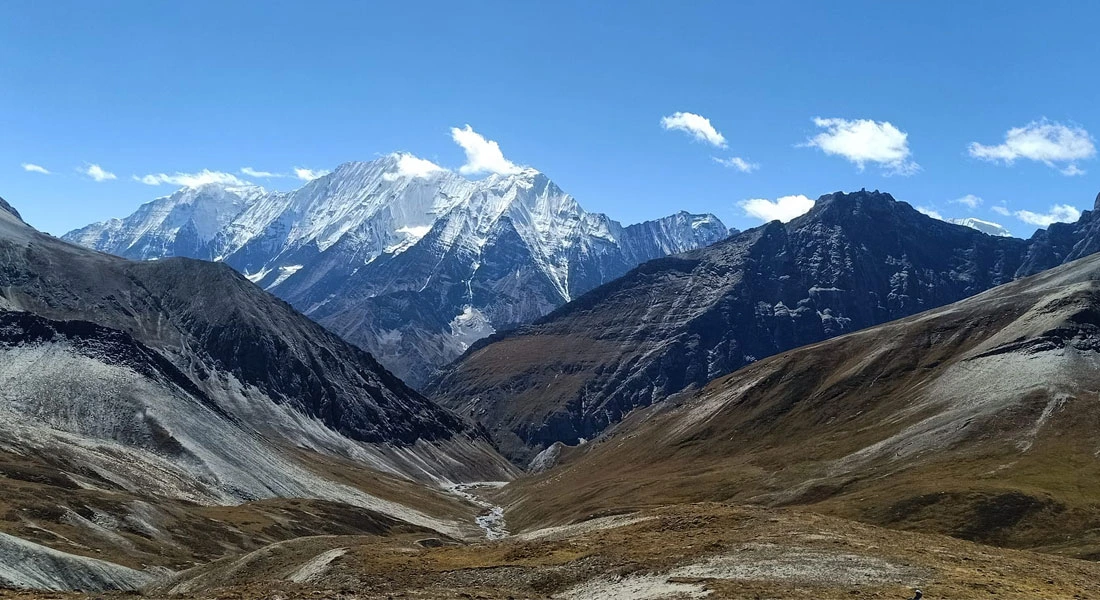


Upper Dolpo Trek is a challenging 25 days remote, high-altitude trek in Nepal. You require strong physical fitness for the Upper Dolpo Trek. The trek features stunning views of Shey Phoksundo Lake, ancient Tibetan-style villages, and high mountain passes over 5,000m like Nagdala La. April to October are the best times to trek the Upper Dolpo. The 25 days Upper Dolpo Trek follows the ancient salt trading route, exploring its nature, culture, and the high Himalayas.
Upper Dolpo Trek known as Inner Dolpo Trek is a challenging hike in Nepal. Dolpo is a remote areas of Nepal offers a lifetime trek experience. The Upper Dolpo Trek lying between Jhupal and Jomsom. The Dolpo trekking trail is unexplored and rugged mountain villages and high passes. Dolpo is a hidden land in the far-western part of Nepal.
Upper Dolpo Trek is naturally and culturally beautiful including Phoksundo lake and Shey Gomba(Monastery). Dolpo Circuit Trek covers both lower and upper Dolpo trek starts from Jhupal and ends at Jomsom. Dolpo Trek is suitable for physically fit hikers. You will walk through stone-walled villages, Tibetan gompas and alpine pastures.
You will cross high passes above 5000 m. The Upper Dolpo Trek is worthy for Tibetan Buddhist culture, old monasteries, spectacular Lake Phoksundo, rare wildlife, and wilderness adventures. You will see a deep valleys, high passes, peaks, turquoise Phoksundo lake, an 800-year-old Shey Monastery and the snow leopard.
Upper Dolpo Trek Itinerary
Day 01:Arrive in Kathmandu.
Day 02:Kathmandu to Nepalgunj.
Day 03:Kathmandu to Sulighat (2050m, 6kms, 3 hours)
Day 04:Trek to Chepka (2970m, 16km, 7/8 hours)
Day 05:Trek to Samduwa village (3600m, 12km, 6/7 hours)
Day 06:Trek to Ringmo (3600m, 12km, 7/8 hours)
Day 07:Acclimatize day at Ringmo.
Day 08:Trek to (3700m, 13km, 7/8 hours)
Day 09:Trek to (4650m, 8km, 6 hours)
Day 10:Trek to Shey Gompa (4370m, 12km, 8 hours)
Day 11:Shey Gompa Exploration and Acclimatization day.
Day 12:Trek to Namgung (4415m, 13km, 8 hours)
Day 13:Trek to Saldang (4100m, 7km, 3/4 hours)
Day 14:Trek to Sibu (4150m. 14km, 6/7 hours)
Day 15:Trek to Jeng La Phedi (4850m, 15km, 7/8 hours)
Day 16:Trek to Tokyu ( 4160m, 14km, 6/7 hours)
Day 17:Trek to Yak Kharka (3840m, 16km, 8 hours)
Day 18:Rest day at Yak Kharka.
Day 19:Trek to Shim Ora (3690m, 16km, 7 hours)
Day 20:Trek to Kanigaon (2620m 16km, 7 hours)
Day 21:Trek to Tarakot (2440m, 9km, 3 hours)
Day 22:Trek to Dunai(2090m, 16km, 6 hours)
Day 23:Trek to Jhupal (4480m, 11km, 3/4 hours)
Day 24:Juphal to Kathmandu via Nepalgunj
Day 25:In Kathmandu
Day 26:Kathmandu Airport


