


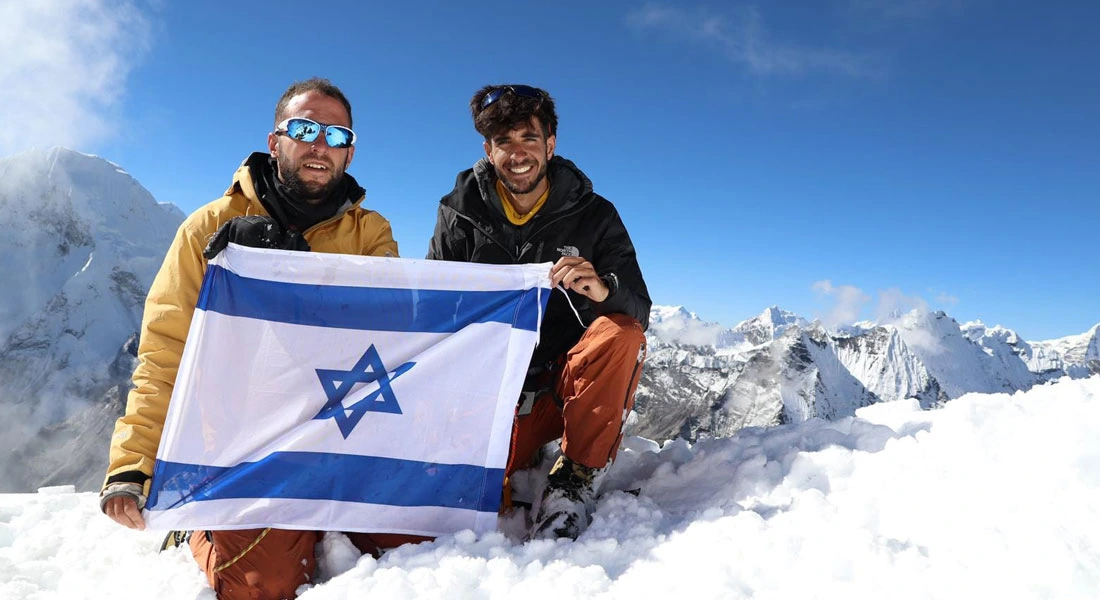
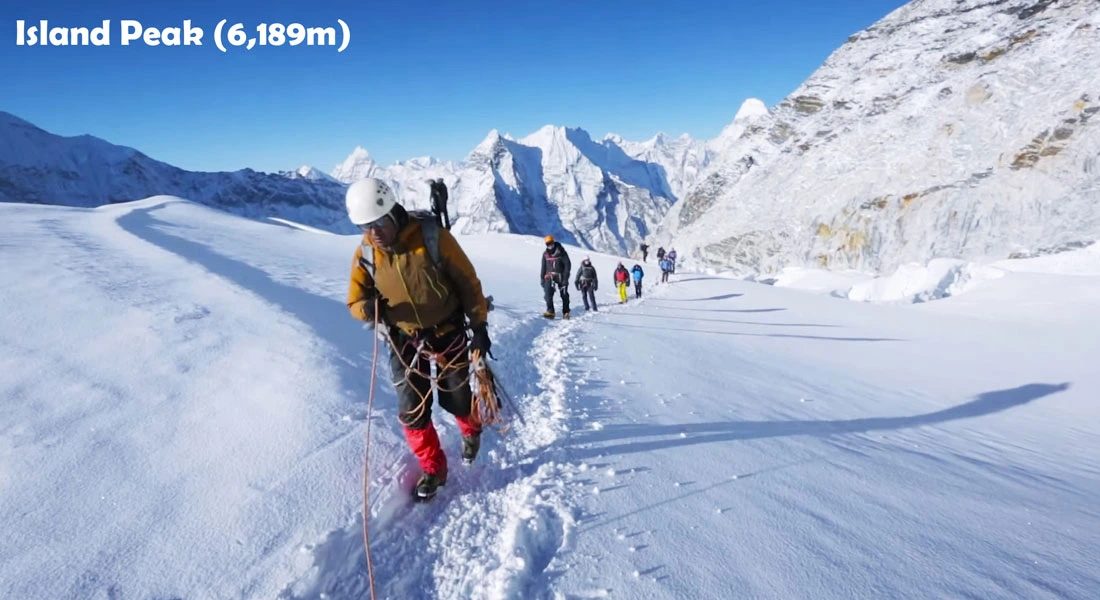


Island Peak Climbing 18 days includes an amazing trek to Everest Base Camp and Kala Patthar for acclimatization before climbing Island Peak. Autumn (September to November) and spring (March to May) are the best time to climb Island Peak in Nepal.
A challenging Island Peak climb is one of the most popular adventure climbs in the Everest region of Nepal. The summit of Island Peak offers mind-blowing 360° views of the Himalayas. The Island Peak Climbing Itinerary starts from Kathmandu with a flight to Lukla and trek towards Island Peak via EBC and Kalapatthar.
Island Peak known as Imja Tse, is one of the most popular trekking peaks in Nepal, standing at an elevation of 6,189 m. It is located in the Everest region and for trekking and mountaineering experience, Island Peak Climb is an ideal choice without an extensive technical skills. It’s considered one of the best trekking peaks in the world due to its accessibility, relatively moderate difficulty, and stunning views of mountains.
Climb Island Peak is technically not very difficult but still requires mountaineering experience. You need to be comfortable using crampons, ice axes, and ropes for the summit push. The summit is often reached by a steep glacier slope and a ridge with some fixed ropes to help you along the way. The most challenging part is often the final push near the summit, where the terrain can be icy and steep.
The journey to Island Peak typically starts with a trek to Everest Base Camp. The trek will take around 10-14 days, including acclimatization days. After reaching Everest Base Camp, climbers continue towards Island Peak Base Camp and set up for the summit attempt. The trek itself is stunning, offering breathtaking views of Mount Everest, Lhotse, Nuptse, and other Himalayan peaks.
The best time for climbing Island Peak are spring (March to May) and autumn (September to November), as the weather is more stable and the conditions are optimal for climbing. Avoid the monsoon months (June to August) due to wet conditions and the winter months (December to February) due to extreme cold. While Island Peak can be climbed year-round, the peak season is during the spring and autumn months, when weather conditions are most favorable.
A good level of fitness and prior trekking experience are essential. The regular hiking and cardio activities are beneficial. You should have previous experience in high-altitude trekking, and it’s helpful to have basic mountaineering skills, such as ice axe use and rope skills. The summit push typically starts very early, often around 2:00-3:00 AM, to avoid the afternoon winds and to make it to the summit before the weather worsens. The climb is often done with the help of fixed ropes. You’ll encounter snow and ice conditions, so proper gear is a must.
You’ll need to secure permits to climb Island Peak. These include the National Park Entry Permit (for the Sagarmatha National Park) and a Climbing Permit for Island Peak. These permits can be arranged through trekking agencies in Nepal-Mission Eco Trek through the Department of Tourism in Kathmandu.
Hiring a local guide and porters is highly recommended. They are experienced in the terrain, help with logistics, and can provide guidance on difficult sections of the climb. Mission Eco Trek, the best climbing agencies in Nepal offer fully supported expeditions, including permits, guides, and equipment.
As with any high-altitude climb, altitude sickness is a concern, so it’s crucial to acclimatize properly. Weather can change rapidly in the Himalayas, so climbers should be prepared for sudden storms or freezing temperatures. From the summit of Island Peak, climbers are rewarded with panoramic views of some of the highest peaks in the world, including Everest, Lhotse, Makalu, and Ama Dablam.
The cost of climbing Island Peak typically ranges from USD 2,000 to USD 3,500, depending on the group size, and services included. The price covers permits, guides, porters, equipment, food, and accommodation. Island Peak Climbing is perfect for beginner, intermediate and advance climbers. Island Peak Climb without Everest Base Camp Trek is also possible. The climbing Island Peak summit offers stunning views of Everest, Ama Dablam, Makalu and Lhotse. Island Peak Climb is a must do peak climbing in Nepal.
Island Peak is a rewarding climb for adventurers seeking a taste of high-altitude mountaineering in the Himalayas. If you’re prepared and well-guided, it can be an unforgettable experience. If you’re planning to climb Island Peak, and need more details about Island peak climb, please let us know.
Island Peak Climbing 18 Days Itinerary
Day 01:Arrive in Kathmandu (1300m)
Day 02:Fly to Lukla and Trek to Phakding(2652m)
Day 03:Trek to Namche Bazaar (3450m)
Day 04:Acclimatisation trek in Namche Bazaar (3450m)
Day 05:Trek to Phortse (3867m)
Day 06:Trek to Pheriche (4252m)
Day 07: Acclimatization trek in Pheriche (4252m)
Day 08:Trek to Lobuche (4930m)
Day 09:Trek to Everest Base Camp(5364m)
Day 10:Climb Kala Pattar and trek to Dingboche (5554m)
Day 11:Trek to Chhukung (4750m)
Day 12:Trek to Island Peak Base Camp (5150m)
Day 13: Island Peak Summit Ascent (6173m)
Day 14:Trek to Pangboche (3950m)
Day 15:Trek to Namche Bazaar (3450m)
Day 16:Trek to Lukla (2800)
Day 17:Fly to Kathmandu
Day 18:Depart Kathmandu


