banner-image

Breathtaking Annapurna Circuit Trek 21 days

5.00/5 from 310 reviews
Confirm Your Trip
@ USD 238
  • visa-icon
  • mastercard-icon
  • american-express
  • discover-network
  • Annapurna Circuit Trek 21 days.
  • Annapurna Circuit Trek 21 days.
destination-icon
Destination Annapurna Circuit Poon Hill
difficulty-icon
Trip Difficulty Moderate Trip
trip-duration
Duration 21 days
activities-icon
Activities Trekking
accommodation-icon
Accommodation Hotel and Teahouse Lodge
max-altitude-icon
Max altitude 4300 m
group-size-icon
Group Size 1-12 Pax
meals-icon
Meals Breakfast/Lunch/Dinner
vehicle-icon
Vehicle Bus/Car/Jeep/
Price starts from
$1190 - $2280
  • Best Price Guarantee
  • Secure & easy online
  • Discount for groups
Confirm You Trip
@ USD 238
  • visa-icon
  • mastercard-icon
  • american-express
  • discover-network

Highlights of Breathtaking Annapurna Circuit Trek 21 days

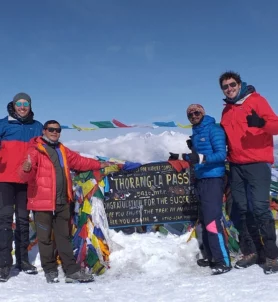
  • Annapurna Circuit Trek 21 days, the most challenging trek crosses the Thorong La Pass (5,416m).
  • Annapurna Circuit Trek through high mountain passes, beautiful lakes and beautiful villages.
  • Annapurna Circuit with Poon  Hill, the most spectacular trekking routes in the world from Manang to Mustang.
  • Annapurna Circuit Hike in a diverse range of landscapes.
  • Annapurna Circuit Trek, the best price guaranteed with fixed departure dates 2025/2026.
  • Annapurna Circuit Trek, a 20 days tour from Kathmandu to Sirung village via Khudi, Chame, Manang and other beautiful places.

Overview of Breathtaking Annapurna Circuit Trek 21 days

Annapurna Circuit Trek 21 days: Experience Nepal’s rich culture and dramatic scenery, witnessing the Sunrise from Poon Hill. Annapurna Circuit Trek is a breathtaking journey through diverse landscapes, high mountain passes, and stunning alpine lakes. Traverse lush valleys, conquer Thorong La Pass at 5,416m.

Annapurna Circuit Trek 21 days takes you through beautiful villages, high mountain pass and high alpine lake. The 21-day full Annapurna circuit trek begins from Kathmandu with bus ride to Besisahar and trek to Manang, Tilicho Lake, Muktinath and Poon Hill. Kathmandu to Annapurna Circuit Trek is famous for its diverse range of landscapes and cultural immersion.

The 21-day Annapurna Circuit Trek itinerary via Sirung village is a beautiful trek that extends from subtropical lands to high alpine mountain pass. The trek is physically demanding, so a previous trekking experience is helpful. The 21-day Annapurna Circuit Trek from Manang to Mustang offers a wide natural and cultural diversity. Annapurna Circuit with Mustang Trek in a diverse range of landscapes and mountains. Mustang Trek with Annapurna Circuit is a unique combination of beautiful mountain vistas, rural villages, pounding rivers and waterfalls.

The slow pace tea house trekking around Annapurna is the most spectacular trekking routes. It goes through lush green valleys and fascinating villages. The trip creates a good photograph opportunity, so please don’t be late and don’t miss the Annapurna Circuit Trek Nepal.

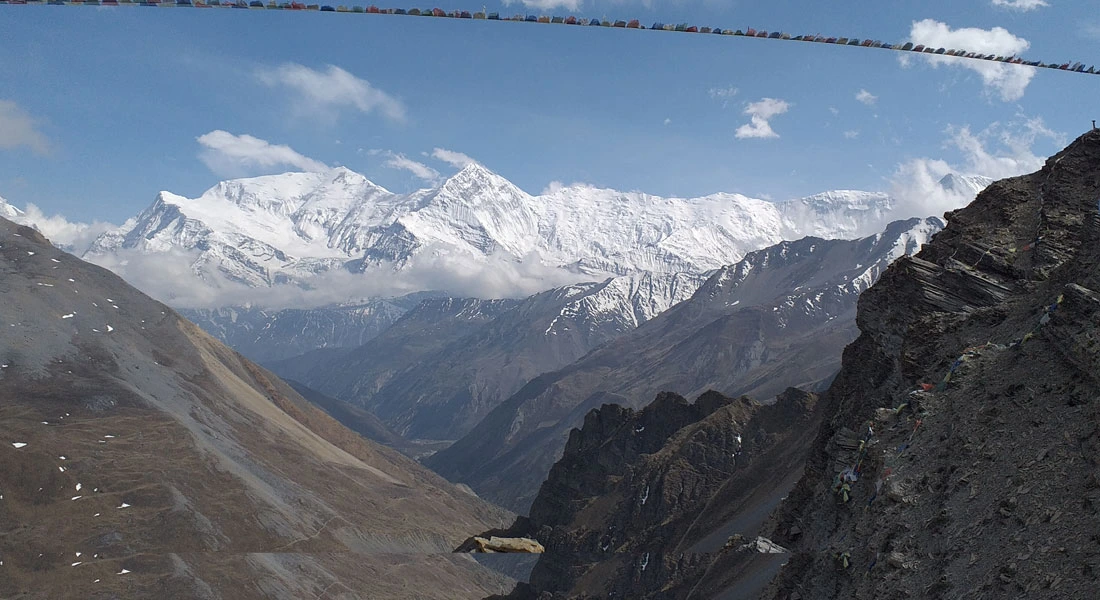
The 21 days,  full Annapurna circuit trek begins from Kathmandu to Besisahar by bus ride and then trek to Manang, Muktinath and Poon Hill. The Annapurna Circuit is full of spectacular scenery, cultures, forests, lakes, glaciers with outstanding views. The entire trek to Annapurna Massif crosses Thorong La Pass at (5,416 m). You will then walk on the world’s deepest gorge-Kali Gandaki with Mt. Annapurna (8,091 m) to the east and Mt. Dhaulagiri hovering at(8,167 m) to the west.

Furthermore, Annapurna Circuit Trek with Poon Hill offers fabulous mountain views with the Sunrise. This is an ideal trek if you have enough trekking time. The Annapurna circuit is the best adventure trek destinations in the world, not only in Nepal.

Annapurna Circuit Trek 21 days Itinerary

Day 01:Arrival in Kathmandu (1,350m/4,429ft)
Day 02:Kathmandu: Sightseeing and trek Preparation (1,350m/4,429ft
Day 03:Drive to Khudi (7-8 hrs, 800m/2,625ft)
Day 04:Khudi to Sirung(2,200m/7,218ft, 6-7 hrs)
Day 05:Sirung to Jagat1(410m/4,626ft 6-7 hrs)
Day 06:Jagat to Dharapani1(960m/6,431ft, 7-8 hrs)
Day 07:Dharapani to Chame(2,710m/8,892ft, 5-6 hrs)
Day 08:Chame to Pisang(3,300m/10,827ft, 5-6 hrs)
Day 09:Pisang to Manang(3,519m/11,546ft, 6-7 hrs)
Day 10:Manang: Acclimatization day(3,519m/11,546ft)
Day 11:Manang to Yak Kharka(4,110m/13,485ft, 3-4 hrs)
Day 12:Yak Kharka to Thorong Phedi(4,600m/15,093ft, 3-4 hrs)
Day 13:Thorong Phedi to Muktinath via Thorong La pass(5,416m/17,770ft, 7-8 hrs)
Day 14:Muktinath to Marpha(2,670m/8,760ft, 4-5 hrs)
Day 15:Marpha to Kalopani(2,530m/8,301ft, 5-6 hrs)
Day 16:Kalopani to Tatopani(1,200m/3,937ft, 6-7 hrs)
Day 17:Tatopani to Ghorepani(2,850m/9,351ft, 7-8 hrs)
Day 18:Ghorepani to Poon Hill to Tadapani(2,700m/8,859ft, 6-7 hrs)
Day 19:Tadapani to Pokhara via Ghandruk(827m/2,713ft, 5-6 hrs, Driving: 1 hour)
Day 20:Drive from Pokhara to Kathmandu(1,350m/4,429ft, 5-6 hrs)
Day 21:Kathmandu Airport

Detail Itinerary of Breathtaking Annapurna Circuit Trek 21 days

01

Day 01: Arrival in Kathmandu (1,350m/4,429ft)

After arriving in Kathmandu, your guide will pick you up from the airport and take you to hotel. In the afternoon, we may take a rest and visit our office. Overnight in Kathmandu.

02

Day 02: Kathmandu: Sightseeing and trek Preparation (1,350m/4,429ft

Today after breakfast we start a guided tour to several of the most historical and spiritual attractions in Kathmandu which are also listed as UNESCO World Heritage sites. We visit the historic Durbar Square, the sacred Hindu temple of Pashupatinath, the famous ‘Monkey Temple’ (Swayambhunath) and Buddhist shrine (Bouddhanath), which is also one of the largest stupas in the world. At noon, we get our equipment checked by our climbing leader, get introduced to fellow participants, and discuss about trip. Overnight in Kathmandu.

03

Day 03: Drive to Khudi (7-8 hrs, 800m/2,625ft)

We start our journey into the hills on a winding road along the Trishuli River. On the way we admire terraced farms and beautiful huts. After reaching a juncture at Mugling, we move straight ahead towards Pokhara. At Dumre, we leave the previous trail and head north to Besisahar. A half-an-hour’s drive from Besisahar takes us to Khudi, the starting point of our trek. Alternatively, we can get off at Besisahar, and then trek for an hour to get to Khudi along the wide trail. Khudi offers us a first glimpse of the gorgeous Manaslu range.

04

Day 04: Khudi to Sirung(2,200m/7,218ft, 6-7 hrs)

Our first day’s walk involves crossing a few suspension bridges and waterfalls including several ascents and descents across rice paddies and a subtropical forest. Initially, the walk is gradual but is then followed by steeper trails. The mountains that we see from Khudi seem a lot closer now. Before reaching Sirung village we pass an ethnic Tamang settlement of Taranche. We admire close-up views of Nadi Chuli and Manaslu mountains from Sirung.

05

Day 05: Sirung to Jagat1(410m/4,626ft 6-7 hrs)

We leave Sirung for Jagat on a relatively easy trail. We leave behind the terraces of the village and hit forest, ferns and woodland. On the forest trail we spot a variety of birds. We also pass through several small villages and a few temples on the way. We cross a suspension bridge over Sangu Khola at Mipra then again at Syange over the Marshyangdi River. There is also a waterfall nearby the bridge. Now our trail moves alongside the mighty Marshyangdi River and we cross one more bridge before reaching J

06

Day 06: Jagat to Dharapani1(960m/6,431ft, 7-8 hrs)

After breakfast, we slowly begin our trek today. The trail from Jagat descends until it reaches the river and then continues through a lush forest. Further ascent leads to sharp-edged cliff facing the riverbank. En route, Chyamje comes into picture amidst the glorious backdrop of towering Annapurna mountain ranges. After crossing a suspension bridge, we climb steeply towards the slippery and physically challenging path to Sattale. On treading along a succession of rock-strewn trails, we descend to a grassy riverbank that leads to Tal. As we walk away from Tal, the path becomes rugged and winding. Then we approach steeply-forested village of Karte. Meandering along the waterfalls and cliffs, we finally reach Dharapani after crossing a suspension bridge. Overnight in Dharapani.

07

Day 07: Dharapani to Chame(2,710m/8,892ft, 5-6 hrs)

Today we walk through a few forested ridges on our way to Chame, which is the headquarters of the Manang District. Throughout the trek we can admire amazing views of the Himalayas including Lamjung Himal, Annapurna II, and Annapurna IV (7,525m/24,688ft). On today’s trek we also come across small hot springs where we can dip in and soothe our aching muscles. Overnight in Chame.

08

Day 08: Chame to Pisang(3,300m/10,827ft, 5-6 hrs)

A steep and narrow path through a very dense forest will bring us to the dramatic curved rock face, rising 1500m from the river. This is probably the steepest part of the Marshyangdi Valley, so steep that the trail is carved into the vertical rock. After passing this last bit of rock, the valley opens up with majestic vistas. And right where the valley widens stands the Paungda Danda, a massive sloping rock face that rises over 5,000ft (1500m) above the trail. We trek for a while before reaching Lower Pisang where we spend the night.

09

Day 09: Pisang to Manang(3,519m/11,546ft, 6-7 hrs)

There are two routes to Manang but we follow the trail that takes us to Upper Pisang via Geru. This trail guarantees excellent views of the beautiful landscape and the mighty mountains including Annapurna and Pisang. We begin to notice a contrast in the landscape and vegetation from today. The cold and dry climate also creates a much harsher environment. Our short visit to Barge monastery, the largest monastery in the entire district of Manang will be memorable. Overnight at Manang.

10

Day 10: Manang: Acclimatization day(3,519m/11,546ft)

In order to keep fit on the trails that follow, we keep ourselves busy today with a short hike to either Bhojo Gumba or Gangapurna Lake. If we have the energy, we can even hike to Vraga Village where we can visit the Himalayan Rescue Association which will give us some idea about Acute Mountain Sickness (AMS). Overnight in Manang.

11

Day 11: Manang to Yak Kharka(4,110m/13,485ft, 3-4 hrs)

From Manang village, the trail crosses a stream, climbs to a village of Tenki and continues to climb out of the Marshyangdi Valley turning northwest up the valley of Jarsang Khola. The trail follows this valley northward, passing a few pastures and a scrub of juniper trees, as it steadily gains elevation. The trail further passes near the small village of Ghunsa, a cluster of flat mud roofs just below the trailhead. Now the trail goes through meadows where horses and yaks graze. After crossing a small river on a wooden bridge, the trail passes an ancient old Mani wall in a pleasant meadow and then reaches another small village of Yak Kharka. Overnight at Yak Karka.

12

Day 12: Yak Kharka to Thorong Phedi(4,600m/15,093ft, 3-4 hrs)

It is an uphill walk to Thorong Phedi. After walking for some time we cross a suspension bridge and reach Ledar village. We ascend furthermore and pass through towering cliffs before reaching Thorong Phedi, the last village before Thorong La pass. On this trip we are rewarded with one of the best views of Mt. Gundang, Mt. Syagang, Thorung Peak and Mt. Khatungkan. The word Phedi in Nepalese is referred to as the foot of a mountain. Overnight in Thorong Phedi. Overnight in Thorang Phedi.

13

Day 13: Thorong Phedi to Muktinath via Thorong La pass(5,416m/17,770ft, 7-8 hrs)

Crossing Thorong La pass, one of the highest passes in the world, will be our ultimate objective today. We will be crossing the pass from east to west (Manang to Muktinath) which is the easiest and safest direction. We get up around three in the morning and walk up the mountain. When we finally make it to the top, we realize that our journey was worth it. We can take a few photos before heading to Muktinath Valley at the foot of the Thorong La pass. Overnight in Muktinath.

14

Day 14: Muktinath to Marpha(2,670m/8,760ft, 4-5 hrs)

Muktinath is an important pilgrimage for both Hindus and Buddhists alike. In the morning, we pay our visit to a Vishnu Temple and a Gompa. Descending from Ranipauwa village down the steep and barren hillside, we tumble down toward Kagbeni and then to Jomsom finally arriving at Marpha. The trail today is quite surreal as we trek along a plateau above Kali Gandaki River, the world’s deepest gorge. The barren landscape of this area resembles Tibet. Marpha is also famous as the apple capital of Nepal where one can enjoy different items made from apple. The local apple brandy of Marpha is famous all over Nepal. Overnight at Marpha.

15

Day 15: Marpha to Kalopani(2,530m/8,301ft, 5-6 hrs)

From Marpha, we take a new route toward Kalopani via Chokhopani village. Today, we come across traditional villages of the ethnic Thakali people. Also, we get to see beautiful apple gardens. From here we get panoramic views of Dhaulagari, Tukuche, Nilgiri, Fang and Annapurna I mountains. From Chokhopani, we continue to Kokhethanti. We cross a river and come across the newly constructed road site before reaching Kalopani. Overnight at Kalopani.

16

Day 16: Kalopani to Tatopani(1,200m/3,937ft, 6-7 hrs)

Our journey today is mostly downhill. During the early part of today’s trek, we cross the bridge at Ghasa. As we drop to lower elevations, we emerge back into subtropical forests, lush with vegetation. Our trail continues along Rupse Chahara (waterfall). We continue down the east bank from Kopchepani via Garpar to a bridge at Dana. At Narchyang Besi, we get to see a powerhouse that supplies electricity in the area. There are bigger villages in this area where we can observe the everyday lives of the local people. Upon reaching Tatopani, we relax and have a bath in the hot spring.

17

Day 17: Tatopani to Ghorepani(2,850m/9,351ft, 7-8 hrs)

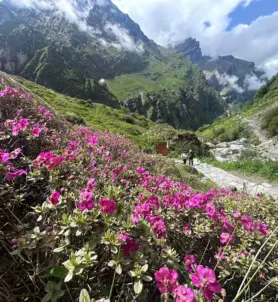
We leave the Kali Gandaki and head up the Ghar Khola valley. The trail leads us through a terraced farmland with mountains all around. We pass through the villages of Shikha and Chitre before reaching a beautiful rhododendron forest. When in bloom the rhododendron trees with its average height of up to 100″ will be covered with pink or red flowers. Walking further we reach Ghorepani, a beautiful village located at a ridge top. Overnight in Ghorepani.

18

Day 18: Ghorepani to Poon Hill to Tadapani(2,700m/8,859ft, 6-7 hrs)

To catch the sunrise over the Himalayas, we make an early morning climb along the steep trail to the viewpoint of Poon Hill (3,210m/10,529ft), the most popular trekking destination of the Annapurna region. It is also a great viewpoint to enjoy the amazing views of Mustang, Pokhara and more than 20 of the highest mountains including the close-up views of the Annapurna and Dhaulagiri ranges. The snowy peaks of the high mountains loom above and around us glowing in the morning light. After taking photographs, we return back to Gorepani. After breakfast, we head east and climb a nearby ridge. We descend through rhododendron forests, pass by spectacular waterfalls and reach Tadapani to spend the night.

19

Day 19: Tadapani to Pokhara via Ghandruk(827m/2,713ft, 5-6 hrs, Driving: 1 hour)

From Tadapani, we make a steep descent through the dense and dark forest. This part of the trek will be through a thick forest of old rhododendron trees. When the rhododendron trees are in bloom, these forests actually turn into amazing gardens. By afternoon, depending upon the season of travel, we also get to enjoy cherry blossoms in bloom on the slopes on the other side of the ravine. After trekking a few more minutes, we enter the village of Ghandruk, a slope settlement with stone houses mostly inhabited by the Gurung people. Here, we enjoy the stunningly close-up towering views of Fishtail, Annapurna South, and Hiunchuli mountains. We continue our trek to Nayapul from where we drive to Pokhara. Overnight in Pokhara.

20

Day 20: Drive from Pokhara to Kathmandu(1,350m/4,429ft, 5-6 hrs)

After breakfast, we say goodbye to the beautiful lake city of Pokhara and drive towards Kathmandu. After reaching Kathmandu, we have the rest of the day off to rest or do some souvenir shopping. To celebrate the successful completion of our journey, we will have a farewell dinner in the evening. Overnight in Kathmandu.

21

Day 21: Kathmandu Airport

Our adventure in Nepal comes to an end today. Your guide will escort you to the airport approximately 3 hours before our scheduled flight. On our way home, we have plenty of time to plan our next adventure in the wonderful country of Nepal.

Not Happy with this itinerary?

Includes / Excludes

What's Included ?

  • Airport Transfer-Pick up and drop off
  • Twin share hotel in Kathmandu with breakfast.
  • Transfer by bus-Kathmandu to Khudi
  • Twin sharing teahouse accommodation during the trek.
  • Three times meals-breakfast, lunch, and dinner during the trek
  • All necessary trek permits-TIMS card and ACAP entry permit.
  • Twin sharing hotel accommodation in Pokhara with breakfast
  • Nayapul to Pokhara by bus or car or taxi
  • Pokhara to Kathmandu by tourist bus.
  • The government licensed, English speaking guide and all his expenses such as meals, accommodation, salary and insurance.
  • Necessary paper works, all government taxes, and company service charge.

What's Excluded ?

  • Meals(Lunch and dinner) in Kathmandu and Pokhara.
  • Nepal entry visa fee cost-$25 USD for 15-days-multiple entry visa, obtain on arrival at Kathmandu-TIA airport.
  • Personal travel and medical insurance.
  • International airfare.
  • Personal expenses like laundry, hot shower, Wifi and shopping.
  • All alcoholic and non-alcoholic drinks like soup, tea, coffee, hot chocolate, coke, mineral water, extra food, cold and hot drinks on trek.
  • All desserts and sweet things like chocolate, cake, pie, pudding.
  • Hot shower and battery charging at the tea houses.
  • Tips for guide, porter, and driver (tipping is expected)Private transfer and flight cost
  • Flight Cost from Jomsom to Pokhara and Pokhara to Kathmandu.
  • All the cost not mention on above cost includes.
private-trip

Note: We operate private trip everyday.

We can operate private trip for solo, group, family, students as per your requirements.

Trip Information - Breathtaking Annapurna Circuit Trek 21 days

Seasons for Annapurna Circuit Trek

The Spring from March to June and Autumn from October to December are two seasons for Annapurna circuit trek. The July to mid of September, the monsoon season is not a good time but still possible to do Annapurna Circuit Trek. The January to February are winter season has a low temperature and a lot of snow falls. The guest houses may close in winter season.

Autumn Trekking-

September, October and November are the most popular months for trekking in Annapurna Circuit. Autumn brings clear blue skies and mild temperatures before the cold sets in in December. Autumn is also a festive season with the celebration of Dashain and Tihar. Nepal’s biggest festivals. The weather is generally dry and clear, with warm sunny days and excellent visibility. Regardless of the seasons, the weather conditions at Thorung La can change rapidly and there is always a chance of unstable weather, cold and snow storms. It is important to check the weather forecast before crossing Thorung La. A freak storm in October 2014 killed several trekkers as they got stuck in bad weather and snow.

Spring Trekking-

The spring season from March to May is considered to be the next best seasons. The weather is generally clear although a little colder, particularly at higher altitudes. Morning is sunny and flowers are in bloom. There is however a higher chance of rain and snow, melting ice increases the chances of landslides and avalanches.

Summer Trekking-

June, July and August are the monsoon months. The Marshyangdi valley up to Manang sees lots of rainfalls. The trails will be muddy with lots of leeches, but the landscapes will be lush and green. The Kali Gandaki valley is in the rain shadow and sees much less rain. The monsoon is responsible for warm and wet weather, with cloud and mist making visibility extremely poor. You can hardly see a mountain. Leeches are a big problem at this time of year, as is the risk of landslides. As the Manaslu Region was one of the worst affected by the 2015 earthquake, there are many landslide areas – these can be more dangerous in wet weather.

Winter Trekking-

January and February are too cold with lots of snow on the trail. The Thorung La Pass will be closed due to heavy snowstorms and a risk of avalanches. By March/April the pass reopens again, but you can still expect snow at the higher altitudes.

Annapurna Circuit Trek Package Cost

We offer budget, standard and the complete trek package to Annapurna Circuit. The trip cost that includes guide, permit, accommodation and meals. We make sure a good value for money. The price ranges from USD 750 to USD 950.

Accommodation on Annapurna Circuit Trek

Accommodation at local lodges – better known as teahouses – are simple but comfortable. Toilets and washing facilities are shared and rudimentary.

In a teahouse, small twin share rooms with twin beds, mattresses and pillows. At times, in high seasons, trekkers may have to stay in dormitories room due to the limited number of teahouses.

In some places, teahouses don’t have access to electricity, depending on solar powered lighting instead. In more remote region, teahouses don’t have running water and toilets. I mean just a hole in the ground. Hot shower facilities are available in some teahouses for a price but occasionally a hot shower means a bucket of hot water, enough to wash your body. Electricity to charge devices as well as Wifi is usually for an additional fee when available.

Accommodation on this route is in simple teahouses, which also allows you to experience the friendly spirit of the local Nepalese people. The teahouses at higher altitudes like in Thorong Phedi and Thorong High Camp are more basic. No power outlets in the room, no wi-fi(poor wi-fi), and no hot shower. The rooms are very basic with two single beds. There are blankets, a table and a chair. Trekkers most of the time sit in the dining area because it’s usually nice, warm and social. Trekkers drink tea, play cards and talk about their trip. You go to room only for sleeping.

Annapurna Circuit Trek-Meals

We do (not) include meals-breakfast, lunch and dinner while trekking. The menus in the teahouses are varied, ranging from traditional Nepalese dhal bhat to pizza and apple pie. Vegetarians are well catered for in Nepal. How much you need to spend per day will vary, but it could be anything up to US$60 per day for meals, snacks and drinks. Prices tend to get higher the higher you go on trek in response to the difficulty of getting supplies to the teahouses. In Kathmandu and Pokhara there are plenty of restaurants and cafes for all tastes and budgets.

Meals on the trek is quite diverse. You usually get Nepalese, Chinese, Indian and western dishes. They are Spaghetti, pasta, noodles and rice with vegetable/chicken/cheese and tomato sauce, omlette, fried, boiled or scrambled eggs with potato/Cheese/vegetable, Dal Bhat includes rice, vegetable and lentil soup. In addition, momos-local dumplings, pizzas and pancakes, different breads such as Chapati, Tibetan bread, toast, porridge and muesli like oats, cornflakes, muesli with honey, jam, apple or banana and all sort of soups like chicken, vegetable, garlic, tomato, noodle are available.

Alcohol and Caffeine

Alcohol and trekking don’t mix. We highly recommend that you limit your alcohol consumption in Kathmandu prior to your trip. Celebrate your achievements after your trek. Both alcohol and caffeine increase dehydration. Limit your intake of both when hiking at high altitudes.

Annapurna Circuit Trek-Difficulty

Annapurna Circuit Trek is not that difficulty as you thought. The trails are mostly in good condition. No technical skills are required to do this trek. The physical effort clearly helps to be as fit as possible. You don’t need to be an athlete. People of all ages and levels of fitness can complete the Annapurna Circuit Trek in 18 days. The key point is to remember that you have to hike at your own pace. Much of the route, particularly in the early days, it involves plenty of ups and downs – descending to cross the river, ascending again, and then repeating the process further along the trail.

Highest Point of Annapurna Circuit Trek

Throng La Pass is the highest point of the trek which is at an altitude of 5416 m. A certain level of fitness level is required trekking around the Annapurna. You will need to walk 10 km to 15 km that takes 5 to 6 hours to walk to cover this distance every day. Thorong Phedi to Thorong La Pass is the toughest trek that is 4 hours steep uphill hike above 5000m and then steep descend downhill trek of 4 hours to Muktinath temple.

Permits for Annapurna Circuit Trek

For Annapurna Circuit trek you need to carry two permits-TIMS card (Trekkers information management system entry card) and the Annapurna Conservation Area (ACAP) entry permit. It costs around USD 50 for both permits. We take care of your trek permit on client’s behalf once you Annapurna Circuit Trek package. You need to send me your scanned passport copy and two passport size photos to issue the necessary permits.

Internet, Wifi, Sim cards and staying Charged

If you’re looking to stay connected while trekking the Annapurna Circuit, the options are fairly limited.

Wifi-

Wifi is available in the tea houses along the trail. There is however normally a charge for using the internet, Wifi and with slow speeds, you may end up wishing you hadn’t bothered. If there’s nothing urgent, our advice would be to wait until you get back from the mountains. Costs anywhere from $4 to $6 to use WIFI at the guesthouses.

Sim Cards-

4G sim cards and packages can be bought at the airport, or from numerous vendors in the Thamel area of Kathmandu. They’re great in the city but as soon as you leave the coverage is patchy. We recommend Nepal Telecom and Ncell for 3G/4G coverage. It’s safe to say that in the mountains, neither are really any good.

Electricity-

There are electricity available along the trail to charge your power banks, cameras, and phones. The key is to get a fat power bank. Pay to charge that then charge everything from your power bank. Your power bank lets you charge your phone and camera batteries. Most of the places you stay let you charge your gear for an extra cost.

Annapurna Circuit Trek-Last-Minute Booking

You can make last minute booking a day before this trek gets started. Moreover, the payment should be made full before departure the trek.

Passport and Visa

You need to carry passport valid for at least 6 months. You will get on arrival visa at Kathmandu-TIA airport. The multiple entry-Nepal visa costs USD 40 for 15 days and USD 50 for 30 days.

Altitude

Altitude sickness is a risk, including on the Annapurna, Langtang and Everest Base Camp treks. Please make sure you familiarize yourself with signs and symptoms before you depart and monitor your own health during your trek.

Travel Insurance Compulsory-Trekking Annapurna Circuit

Make sure your insurance covers you for your intended activities, including travel and trekking above 3000m if this is included on your itinerary, mountain rescue services and helicopter evacuation costs.

Travel insurance is necessary for this trek. We will not sell travel insurance but happily recommends the insurance company. Please, make sure that your travel insurance policy will also cover medical expenses in the hospital.  Hence, purchase a higher tier of travel insurance which covers a high altitude sickness up to 6,000 meters.

Equipment for Annapurna Circuit Trek

Please travel lighter and carry only a necessary trekking equipment. We recommends the below trekking gear list for EBC Helicopter Trek.

General

All season sleeping bag and down Jacket.
Duffle bag or rucksack.
A wind and waterproof thin layered jacket.
Daypack

Head

A warmer hat that covers the ears
Sunglasses
Neck-warmer
Sunscreen (35 to 60 SPF)
Headlamp and an extra set of batteries

Hands

A pair of warm gloves for walking poles(if you prefer)
Warmer shell gloves and liner

Upper Body

Long sleeve t-shirts
Thermal tops
wool jacket or pullover
Sports bras for women and girls
Water and windproof shell jacket

Lower Body

Thermal underwear (especially trousers)
windproof and waterproof trousers
warmer trousers
Comfortable trekking pants
Extra casual sport pants

Footwear

A pair of good waterproof trekking boots
Pair of sandals
4-5 pairs of woolen socks
Sock liners
Light shoes and sneakers

First Aid Kits and Medicines

Assorted adhesive bandages (fabric preferred)
Blister treatment cream or similar
Insect / anti-itch ointment
Ibuprofen or other pain-relief medication
Diamox (125mg to 250mg tablets for altitude sickness)
Warps, splints, and wound coverings butterfly bandage
Water purifying pills

Miscellaneous

4 passport size photos with original passport
Water bottle and filter
Flight Ticket(please make a copy and leave at our office in KTM because in case you want to change your flight date)
Bathroom kit such as toilet paper, plastic bags, hand wipes, towel, and soap, etc.)

Extra things

Comfortable trekking poles
Quality energy dry foods
Power bank and music players
Camera (memory card, chargers, and extra batteries)

Luggage Limits

Domestic flights in Nepal have strict weight limits – 10kg of check-in luggage and 5kg of carry-on hand luggage per person is included with your flight ticket. Excess baggage (up to 5kg per person only) will be charged at your own expense.

Travel between Kathmandu and Pokhara

Travel between Kathmandu and Pokhara is about 200 km that takes 6 to 7 hours drive. The travelers have often decided to fly to avoid the long overland journey. The flight takes around 35 mins. If you decide to fly, this will be at your own expense with no refunds for road travel available.

Road Travel

Road works and infrastructure projects can cause significant delays on major roads within cities and highways between destinations. Road travel can also be disrupted due to demonstrations and bandhs (strikes) without warning. Major road works are currently ongoing in and around Kathmandu and the roads to Chitwan National Park and Pokhara. Delays, heavy traffic, poor road conditions and dust are a reality of road travel in Nepal.

Monsoon(Rainy Season)

The monsoon season is from June to September and weather conditions can disrupt travel during this time due to flooding and landslides. Disruption of air travel and airport closures are also possible. Be prepared that the itinerary may need to change at short notice.

Money matters

The official currency of Nepal is the Nepali rupee (NPR). Its symbol is often displayed as Rs. USD is also widely accepted in Nepal. ATMs can only be found in Kathmandu, Pokhara, Chitwan and Bhaktapur. Make sure you carry sufficient cash to cover your needs when travelling outside of these cities. Money exchange facilities are available in Kathmandu, Namche, Pokhara, Chitwan, and Bhaktapur. Credit cards are not widely accepted.

The Government of Nepal has banned the import, export, and use of 500 and 1000 Indian rupee notes in Nepal. You should ensure you are not carrying these notes on arrival in Nepal as they will be confiscated and you may be fined.

Nepal will not accept foreign currency notes that are old, torn and faded. They can be very difficult to exchange or extra fees added when exchanging. Please ensure that you have new, clean notes.

Before departing on a trek, make sure you have enough Nepalese currency to purchase meals and drinks as there are no ATMs.

Nepali Rupee is a blocked currency – it cannot be exchanged into other currencies outside of Nepal. You can only obtain Nepali Rupee in Nepal and must exchange any leftover Nepali Rupee whilst still in Nepal.

Spending Money

When it comes to spending money on the trip, every traveler is a little different. You know your spending habits better than we do, so please budget an appropriate amount for things like optional meals, drinks, shopping, optional activities, and laundry. Make sure you have read the itinerary and inclusions thoroughly so you know what is included in the trip price and what you may need to pay for while travelling.

Contingency Funds

We try to plan for every eventuality, but there are still some things beyond our control. We reserve the right to change an itinerary after departure due to local circumstances or a Force Majeure Event. In such emergency circumstances, the additional cost of any necessary itinerary alterations will be covered by you.

Please note we are not responsible for any incidental expenses that may be incurred as a result of the change of itineraries including but not limited to visas, vaccinations or non-refundable flights.

Make sure you have access to an extra US$500 for emergencies (e.g. severe weather, natural disasters, civil unrest) or other events that result in unavoidable changes to the itinerary (e.g. transport strikes or cancellations, airport closures).

Sometimes these things necessitate last-minute changes to enable our trips to continue to run, and as a result, there may be some extra costs involved. The recommended amount is listed in USD for the relatability of universal travelers, however, local currency may be needed once in the country to cover these costs. Suggested budget for meals not included: USD500.

Climate and Seasonal information

Seasonal Information
Nepal’s climate varies greatly depending on the season:

June to September:

The monsoon rains (mostly at night) bring landslides in regional areas. Cloud cover often obscures mountain views with rain, mud, and leeches deterring most trekkers at this time of year. Treks running in September can be hot and very humid at lower altitudes.

March to April:

The Spring brings warm weather and spectacular rhododendron blooms. A popular time to visit and one of the peak times to trek.

October to November:

The Clear skies and warm days make autumn the peak season.

December to February:

The Winter brings cold temperatures and snow to the mountains. Good trekking, but remember to rug up. Some towns, including Kathmandu, experience very high levels of seasonal smog which can lead to decreased scenic visibility.

Price starts from
$1190 - $2280
  • Best Price Guarantee
  • Secure & easy online
  • Discount for groups
Confirm You Trip
@ USD 238
  • visa-icon
  • mastercard-icon
  • american-express
  • discover-network

Similar Trips

Few reasons to choose mission eco trek for your next holiday

Read Reviews on Breathtaking Annapurna Circuit Trek 21 days

5.00/5 from 310 reviews
trip-advisor-icon
trip-advisor-rating
310 reviews
21 days
Breathtaking Annapurna Circuit Trek 21 days
Price starts $1190 - $2280
Free Trip Planner
kathmandu package trips.
Jitendra Gurung Tour Leader
Request for Assistance ⮞