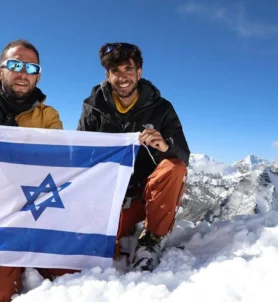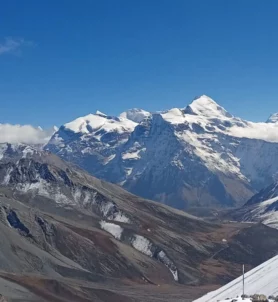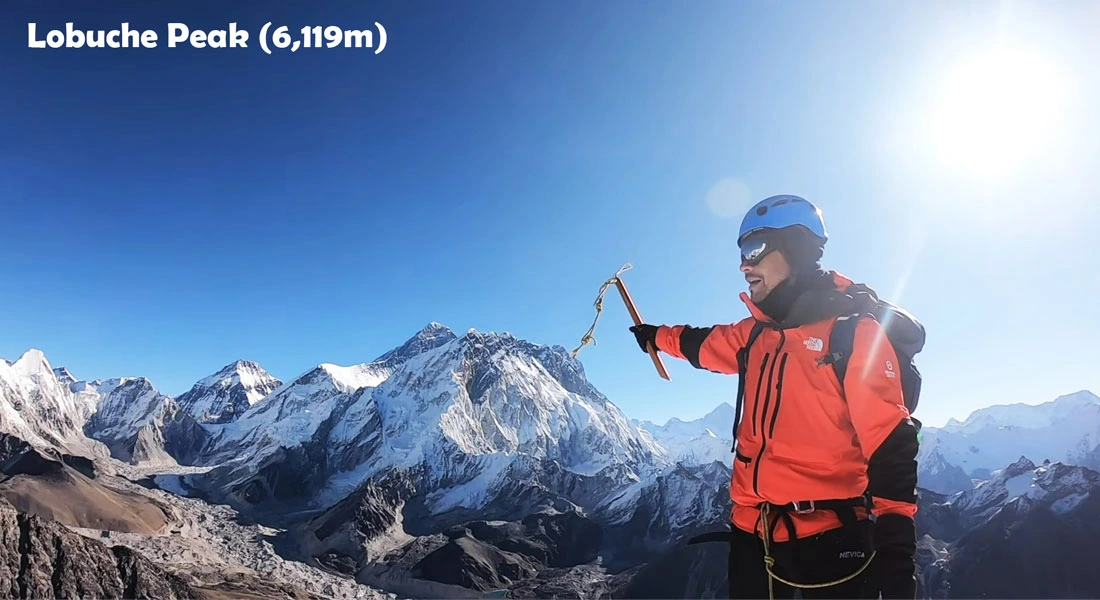


Lobuche Peak Climbing 20 days with the iconic Everest Base Camp Trek is an exhilarating and semi-technical trekking peak in Nepal. It involves steep rock scrambling and fixed-rope glacier climbing. The Autumn(Sept to November) and Spring(March to May) are the best season for Lobuche Peak Climb. The summit of Lobuche Peak offers stunning views of Everest, Amadablam, Pumori, Lhotse and Numpse mountains.
Lobuche Peak is an exciting trekking and climbing expedition in the Everest region of Nepal. The Lobuche East Peak is a challenging yet accessible climbing Peak for climbers with prior mountaineering experience. A standard Lobuche Peak climbing itinerary usually takes around 18-20 days, including acclimatization and trekking to Everest Base Camp.
Lobuche Peak has two distinct summits: Lobuche East (6,119 meters) and Lobuche West (6,145 meters). Lobuche East is the more commonly climbed peak, as it is classified as a trekking peak by the Nepal Mountaineering Association (NMA), making it accessible to climbers with basic mountaineering skills. Lobuche West, on the other hand, is more technical and requires advanced climbing experience.
The journey begins in Lukla, which is accessed via a flight from Kathmandu. The trek goes through the famous Sherpa villages with acclimatization. A small village in the Khumbu Valley where trekkers often rest and acclimatize before heading to higher elevations. From Dingboche, trekkers continue toward Lobuche Base Camp, the staging area for the summit attempt. A higher camp is set up before the final ascent to the summit of Lobuche Peak. The final push to the summit involves some steep climbing with the use of ice axes, crampons, and ropes.
The climb is considered moderately difficult, and while it doesn’t reach the technical level of peaks like Island Peak or Ama Dablam, it still requires solid mountaineering skills. You will need to experience with ice axes and crampons, knowledge of roped climbing techniques, ability to manage altitude and basic mountaineering techniques, and the summit push typically involves steep rock and ice sections, with some sections requiring fixed ropes.
If you are considering climbing Lobuche Peak, it is essential to prepare physically and mentally for the challenge. You should have prior mountaineering experience, including knowledge of using technical climbing equipment, and should train in high-altitude trekking and climbing techniques before attempting the peak.
Mountaineering in Nepal can be dangerous due to the unpredictable weather, steep terrain, and high-altitude challenges. It’s important to be aware of potential risks like avalanches and crevasses. Always use proper climbing gear (crampons, ice axes, ropes, harnesses), and follow the advice of your guides and Sherpas.
From the summit of Lobuche Peak, you get stunning panoramic views of the surrounding Himalayas, including Everest, Lhotse, Nuptse, and Makalu. The view from the top is one of the key highlights of the climb.
You’ll need a Trekking Information Management System (TIMS) card and an entry permit to the Sagarmatha National Park, which covers the Everest region. In addition to the trekking permits, you need a climbing permit for Lobuche Peak, which can be arranged through a registered trekking agency in Nepal-Mission Eco Trek in Kathmandu.
Because Lobuche Peak sits at a high altitude, proper acclimatization is critical to avoid altitude sickness. A standard itinerary includes several rest days at key points along the trek, such as Namche Bazaar and Dingboche, to help climbers adjust to the thinning air.
Hiring an experienced guide and Sherpas is highly recommended for safety reasons. They are familiar with the route and can offer guidance on mountaineering techniques, as well as ensure safety during the climb.
The cost of a Lobuche Peak climbing expedition varies depending on the company, route, and duration of the trip, but it typically ranges from $3,000 to $5,000. This generally includes permits, guides, Sherpas, transportation, and food.
Climbing Lobuche Peak is a rewarding experience for seasoned trekkers and mountaineers seeking a non-technical but challenging climb in the Everest region. The trek to the base of Lobuche East Peak offers breathtaking scenery, and the climb itself rewards you with a spectacular view of some of the highest mountains in the world. Proper preparation, a reliable guide, and respect for the mountain environment are key to a successful climb.
Lobuche Peak Climbing is the third popular trekking peaks in Nepal. Lobuche Peak represents Lobuche East peak, an advance mountaineering skills and a high level cardiovascular fitness is required for Lobuche Peak Climbing. Lobuche Peak Climbing is possible to combine with Gokyo Lake and Everest Base Camp Trek. Lobuche East Peak Climb requires greater commitment and more climbing expertise. Climbing Lobuche Peak summit offers a very good views of Everest, Lhotse, Nuptse, Ama Dablam and Pumori.
Lobuche Peak Climbing 20 Days Itinerary
Day 01:Arrive in Kathmandu
Day 02:Kathmandu sightseeing and preparing for trek
Day 03:Fly to Lukla (2800m) and trek to Phakding (2610m)
Day 04:Phakding to Namche Bazaar (3440m)
Day 05:Rest at Namche Bazaar
Day 06:Trek to Tengboche (3800m)
Day 07:Tengboche to Dingboche (4,360 m)
Day 08:Dingboche Acclimatization Day
Day 09:Dingboche to Lobuche (4940 m)
Day 10:Lobuche to Everest Base Camp (5364m) and back to Gorakshep (5170 m)
Day 11:Gorakshep to Kala Patthar (5545m) and back to Lobuche (4940m)
Day 12:Lobuche to Lobuche Base Camp (4,950m)
Day 13:Lobuche Base Camp to High Camp (5,400m)
Day 14:Lobuche High Camp to Summit (6119m) and back to High Camp
Day 15:Lobuche High Camp to Pangboche (3930m)
Day 16:Pangboche to Namche Bazaar
Day 17:Namche Bazaar to Lukla
Day 18:Fly to Kathmandu
Day 19:In Kathmandu
Day 20:Final Departure