Accommodations on EBC Nepal Trek
Accommodations on the Everest Base Camp Trek primarily consist of local, family-run teahouses that range from comfortable lodges in lower elevations to very basic stone huts at higher altitudes.
At Lower Region (Lukla, Phakding, Namche Bazaar): You will find comfortable guesthouses and hotels featuring twin-share rooms, wooden paneling, options for attached bathrooms, and warm dining areas. Prices generally range from $15 to $30 per night.
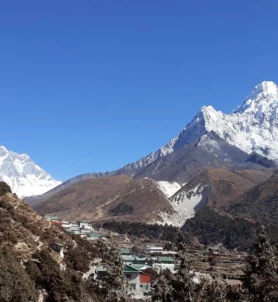
At Mid Region (Tengboche, Dingboche, Pheriche): Rooms become simpler with unheated twin beds (mattress, pillow, and blanket provided, though a sleeping bag is strongly recommended). Bathrooms are mostly shared with bucket-flush or long-drop toilets.
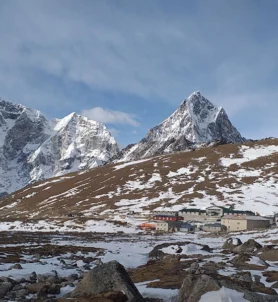
At High Altitude (Lobuche, Gorakshep): Facilities at these final stops are very rustic and minimal, featuring plywood-partitioned rooms with twin or multi-bed setups, freezing temperatures at night, and basic shared outdoor or indoor common toilets.
At Everest Base Camp: There are no permanent lodges for overnight accommodations at the actual Everest Base Camp. The trekkers sleep in Gorakshep and hike to the base camp during the day.
Amenities and Extra Costs
Showers: Hot showers via gas and solar are available for a fee ($3 to $6), but become rare and discouraged due to freezing water pipes as you climb past Namche Bazaar.
Electricity and Charging: Charging your phone or power bank in your room or communal areas costs an extra $2 to $5 per device. Bringing a high-capacity power bank is advised.
Wi-Fi: Local networks like Everest Link offer scratch-card internet access through the valleys, though signals can drop out completely at higher elevations due to weather and terrain.
Meals: Teahouses require you to purchase your meals (breakfast, lunch, and dinner) on-site, with prices for food and hot tea scaling higher the further you ascend.
Meals on the Everest Base Camp Nepal Trek
Meals on the Everest Base Camp trek consist of hearty, carb-rich Nepali staples and simple Western dishes freshly prepared at teahouses along the trail.
Porridge: Warm oatmeal cooked with water or milk, often mixed with peanut butter or honey for slow-burning energy.
Eggs: Prepared to order as boiled, fried, scrambled, or as an omelet.
Tibetan Bread: Thick, round dough deep-fried until crispy, commonly eaten with honey or jam.
Pancakes and Toast: Simple pan-fried batter cakes or sliced bread served with peanut butter, butter, or jam.
Dal Bhat: The ultimate trekking meal of steamed rice, lentil soup, vegetable curry, and pickles, featuring unlimited refills at most teahouses.
Sherpa Stew (Syakpa): A thick, local Himalayan stew made with potatoes, vegetables, herbs, and sometimes noodles or meat.
Noodle Soups (Thukpa / Thenthuk): Warming broths loaded with vegetables and handmade or instant noodles, popular on cold evenings.
Garlic Soup: A local favorite and natural remedy frequently recommended by guides to support altitude acclimatization.
Western Comforts: Fried rice, chowmein, vegetable momos (dumplings), and basic pasta or pizza available at lower and mid-altitude stops.
Hot Teas: Ginger lemon honey tea, masala tea, and traditional yak butter tea for high-altitude warmth and energy.
Coffee: Instant coffee is widely available, alongside black or milk tea.
Water Safety: Aim for 3 to 4 liters of fluids daily; stick to boiled or properly purified water rather than un-refrigerated options or alcohol, which worsens dehydration at high altitudes.
Seasons, Weather and Temperature on the Everest Base Camp Nepal Trek
The best times for the Everest Base Camp Trek in Nepal are spring (March to May) and autumn (September to November), offering the most stable weather and clearest mountain views. Although Everest Base Camp Trek Nepal is possible all around the year.
Spring Season (March–May)
Weather: Mostly clear and sunny mornings with occasional afternoon clouds. The lower trails feature blooming rhododendrons.
Temperature at Base Camp (5,364m): Daytime highs range from 0°C to 10°C (32°F to 50°F); nighttime lows drop to -10°C to -15°C (14°F to 5°F). Lower elevations like Namche Bazaar are much milder.
Highlights: Peak climbing season brings high energy and bustling camps.
Autumn Season (September–November)
Weather: Crisp, stable post-monsoon air with maximum visibility and bright blue skies, especially from mid-October onward.
Temperature at Base Camp: Daytime highs average 5°C to 15°C (41°F to 59°F) early on, dropping to -5°C to -10°C (23°F to 14°F) by late November. Nighttime lows fall to -10°C to -15°C (14°F to 5°F).
Highlights: Considered the most reliable trekking season, coinciding with major festivals like Dashain and Tihar.
Monsoon / Summer Season (June–August)
Weather: Heavy rainfall (over 200mm monthly), muddy and slippery trails, leeches, and frequent cloud cover obscuring mountain views.
Temperature at Base Camp: Milder days around 5°C to 15°C (41°F to 59°F), with nights hovering just around or slightly below freezing.
Highlights: Very quiet trails, but heavily discouraged due to poor visibility and flight delays at Lukla.
Winter Season (December–February)
Weather: Frigid, dry, and exceptionally clear skies on days when it is not snowing.
Temperature at Base Camp: Daytime highs range from -15°C to 0°C (5°F to 32°F); extreme nighttime lows plunge below -20°C to -25°C (-4°F to -13°F).
Highlights: Absolute solitude on the trails, though high-altitude teahouses may offer reduced services or close.
Recommended Gears and Equipments for Everest Base Camp Nepal Trek
You need a layered clothing, sturdy waterproof boots, and a 4-season sleeping bag for the Everest Base Camp Nepal Trek.
Hiking Boots: Waterproof, well-broken-in high-ankle boots with good ankle support.
Lodge Shoes: Lightweight trainers, sandals, or slippers to wear inside tea houses.
Socks: 4 to 6 pairs of moisture-wicking merino wool socks.
Base Layers: Thermal tops and bottoms made of synthetic or merino wool (avoid cotton).
Mid Layers: Fleece jackets and a lightweight down vest or sweater for insulation.
Outer Shell: Windproof and waterproof Gore-Tex jacket and trousers.
Down Jacket: A heavy-duty, high-fill down jacket for freezing mornings and evenings at higher altitudes (often available to rent in Kathmandu).
Trekking Pants: Quick-dry, comfortable hiking trousers.
Accessories: Warm woolen beanie, sun hat or baseball cap, neck buff, and windproof/waterproof gloves (liner gloves plus thick outer gloves).
Daypack (30L–40L): For your daily essentials like water, layers, sun cream, and a headlamp.
Duffel Bag (80L–90L): Carried by your porter (keep total weight around 10–15 kg).
Sleeping Bag: 4-season sleeping bag rated down to -10°C to -15°C (can be rented in Kathmandu).
Trekking Poles: Adjustable, collapsible poles to save your knees on steep descents.
Headlamp: With extra batteries for early morning starts or dark tea house hallways.
Water Bottles/Purification: Two reusable bottles (like Nalgene) plus water purification tablets or a Steripen.
First Aid Kit: Including blister plasters, painkillers, and altitude sickness medication (Diamox).
Sun Protection: High-factor sunscreen, lip balm with SPF, and category 3 or 4 UV-protected sunglasses.
Power Bank: To keep phones and cameras charged in higher villages where electricity costs extra.