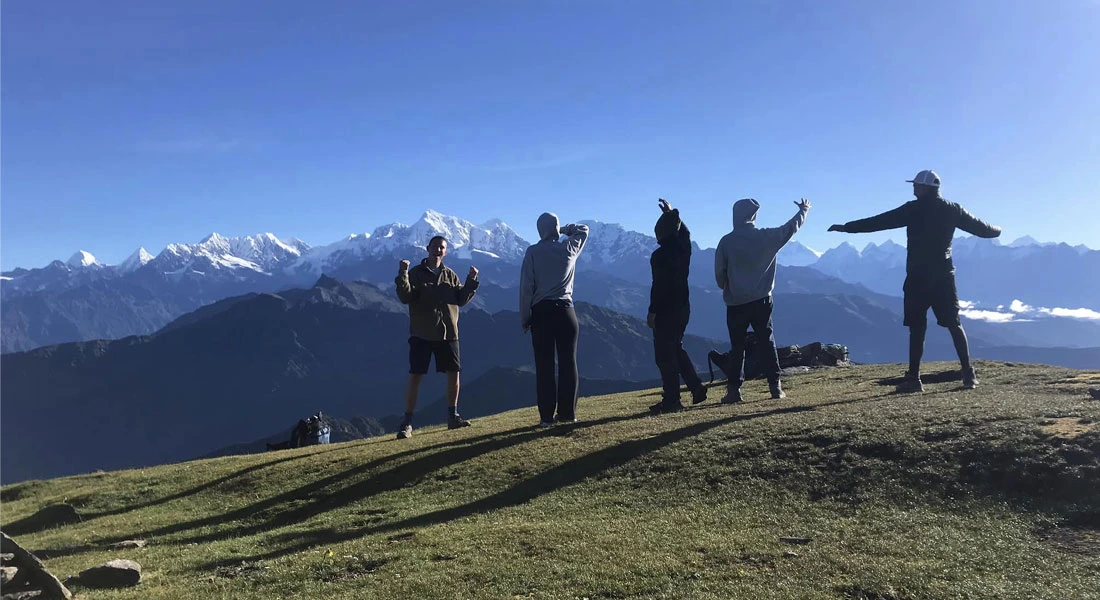


The best guided pikey peak trek 7 days itinerary is famous for the panoramic sunrise views of Mt. Everest. The 7-day Pikey Peak Trek begins from Kathmandu by drive to Dhap, followed by the trek to Pikey Peak and back to Kathmandu via Salleri. Experience sherpa people, Buddhist culture and mountain views from Everest to Kanchenjunga including Makalu from 7 days Pikey Peak Trek.
A soul-stirring adventures in Nepal, Pikey Peak Trek offers breathtaking views of the Himalayas, including Everest, Makalu and Kanchenjunga. Pikey Peak Trek is a captivating journey in the serene landscapes of lower Everest region in Nepal.
The 7 days pikey peak trek starts from Dhap after a winding drive from Kathmandu, followed by the trek through lush forests of rhododendrons, magnolias, and pines. The sunrise from Pikey Peak is particularly magical.
Throughout the 7 day trek to Pikey Peak, you will interact with local Sherpa communities, aware with their customs, traditions, and the way of their life. The Pikey Peak Trek is a less travel route compared to others treks in Everest. In short, Pikey Peak Trek is an ideal choice for the trekkers seeking an authentic Himalayan experience without crowds.
The pikey peak trek is not suitable for pregnant women, people with back problems, heart problems, afraid of heights and the high blood pressure. The Pikey Peak Trek is a new trekking trail. It is the best trek to see Mt Everest, the tallest peak in the world without Everest base camp trek.
The 7 days pikey peak trek caters a wide variety of culture, nature and the Himalayas. For a live culture of Sherpas and Rais, Pikey Peak is the best trekking if you have a week time in Nepal. Also the trek is perfect for beginners like families with children to seniors and adults.
Pikey Peak Trek 7 days package price, it includes sharing jeep transportation, guide, permits, accommodations and meals-breakfast, lunch and dinner.
Guided Pikey Peak Trek 7 days Itinerary
Day 1:Kathmandu to Dhap Bazaar(2850m,7 hours, 250km)
Day 2:Dhap Bazaar to Jhapre(2815m, 4 hours, 13 km)
Day 3:Jhapre to Pikey Base Camp(3640 m, 5 hours, 15 km)
Day 4:Pikey Base Camp to Junbesi(2680 m, 6 hours via Pikey Peak 4065 m, 22 km)
Day 5:Exploration trip to Thupten Chholing Gompa(2920m, 4 hours, 9 km)
Day 6:Junbesi to Phaplu(2380m, 4 hours, 11km)
Day 7:Phaplu to Kathmandu
Pikey Peak trek is the shortest treks in Nepal, located at the lap of the mighty Himalayas, Everest. Pikey Peak is an elevation of 4065m provides stunning views of mountains, traditional villages and lush rhododendron forests. Pikey means the “Deity of the sky”. Therefore, Pikey Peak holds a sacred significance on Sherpa community, and its scenic beauty.
The Pikey Peak trek is famous for the greatest view of Mount Everest. This is a newly opened, a lesser-known, short trekking route in Everest. Experience the cultural richness and breathtaking views of Himalayas from Pikey Peak.
About Pikey Peak Trek
Pikey Peak Trek is located in the lower Everest region.
Trek Facts
Beginning/Ending Point: Kathmandu (1400 m)
Trek Beginning Point: Dhap Village (2932 m)
Trek Ending Point: Junbesi Village (2700 m)
Drive Distance: 497 km/ 308.8 miles (Kathmandu to Dhap Village and Phaplu to Kathmandu)
Trek Distance: 54 km (33.55 miles)
Total Distance: 551 km (342.4 miles, including drive)
Maximum Elevation: 4065 meters at Pikey Peak
Best Season: Autumn (September-November) and Spring (March, April, May)
Accommodation: Teahouse/ Guest house/ Hotel
Transportation: Private Jeep/ Public bus/ Flight
Trek Category: Easy
Permits: Sagarmatha National Park Area Entry Permit, Gaurishankar Conservation Area Permit, Local Area Permit
Highlights of Pikey Peak Trek
Easiest trek in Nepal, can trek in a short time.
The flexibility of the trek from Jiri, Phaplu, or from Kathmandu.
Great view of mountains, including Mount Everest.
Trek through beautiful forests and a friendly Sherpa villages.
A less crowded trekking route with great adventure.
The breathtaking sunrise and sunset view over the snow-capped mountains.
An alternative trek to Dudh kunda.
Experience an authentic Nepali hospitality in a local tea house.
Visit the historical Thupten Choling Monastery.
Himalayas/Mountains View from Pikey Peak Trek
Mount Everest: 8,848.86 meters (29,031.7 feet)
Kanchenjunga: 8,586 meters (28,169 feet)
Lhotse: 8,516 meters (27,939 feet)
Makalu: 8,481 meters (27,825 feet)
Cho Oyu: 8,188 meters (26,864 feet)
Manaslu: 8,167 meters (26,795 feet)
Dhaulagiri: 8,167 meters (26,795 feet)
Annapurna I: 8,091 meters (26,545 feet)
Shishapangma: 8,013 meters (26,289 feet)
A Typical Day on Pikey Peak Trek
Wake up early in the morning, enjoy the mountain views with breakfast at around 7-8 am. Then trek through forests and villages. After walking for a few hours, we stop for lunch at a teahouse where you can enjoy the majestic view of the world’s highest peaks.
Perhaps you can have traditional Dal, Bhat and curry. After that, the trek again resumes, and you will walk for a couple of hours to your day destination for the night in the teahouses at around 3-5 pm. The warmth of burning wood and a delicious dinner prepared from homegrown fresh ingredients. Muscles tired but spirits high, another Pikey Peak Day comes to an end.
Important Notes for Pikey Peak Trek
Be aware of early signs of altitude sickness, ascend gradually and acclimatize properly, stay hydrated, and listen to the instructions from the guide.
Only carry essential clothes and essentials; a porter can carry up to 26 kg, but lesser weight is better for a porter.
Respect local culture, tradition, religion, and nature; be careful of what kind of dress you wear.
There are no ATM services on the route, so carry enough Nepali cash.
Remember to carry the required documents and permits.
The trek is not just about reaching the summit but also about experiencing it throughout the journey.
Booking Pikey Peak Trek with us
We are the best trekking companies. Our team is comprised of highly skilled and experienced guides and porters. Our primary motive is to provide the most secure, comfortable, and memorable trekking journey at the most affordable price. We not only provide help before and during the trek but also after the journey. We build not the customer but a family.
Weather and Temperatures on Pikey Peak Trek
The Pikey Peak weather changes significantly depending on the season. Spring (March-May) has a temperate climate with temperatures ranging from 10°C to 20°C during the daytime, offering clear skies and blooming rhododendron views.
Likewise, Autumn (September-November) has a pleasing and calming environment with a festive vibe. This season offers cool and crisp air, making it one of the ideal seasons for trekking.
In contrast, Pikey Peak in winter can be really cold, with temperatures dropping to below -5°C at higher altitudes at night. Trekking Pikey Peak in winter is comparatively challenging due to snow covering the trekking trail.
Similarly, Pikey Peak trek in Monsoon (June-August) season, receives heavy rain, making the trail muddy and slippery, increasing the challenges in the trekking. Additionally, the temperature during this season can vary between 15°C and 20°C.
Difficulty on Pikey Peak Trek
The Pikey Peak trek is a comparatively easy trekking route than Manaslu Tsum Valley Trek, Annapurna Base Camp Trek, and Everest Three Passes Trek. The trek route traverses via the lower region of Everest.
Although it is a short and easy trek, accidents can happen anytime, anywhere. You need to be prepared in case of any accidents or emergencies on the trek. Altitude sickness, loss of breath, appetite, sleep, hypothermia, sore throat are some of the challenges that you might encounter during the trek. This Pikey Peak Trek is a perfect trekking destination for novice trekkers and for those with ordinary fitness levels.
Best Season for Pikey Peak Trek in Nepal
The Pikey Peak weather showcases its beauty around the year, but spring (March-May) and autumn (September-November) are the best seasons for Pikey Peak Trek in Everest.
Pikey Peak Trek in Spring
During the spring, the lower Everest region is filled with vibrant rhododendron colours. Pleasant Pikey Peak weather conditions, temperature, and clear skies with magnificent views of the Himalayas, sunrise, and sunset proves to be ideal season for trekking.
Pikey Peak Trek in Autumn
The Pikey Peak in autumn showcases itself as calming, festive environment. The days are moderately calm, and the skies are clear, offering great scenery and cultural immersion. You can even enjoy the festivals with the local communities on the trek.
Pikey Peak Trek in Winter
For those seeking more adventure, winter could be a favorite season for trekking for them. During the winter, Pikey Peak offers a contrasting landscape. The days are normally clear and sunny. But at the altitudes of Pikey Peak, it could be significantly colder with unpredictable weather conditions.
Pikey Peak Trek in Summer/Monsoon
Summer/monsoon is typically challenging due to rain. Walking on the slippery and muddy road because of rain makes navigating difficult. Also, the insect bites and leeches in lower regions are major challenges when trekking during the summer season. In contrast, during clear weather, mountain views above the clouds or far beyond are awe-inspiring in Pikey Peak Nepal.
Avoid road route to Pikey Peak
Basically, once you start trekking from Dhap Village until Phaplu while returning, the whole route follows the traditional trek trail. Almost all the trek routes in the Himalayas follow the trekking trail. To promote trekking culture, you will not find motorable ways, especially in the Everest region.
However, up to Dhap Village from Kathmandu and Phaplu to Kathmandu, you will need to drive. For a better and more isolated trekking experience, you can hire a local guide who knows the lesser-popular trek routes.
Experience/Training for Pikey Peak Trek
You do not require any special training for the Pikey Peak Trekking. Prior experience in hiking or trekking could be a plus point, though. To ensure smooth and enjoyable trekking memories, regular exercise is highly recommended for boosting cardiovascular endurance.
Engaging in activities like hiking, biking, and swimming can significantly improve your endurance. In addition, you need to be mentally as well as physically sound to make the most out of the trek.
When it comes to trekking or travelling, being physically and mentally fit is recommended. To need to walk for 5-6 days (as the Pikey Peak trek itinerary is of 6 days) for 6 hours on a moderate sloppy trail every day. For that, being physically fit will surely make your trip exciting.
Also, if you have any medical issues or allergies, it is highly advised that you consult with your doctor beforehand. Additionally, mention them to your guide before starting the trek so that he/she can plan accordingly.
Altitude Sickness on Pikey Peak Trek
Pikey Peak altitude reaches a maximum elevation of 4,065 meters at Pikey Peak Base Camp. Trekkers can face altitude sickness above the elevation of 2,500 meters. So, it is better to be well aware of one’s health condition and early symptoms of altitude sickness to avoid any severe conditions.
Therefore, it is advised to ascend gradually, get acclimatized to the Pikey Peak height level and stay hydrated. If you feel any difficulty, you should inform your guide to avoid any hazardous incidents. Also, be prepared for any emergency evacuations.
Emergency and Evacuation
Emergency and evacuation while Pikey Peak trekking is not essentially required as the trekking route is considered a relatively safe route. However, it is better to be safe than sorry during any emergencies. With the experienced guides and their proper evacuation strategies, you are basically in safe hands with Himalayan masters.
Travel Insurance for Pikey Peak Trek
Travelling or trekking in the mountains can be unpredictable. Sometimes, some unforeseeable accidents might occur that could cause a huge loss, physically and financially. So, it is better to be well prepared beforehand.
Travel insurance covers a few emergencies like helicopter evacuation costs (might cost around USD 1000, more or less) or medical care, ensuring one’s safety. Choose your travel insurance provider carefully.
Permits for Pikey Peak Trek Nepal
You will require three permits for the Pikey Peak Trek. These permits are Sagarmatha National Park Area entry permit, Gaurishankar Conservation Area Permit and a Local Area Permit. The Sagarmatha National Park Area Permit and Gaurishankar Conservation Area permit will cost you $30 per person, and the Local Area permit will cost you $17 per person.
Sagarmatha National Park entry permit allows the trekkers access to the protected area where Pikey Peak resides. Additionally, a Gaurishankar Conservation Area Permit (GCAP) is necessary as the trek’s route passes through the Gaurishankar Conservation Area. Similarly, a Local Area Permit is also required, which can be obtained locally to complete the necessary authorizations for your Pikey Peak adventure.
Cost for Pikey Peak Trek
The trek cost might fluctuate depending on the time of the year you are trekking and your budget. But with Himalayan Masters, you will be covered at around $600 per person for the Pikey Peak Trek.
The trek cost covers all your food and accommodation during the Pikey trek, travel costs including Pikey Peak permit, guide, and porter costs required for the trek. The overall Pikey Peak cost breakdown is given below for your reference:
Food on Pikey Peak Trek
The food, including breakfast, lunch, and dinner, will cost around 15-20 dollars per day.
Accommodation on Pikey Peak Trek
Accommodation costs around $5-$7 per day as per the altitude.
Guide and porter cost for Pikey Peak
Each day, the cost for a guide and porter will cost you around $25-$30 and $20-$25, respectively.
Transportation cost for Pikey Peak
The transportation will cost you around $50-80 dollars in public vehicles. But we will organize a private vehicle for you on your request.
Pikey Peak Trek Permits Cost
As you will need three permits for the Pikey Peak Trek, the cost will be $30 for Sagarmatha National Park Entry Permit and Gaurishankar Conservation Area Permit, and for the local Area permit will cost you $17, i.e. NPR 2000 per person.
Extra Cost Occurs on Pikey Peak Trek
Although all the expenses are included in the trip package, you will need to carry extra cash for miscellaneous.
You will need to pay an additional charge for snacks and extra cold, hot, and alcoholic drinks. Also, you might be charged additional charges for hot water and shower, Wi-Fi, and electronic charging. Additionally, if you take a private jeep, except included in the trip package, you will need to pay extra for it.
Further, if the trekkers have extra luggage or want to share their load so that he/she can trek more comfortably, they can hire an additional porter. Each porter carries 20-25 kg of weight. Altogether, you can expect to spend around $15-$20 per day.
Private Transportation
You can also opt for a shared private jeep service for an additional charge on top of the standard trek cost. This private jeep will pick you up directly from your Kathmandu hotel at 7:00 am and transport you comfortably to Dhap and from Phaplu to Kathmandu. Shared jeeps typically accommodate up to 9 passengers.
Kathmandu to Dhap: USD 250 (one way)
Phaplu to Kathmandu: USD 250 (one way)
Advantages of Private Vehicle
It is cleaner and more comfortable than public transportation.
It takes a shorter time to reach the destination.
You can stop at cleaner restaurants for meals between the drive.
Alternative sightseeing can be done on the way. If you are prone to any health issues during the trip, it is better to take a private vehicle.
Disadvantages of Private Vehicle
Increased Cost-Taking a private vehicle will likely increase your overall trek budget due to the additional expense compared to public transport.
Limited Social Interaction-Public transport offers a chance to connect with fellow trekkers and locals, enriching your travel experience. A private vehicle limits these interactions, potentially making the journey feel more isolated.
Road condition-Sometimes, it is better to take a public vehicle considering the road condition, as private drivers might not be quite familiar with the road condition. If you are a solo traveler, it is better to take a public vehicle.
Packing List for Pikey Peak Trek
The kit and equipment required for the Pikey Peak Trek are:
Sturdy hiking boots with ankle support
Warm and breathable clothing
Trekking Poles
Down jacket for minus degrees Celsius
A warm fleece jacket
Rain gear
Sleeping Bag
Trekking Backpack
Small bag as a daypack
A first-aid kit
Official documents and permits
There is no hard and fast rule for packing lists for Pikey Peak trekking. However, carrying proper clothing and trekking gear is highly suggested for a safe and comfortable trekking experience.
Accommodation on the Pikey Peak trek
The Pikey Peak trek route is a comparably lesser-known route than the Everest Base Camp trek and Manaslu Circuit Trek or any other trek in the lower Everest region trek. Since the trekking route is not so popular, the only available accommodations are either teahouses or a few small lodges.
These aren’t any basic campsites or luxury hotels; they provide basic two-bed bedrooms with blankets and pillows. Few of them might have hot showers and even attached bathrooms. Hot water, Wi-Fi, electronics charging, and other additional expenses like drinks and alcohol come with additional charges.
It can be an amazing opportunity to connect with residents and their culture and experience firsthand the warmth and hospitality of the Nepali people.
Food on the Pikey Peak Trek
Due to the remoteness of the trek’s route, processed and pre-packed food is not readily available. This gives the trekkers a chance to savor the traditional taste of Nepali food.
Teahouses here offer both vegetarian and non-vegetarian food’s menu featuring fresh, locally-grown vegetables-all organic and free of pesticides.
Dal Bhat, a lentil soup with rice and curries, provides delicious and nutritious fuel for the trek, from which a famous saying came: “Dal Bhat power 24 hour”.
Breakfast
Oatmeal, Tibetan bread, Chapati and paratha, Potato items, Muesli, Pancake, Porridge, Chocolate, Egg items.
Lunch
Dal Bhat and curry, Mo: Mo, chowmin, noodle, veg and non-veg soup, pasta and macaroni, pizza, sandwich, spaghetti.
Dinner
Dal Bhat, veg and non-veg curry, soup, chocolate rolls, rice pudding, Thukpa.
Packed Lunch
Sandwich, boiled or fried egg, fresh or dried fruits, energy bars, chocolate, nuts, cookies, electrolytes.
Electricity and Charging Electronics
Electricity and battery recharge during the Pikey Peak trek map can be scarce. Teahouses and lodges along the trek might offer limited or solar-powered electricity and charging options. So, you are advised to carry a power bank.
Drinking Water in the Pikey Peak Trek
You need to stay hydrated wherever and whenever you are trekking. Carrying a reusable water bottle and purifying the water before drinking with a water purifying tablet is an essential measure during Khopra Danda trekking.
Using plastic bottles is banned in the mountains, so you need to carry a refillable bottle. You can refill the bottle in a hotel for a dollar. However, the best option is to refill the bottle with the natural tap and use a Steripen (UV sterilizer) for safe drinking water. We will provide you with a complimentary water purifying tablet for the trek.
Internet/ Wi-Fi on Pikey Peak Trek
Internet connectivity on the Pikey Peak trek route can be hard to find. Teahouses and lodges may offer weak or nonexistent Wi-Fi service. Even cell service may be limited or have no coverage in some places.
Money Changer and ATM on the trek
Pikey Peak trek route is a relatively new trek route located in the lower Everest trek region. It is still developing its infrastructure, and no ATMs are available along the way. The only ATM is located in Phaplu, on the way back to Kathmandu. Or at Kathmandu before starting the trek.
Moreover, every transaction through ATM costs an additional 3.5%, which is not a wise decision. So, it is essential to carry enough Nepali Rupees (NPR) for your trek. You can exchange your money in one of the authorized money exchange booths in Kathmandu.
Communication on the Pikey Peak Trek
Mobile network coverage is available in some of the areas of the Pikey Peak trek map. However, it cannot be relied upon in remote sections. For mobile network coverage, you can use a local SIM card (like NTC and NCELL).
Further, teahouses en route Pikey Peak trek offers Wi-Fi facilities, though it might be slow. If you want to be connected at all times, you can use a data package from the local SIM card.
Guide Vs Solo Trek
Though solo trekking in Pikey Peak trek for 6 days is possible, it is better to hire a guide for information regarding the trek route and local culture and history.
Guides can help you navigate and communicate with the locals. Also, they know the people and teahouses on the route, so you need not worry about any of those things.
In contrast, solo trekking offers a sense of solitude and more flexibility. Moreover, if you are trekking solo, you need to be fully prepared and have information regarding the route and accommodation. Maybe you would like to learn a few Nepali phrases for your convenience.
Porters Vs No Porters
Hiring a porter significantly reduces the burden of carrying your heavy luggage, making the trek easier, comfortable, enjoyable, and achievable. Without a porter, you will need to carry all your luggage by yourself, which reduces your trekking expenditure. However, it increases the physical demand, especially at higher altitudes, and exhaustion.
Tipping on Pikey Peak Trek
While it is not compulsory to tip your guide and porter. But, out of appreciation, it is expected that you tip them for their dedication and hard work.
Normally, the tip for the guide and porter is 10% of your trip, but you can tip them as you please. More is always appreciated. Remember, the tip you give goes directly to them, so you are not just helping them by tipping but also their family and their economy.
Alternative trek route to Pikey Peak Nepal
If time is not the problem, we suggest you extend your trek by 3-4 days to witness the beauty and religious importance of Dudh kunda.
Dudh kunda is a jewel of the Solukhumbu region, a small, sacred glacial lake located north of Ringmo in the lap of Mount Numbur. Depending on the Nepali calendar (typically June or July), during the festival month, hundreds of devotees visit Dudh kunda to see its beauty and religious significance.
Just imagine the serene reflection of the majestic Himalayas on the lake, infused with spiritual energy during the festival. It would be an incredibly enriching experience.
The route to Dudh kunda starts from Ringmo. But it is recommended to ask about the latest route and accommodation in the village of Beni with the local teahouse keeper. You will be spending the night before and after trekking to Dudh kunda and the second night in Beni.
On the 6th day of the trek, you can also take the alternative trek to Dudh kunda from Junbesi. Since the route is difficult, mainly during the winter, it is important to take a guide on this route.
Another crucial reason for taking a guide is that they will instruct you to be well prepared in case a hut in Beni closes. In such a scenario, being self-sufficient for up to three extra days with a portable stove and food becomes essential.
The most significant thing to consider about the Dudh kunda trek is the view of Everest on the trail from Ringmo to Dudh Khola Lake. The most significant thing to consider about the Dudh kunda trek is the view of Everest on the trail from Rigmo to Dudh Khola Lake.
Booking Process of Pikey Peak Trek
Book Pikey Peak trek with us by following a few easy steps below:
Fill out the online form from our trip page or contact us via WhatsApp, email, phone call or SMS.
Then, we will contact you through email with further information. If you have any special requests regarding the trip, you can mention them. The trip can then be customized as per your needs.
Once you pay $200, your booking will be confirmed.
Finally, after the full payment for the trip, you are all set to go on a trek. You can ask for a trip briefing and itinerary even before booking the trip.
Documents for Pikey Peak Trek Nepal
Emergency contact details
A copy of your passport
A copy of your flight ticket
Two passport-sized photographs
A copy of your travel insurance
Last-minute Booking for Pikey Peak Trek
Pikey Peak Trek Nepal can be booked at the last minute before the trek by directly contacting us on WhatsApp, email, phone calls, or any other procedure. However, you need to book the trip a day before the trek. Additionally, you will need to make full payment for the trip.
Cancellation and Postpone Policy
Once you make a booking for the trip, the amount you paid is not refundable. However, you can postpone Pikey Peak Trekking in Nepal or any other trek from our company as many times as you want to for your whole life.