Panch Pokhari Trek Accommodation
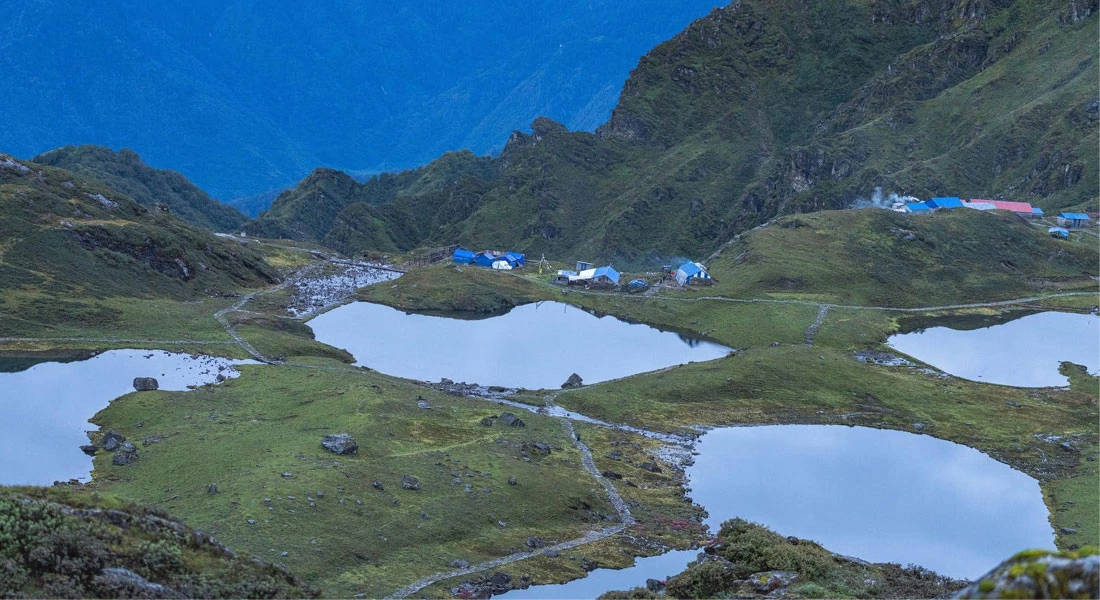
You will get 3-star hotels in Kathmandu. During the trek, we will be staying at homestay/tented camp. During the trek, you will be staying in a tent camp as there is no tea houses and home stay developed on Panch Pokhari(five lakes) Trek.
Meals during the trek
In Kathmandu hotel, breakfast includes whereas all meals (breakfast, lunch, and dinner) will be provided during the trek. A staple food of these regions is potatoes, oats, buckwheat, Sherpa stew, and Tibetan bread. Sherpa’s’ started farming potatoes when the first seeds were introduced to the region in the early 90 s. There is a limited choice of food at higher elevations and except many potato dishes. Potatoes are high in carbohydrates – an excellent source of energy needed at high altitudes.
Trip Transportation
We use a private vehicle for sightseeing and for the airport to hotel pick and drop off. We use public transportation or local buses during the trek.
Panch Pokhari Trek Difficulty
The trek is challenging as you need to walk 6-7 hours a day. The past experience of hiking or trekking is helpful if you have done any kind of trekking activities then it is always a plus point. You will met people from all walks of life, shapes, and sizes who have completed the trek. The only difficult part is when altitude sickness strikes and the effect that it can have on your body. Before leaving for Nepal Trek it is good if you prepare yourself physically by increasing your stamina and oxygen intake.
Panch Pokhari Trek Seasons
Spring and Autumn are the best seasons for a good trek experience. The trail is little slippery and wet in summer due to monsoon rain, and winters are cold. However, we conduct Panch Pokhari Trek throughout the year. Being near Kathmandu, this trek is very accessible.
Winter Trek-January to February
January and February are the coldest months, especially from early January to early February. Though the days may be warm and admirable with clear skies, the nights are so cold.
Spring Trek-March to May
This is also best season to trek in the Ruby Valley, as you will get stunning views of the central Himalayan ranges. Temperatures start rising from the mid of March, and with clear skies, snow mountains look their best. Trekkers hiking in March-April will find rhododendron flowers welcoming them.
Summer Trek-June to August
It is also a great time to trek, right before the rainfall. It starts raining from the end of June till mid-August in trek regions. The overlapping of spring and summer makes the trek much more enjoyable during these months. The rainfall hits its peak during these months. The rainfall makes the trails get wet and slippery, making treks challenging. Trek paths mainly at ridges and descents require great attention.
Autumn Trek-September to December
It is also one of the perfect seasons for the Ruby Valley trek. For this reason, most tourists take a hike to Ruby Valley during these months. As the monsoon retreats, a perfect trekking climate sets in. The temperature goes up to 20 degrees during the day and falls to 5 degrees during the night. The clear skies and amazing views of the mountains allure most trekkers to Ruby Valley. We recommend you to trek to Ruby Valley from mid-September to the end of October. If you hike during these months, you will also witness the two great Nepali festivals – Dashain and Tihar.
As winter slowly begins, snow falls begin on Panch Pokhari trail, and it eventually gets tough to trek. Nights start to get colder. However, November treks are also popular due to sparkling days and stable temperatures. From December, the temperature drops and it begins to snow. The weather in the Himalayas is unpredictable, and the temperature changes quickly.
Solo Travelers/Trekkers
We organize a group as well as private treks. If you have your own group, you will get discount on package price. However, you will not get discount for the groups as we form of. Each group will have a trekking guide, a porter for every two trekkers. Further, we can handle all group sizes and add an assistant trek guide for groups above 12 and more members.
Communication during the trek
During the trek, you can use internet services through 4G data packages at lodges/home stays you will be staying in, paying a small service charge. Once we reach high altitudes, we will communicate through phones. If you wish, you can buy a local sim in Kathmandu. However, based on network you use, the mobile signals may not be strong enough. You can use the internet through the 4G data service available in lodges/home stays but comes with an extra cost.
Personal Expenses
Meals and accommodations in Kathmandu, we will book on your request. You can choose to stay in luxury or budget hotels/lodges. Moreover, trekkers will need money for various purposes – including visa processing, travel insurance policy, snacks, hot (tea/coffee), cold and alcoholic drinks, tips for guide and porter, souvenirs, etc. We recommend bringing cash (major currencies) and exchanging them for Nepali Rupees in Kathmandu. In the trek region only accept Nepali Rupees.
Electricity and Water on Trek
Throughout the lodges/home stays in Panch Pokhari Trek region, electricity for camera and mobile recharge is available by paying a small price at lodges/home stays. Water during the trek, you can buy either packed mineral water from shops or fill your water bottle with boiled/filtered water in local lodges/home stays. We suggest you to use water purification tablets before drinking water. Please don’t drink water from local rivers, taps, and wells in trek region because it might not be drinkable as it seems.
Travel insurance
Trekking to Panch Pokhari has a slight risks – including high altitude sickness. So, travel insurance is compulsory for Panch Pokhari. At a minimum, you require a comprehensive travel insurance policy that covers medical and emergency repatriation – including helicopter rescue and evacuation expenses at altitude up to 4000m. We can recommend insurance companies based on our clients’ previous experiences, but we do not sell insurance policies.
We kindly request you to send your detailed insurance information once you book the trek. In emergency, we will use your insurance policy and other informational documents you sent us to arrange a quick and effective rescue operation. Ensure that your insurance policy covers the cost incurred for mountain rescue service at the highest trek elevations. Before buying travel insurance, make sure to call insurance companies and recheck if they have helicopter rescue and evacuation up to 5000m. Do not just rely on the insurance company website content.
Equipment of Panch Pokhari Trek
We recommend you to carry basic clothing and accessories for Ruby Valley Trek. If you hire porter, porters will carry 9 kg per person luggage maximum.
Head
Sun hat or scarf
Winter hat or insulating hat or a wide-brimmed hat
Headlight with extra batteries
Face
Sunscreen
Sunglasses with UV protection
Face/body wipes
Hands
Lightweight gloves
Heavyweight winter gloves
Body
Hiking shirts
Long-sleeved shirt
Hooded rain jacket
Fleece jacket
Lightweight cotton pants
T-Shirt (bring lightweight wool)
Polypropylene underwear
Down jacket (available for rent in Kathmandu)
Sweater
Waterproof jacket and pants
Footwear
Hiking Boots
Thick wool socks (Take an extra pair of thick light socks)
Essential Gear
Backpack or day pack (Size depends on whether you take porter or not)
Thermal bottle
Water purification
Trekking pole
Sleeping bag (-15 degree bag is best for high altitude trekking)
Toiletries
Medium size drying towel
Toothbrush
Toothpaste
Deodorant floss
Biodegradable bar soap
Nail clippers
Small mirror
Personal accessories
Money
Watch
Cell phone
Camera
Extra items
First aid kit
Extra passport photos and photocopies of passport
Notebook and pen.
Nepal Visa
All foreigners except Indian nationals need a valid visa to enter Nepal. Visa is available upon arrival at Kathmandu-TIA Airport. Citizens of China, and the South Asian Association for Regional Cooperation(SAARC) countries (Bangladesh, Bhutan, India, Maldives, Pakistan, and Sri Lanka), get a free visa.
For visa application requires a passport with at least 6 months validity, one passport-size photo, and visa fees. The current visa cost for 30 days is USD 50 (to be paid in cash). Children under 10 get free visas. Citizens from certain countries – Nigeria, Zimbabwe, Ghana, Swaziland, Cameroon, Liberia, Somalia, Ethiopia, Iraq, Palestine, and Afghanistan may not receive on-arrival visa. So, contact your local Nepalese embassy. The government can change immigration rules without notice. We recommend you to add 1-2 extra days for trip so that you will not miss your international flight back home in case of trek delays. If there is no delay, we can arrange fun activities during this time.
Money Matter
Nepali Rupees (NPR) is the local currency(1 USD = Rs.132 NPR). You can exchange major foreign currencies through local banks and local money exchange in Kathmandu. Legitimate money exchange displays their current exchange rates visibly. Please remember that only Indian Rupee notes of 100 and 2,000 are legal in Nepal.
Though traveler’s Cheqe are no more acceptable in Nepal now. We recommend you to bring cash to avoid lengthy processes and high bank commission. You can also withdraw cash in Rupees from ATMs in Kathmandu and Pokhara. Several of these ATMs are open around the clock. The maximum ATM withdrawal amount is 35,000 Rupees for a 500 Rupees processing fee using your foreign card.
If you use money exchange facilities at banks and financial institutions, they will charge a service fee of 4% or more. There are no banks and money exchange services at trek region. So you should exchange your money in Kathmandu, depending on how much personal expense you require. Most established banks in Asia do not accept faded, old, or torn foreign currency notes. So, please ensure that you have new, clean notes.
Luggage Weight Limit for the trek
The luggage weight limit is 9 kg per trekkers. There will be one porter for two trekkers, and they will not carry more than 18 kg of combined weight. We also expect you to carry a backpack for your valuables. Please bring only the essentials. You can store your excess luggage at your hotel in Kathmandu for free. We will re-check your luggage, gear, and equipment during trip briefing to ensure that you have all essentials for the trek.
Trek Safety
Client safety is our first priority. To ensure safety, we will be carrying all necessary gear, equipment, first aid kits to face any situation. Our trek guide have completed extensive first aid training. If a trekker falls sick during the trek, the trek leader has the authority to decide whether to descend immediately or to continue forward. In an emergency, a rescue helicopter, funded by insurance, will bring you back to safety from the higher elevation. We will trek as a group for safety.
Tipping
Nepali society accepts tipping but, it is at the traveler’s discretion. We advise you to tip collectively at the end of the trek taking into account, the quality of service provided by your guide and porter.
Booking and Payment
We are a Nepal government-authorized and bonded trek and tour operator. We have been providing our services for over a decade. We are members of Trekking Agency Association of Nepal (TAAN), and Nepal Mountaineering Association (NMA). Therefore, you can book trips with us by confidence. We require 10% payment in advance for booking confirmation. Within a week of booking, please send us necessary documents like passport copy, passport size photos, travel insurance policy, arrival and departure flight details. You can pay by using bank transfers, western union, or online through our website. You can pay the remaining trip cost in cash, by bank transfer, or using credit cards after arriving in Nepal. Furthermore, we will email you a payment details and modes of payment available.
Last minute booking
It is nice to book this trip in advance but, for those unable, we have a special provision for last-minute booking. In case of last-minute booking, you need to clear 100% trip payment 24 hours before the trip departure date. We try our best to operate a trek at any time, but, in case of last-minute booking, you cannot hold us responsible for delays due to changes beyond our control, such as bad weather or unavailability of lodging.
Trip Extension
After trek completion, if you want to stay a couple of days extra in Nepal, we can arrange activities for you that include sightseeing in and around Kathmandu, Chitwan jungle safari, paragliding, rafting, canoeing, etc.
Private Departure
We offer fixed departure dates for Panch Pokhari Trek from Kathmandu, but we can accommodate your specific requests and schedule. Please review your designated departure dates, and if these dates do not suit you, let us know. We will arrange it according to your time frame. Please note that itinerary listed above might require modification due to circumstances beyond our control, such as bad weather, unavailability of lodging. In such cases, we will create a new itinerary based on the interest of whole group without affecting the trip experience. We look forward to guiding you to Panch Pokhari through some of the most dazzling landscapes on the planet.