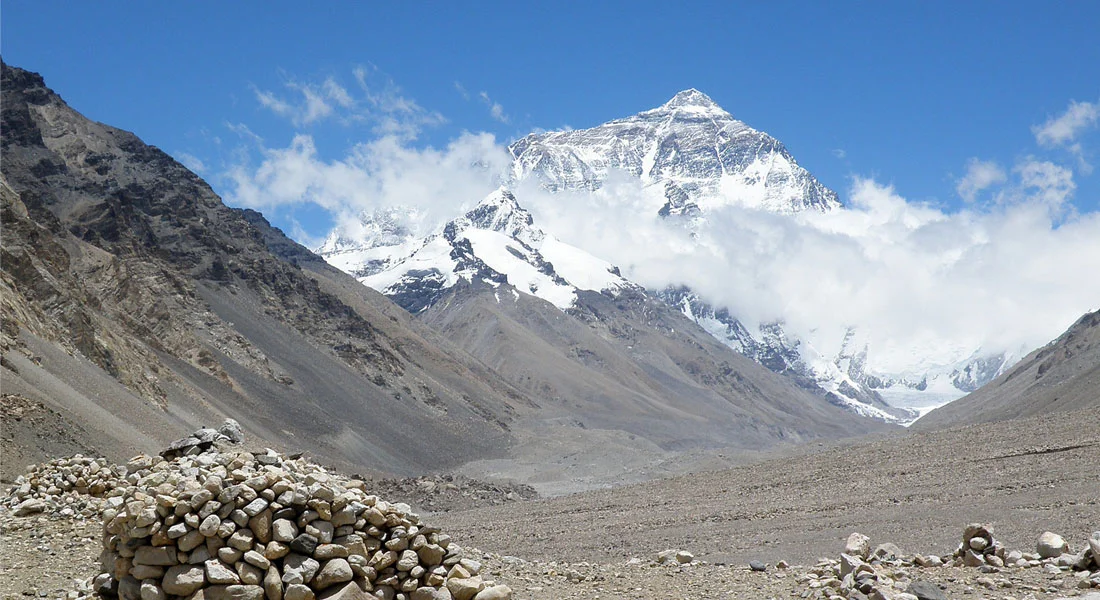


Lhasa Everest Base Camp Tour 8 days is an adventure of a lifetime, a great Tibet Tour begins and ends in Lhasa, visiting Everest Base Camp. It is a classic 8 days Tibet overland tour in the spiritual heart of the Himalayas. The adventure starts with Lhasa Tour and you will drive through a high-altitude mountain passes to the iconic north Everest Base Camp. Lhasa to Everest Base Camp Tour is a lifetime adventure tour explores the heart of Tibet from Lhasa to Everest Base Camp with exotic landscapes along the way.
8 days Lhasa to Everest Base Camp Small Group Tour is the most popular Tibet overland trip with Tibet’s top highlights.The stunning Lhasa to Everest Base Camp Tour begins and ends in Lhasa, visiting ancient monasteries, EBC and Lakes. The North Everest Base Camp Lhasa Tour primarily focuses on a visit to the Everest Base Camp. Lhasa to Everest Base Camp is a great cultural tour for spiritual, historical, and natural experiences across Tibet plateau.
Lhasa Everest Base Camp Tour is an overland adventures in Tibet. The April–June and Sept–Oct are the time for this tour as it offers stunning Himalayan views. Tibet Travel Permit, Alien’s Travel Permit (ATP), and Everest Region Permits are required for Everest Base Camp Tour from Lhasa. All these documents are arranged by Tibet tour operators,
An 8 days Lhasa Everest Base Camp Tour Package cost ranges fro US $1250 to US $1550 per person for group tours. It covers all permits, accommodation, breakfast and transport, but excluding lunches, dinners, and flights. Lhasa EBC Tour has no technical climbing, but a moderate physical fitness is advised. March can have special restrictions for foreigners, the other months of the year you can do Lhasa Everest Base Camp Tour.
A gradual ascent is necessary as you travel in high altitude sickness is a risk. Hotels in Lhasa/Shigatse are comfortable, but EBC accommodation is basic with guest houses or tents. Lhasa EBC Tours can end in Lhasa and also continue through the Gyirong Border to Nepal.
Lhasa Everest Base Camp Tour visits all awe-inspiring attractions of Tibet from Lhasa to Mt Everest BC tour. The entire Lhasa to EBC Tour is about 600km long drive by road. Lhasa Tour with Everest Base Camp is really an amazing adventure in Tibet. The 15-day Lhasa EBC Tour offers the once in a life time to reach to the Mount Everest BC from Tibet. This is absolutely a mind-blowing tour with great views and high mountain passes.
En-route to Everest Base Camp, you will visit Tibetan monasteries, pristine lakes, and glaciers. Also, the tour is famous for the important religious and historical sites of Tibet. Lhasa Everest Base Camp Tour is truly an amazing journey through high deserts and mountain passes from Lhasa to Everest Base Camp.
The Everest Base Camp at 5300m is the highest point of the trip. Lhasa is the capital of Tibet, also the starting point of this tour. You will visit Tashilhunpo Monastery in Shigatse before driving towards Everest Base Camp. Explore around Rongbuk Monastery and take the best photograph of Mount Everest before back to Lhasa.
Lhasa Everest Base Camp Tour 8 Days Itinerary
Day 1: Arrive in Lhasa (3650m).
Day 2: Lhasa Tour – Potala Palace, Jokhang Temple, and Barkhor Street.
Day 3: Lhasa Tour – Drepung and Sera Monastery.
Day 4: Lhasa to Shigatse (3900m, 350km, 6 hours)
Day 5: Shigatse to Rongbuk Everest (5200m, 465 km, 7-8 hrs) via Tingri
Day 6: Everest Base Camp to Shigatse (3900m,465 km, 9-10 hours)
Day 7: Shigatse to Lhasa (3650m, 290 km, 6 hours)
Day 8: Lhasa Airport or Train Station.
Best Time for Lhasa Everest Base Camp Tour in Tibet
Everest Base Camp in Tibet is one of the most popular destinations. The global visitors tour to Everest Base Camp all year round. For most travelers, April to Early June and September to October are the best times to visit Everest Base Camp in Tibet.
During these months, the air feels crisp and fresh, the temperature is mild and cozy (5°C to 13°C daytime), and you can enjoy the clearest Himalayan skies. You admire and capture the majestic north face of Mount Everest and other towering peaks. Meanwhile, the road condition is also perfect for a smooth ride from Lhasa to the Tibet Everest Base Camp.
If you are traveling on a budget, November to February, the Winter season, is another perfect time to do this tour. During these time frames, Tibet train tickets are easier to get, and you can enjoy a good discounts on flights to Lhasa, 4 to 5-star hotels, and free entrance to Tibet EBC and other major Tibetan attractions. The tour is less crowds and a high visibility for an immersive Mount Everest.
Besides, July to August is traditionally known as the monsoon season in Tibet. The Mt.Everest may decide to hide in clouds for a while. However, no worries. This is part of the charm of the Himalayas. Our seasoned local Tibetan guides know Mount Everest’s moods very well. They will pay close attention to weather changes and help you plan the best time to walk out, find the right viewpoint, and see Everest in her full glory.
Tibet Everest Base Camp Tour for elderly people and Children
No age limit for older travelers and children for Tibet Everest Base Camp tour. As Mount Everest tour operator, we’ve helped numerous families who travel with older parents and small kids to the Tibet EBC with attentive care and complete success.
The oldest guest of 82-year-old, made complete the Tibet Everest Base Camp tour and also the youngest guests of 6 also complete this tour with their parents. So, for travelers of all ages, including older travelers and small kids as long as you are in good health, you can do the Tibet Everest Base Camp safely and comfortably.
Besides, Tibet Everest Base Camp tour is much easier than the Nepal EBC trek. In Nepal, travelers need to trek for days. But in Tibet, you can sit comfortably in the vehicle and enjoy well-paved roads drive all the way from Lhasa to Everest Base Camp with rest stops and oxygen supplies along the journey.
Drive Distance from Lhasa to Everest Base Camp Tour
It usually takes two full days to drive from Lhasa to Tibet Everest Base Camp, covering around 639 km via enchanting Gyantse and Shigatse. Tibet’s second largest city-Shigatse is the gateway to Mount Everest.
Although it sounds long, most of our guests find it enjoyable and not too tiring. The overland experience is part of a classic 8-day Lhasa to EBC tour. Along the way, we make many relaxing stops to stretch your legs, enjoy the views, and explore local sights.
Guide and Driver for Lhasa EBC Tour
The humorous and knowledgeable local Tibetan guides love to share intriguing stories of Tibetan culture and history, while our friendly local Tibetan driver may fill the clean, comfortable tour vehicle with folk songs when the mood strikes. Little moments like these make the long journey feel relaxing and enjoyable.
Altitude Sickness in Everest Base Camp Tour in Tibet
Every traveler reacts differently to high altitude at the Tibet EBC (5,010m). Some may feel mild symptoms like faster breathing, while others feel perfectly fine. This is completely normal as your body is adjusting to the high elevation.
Please don’t worry. Our experienced Tibetan guide will stay with you throughout the journey and keep a close eye on every guest’s blood oxygen level. If you need help, oxygen supplies are always available, and our local Tibetan guide will know exactly what to do to make you comfortable. Meanwhile, all the hotels at the Tibet EBC have oxygen supplies to help you rest well at night.
Besides, Lhasa Everest Base Camp Tour itineraries are carefully planned to help you acclimatize step by step, starting from Lhasa (3,650m), then Shigatse (3,840m), and finally reaching the Everest Base Camp (5,010m) in 5 days. This gradual ascent gives your body plenty of time to adjust. So, the chances of getting acute altitude sickness are very low.
With a relaxed mind, a slow pace, and the care of our professional Tibetan team, most travelers can manage the altitude very well and enjoy the precious time spent at the Tibet EBC.
Road Conditions from Lhasa to Everest Base Camp
The road from Lhasa to Tibet Everest Base Camp is actually one of the best in Tibet, as it mainly follows the scenic and well-paved G318 National Highway. The asphalt road is in perfect condition and regularly maintained.
Traveling along the wide, boundless roads with the majestic Himalayan peaks and sparkling alpine lakes stretching out before you, you will enjoy every minute of this epic journey.
Besides, our local Tibetan driver knows every curve of the plateau roads and always drives gently and safely. The driver drives smoothly, most of our guests feel very comfortable on the way and rarely get carsick.
Toilets and Restaurant on Everest Base Camp Tour
Restrooms and local restaurants are available at most sightseeing stops and in towns. Our attentive Tibetan guide and friendly driver will plan comfortable stops for you to use the restroom and enjoy clean, safe, and tasty Tibetan or Sichuan-style food. No worries at all.
Accommodations Available on Tibet EBC Tour
Currently, the newly-upgraded tent hotels (a total of 54 tents) and the Rongbuk Hotel are the only accommodations available at the Tibet EBC. The brand-new tent hotels are spacious and clean. Every tent is divided into eight private rooms, offering different room types such as single rooms, double rooms, and twin rooms.
Inside each tent, there is a cozy public area where travelers can relax, chat, or enjoy a cup of coffee together on comfortable sofas. You will also find a small sink with running water and a hot-water dispenser. For hygiene, several basins and disposable liners are provided so you can wash up comfortably and cleanly, and the bedding is freshly changed for every guest. However, due to the shortage of water, there are no shower facilities at the Tibet EBC.
Besides, you may also find thoughtful amenities, such as a disposable toothbrush and toothpaste, slippers, two bottles of free drinking water, a cup, a humidifier, an electric blanket, warm blankets, and oxygen supplies. You can easily charge your phone in your room or use free Wi-Fi to share Everest photos online. So, everything is clean, tidy, and helpful for a comfortable night’ sleep.
Alternatively, you may stay in the Rongbuk Hotel, which is the best accommodation at the Tibet EBC. You can enjoy private Western toilets, running tap water, underfloor heating, humidifiers, cozy rooms and a decent restaurant offering epic Everest views and authentic Tibetan hot pot, diverse Chinese cuisines, and hearty breakfasts. It’s truly a “luxury” at such a high altitude, even if no showering facilities are available.
With just 25 rooms available year-round, early booking is essential. For our guests, we offer one-stop booking services to secure your stay at Rongbuk Hotel for an unforgettable Everest Base Camp tour.
Foods Available on the Lhasa Everest Base Camp Tour
Tibetan and Sichuan-style cuisines are the most common food available on the Lhasa EBC tour. Our local Tibetan guides will help you choose the clean and ideal restaurants for you to enjoy warm and tasty food along the way.
For Tibetan food, you can enjoy nutritious Tibetan noodle soups, all sorts of yak meat dishes, Tibetan momo (dumplings), mutton, Balep (Tibetan bread), Tsampa (roasted barley flour), Dresil (Tibetan sweet rice), Tibetan yogurt, Khapse (Tibetan pastry), or drink comforting Tibetan sweet tea, butter tea, and more.
Many restaurants in Tibet are run by businessmen from Sichuan and Chongqing, Sichuan-style dishes are also very common and popular all the way from Lhasa to the Tibet EBC. You can find dishes like tomato and scrambled eggs, shredded pork with green peppers, twice-cooked pork, mapo tofu, and stir-fried shredded potatoes, and beyond. These simple and flavorful foods will enrich your dining options for your journey.
For vegetarian travelers, you can enjoy vegetable noodles, fried rice with vegetables, cabbage or potato dishes, and Tofu soups without meat to keep your stomach warm and fulfilling. Alternatively, you can always bring some snacks like biscuits, nuts, chocolate, or fruit for the road, just to add a little extra comfort.
Once you reach the Tibet EBC, now you can find a large base camp restaurant that serves yak meat hotpot, Tibetan noodle soup, a variety of Sichuan-style dishes, grilled sausage, instant noodles, Tibetan sweet tea, and snacks like potato chips, biscuits, and chocolate. There is also a cozy café offering Americanos, lattes, and hot milk, perfect for sipping as you admire Mt. Everest.
If you stay at the Rongbuk Hotel, you can dine at its on-site restaurant. In the morning, you can enjoy a simple buffet with boiled eggs, pancakes with strawberry and honey jam, porridge, Tibetan sweet tea, and a few light dishes like pickles and peanuts. For lunch and dinner, you can try travelers’ favorites such as yak meat hotpot, stir-fried noodles, and other tasty Sichuan-style dishes, perfect for warming up at Tibet EBC.
Equipment Lists for Lhasa Everest Base Camp Tour
Tibet Everest Base Camp Tour is easier than you expect. There’s no need for special gear. The accommodations at Tibet EBC provide enough comfort, good dining, and washing facilities, so you can travel light.
For clothing, it’s best to dress in layers and keep warm. So, you can adjust to the changing temperatures during the day and evening. A warm jacket, a fleece or sweater, and a comfortable base layer will keep you cozy. Comfortable sports shoes or trekking shoes are ideal for exploring and short walks around the Base Camp area.
As for medicines, there’s no special requirement for the trip. If you have any health concerns or need medications, it’s always a good idea to consult your doctor before traveling. And don’t forget your sun protection too, like sunglasses, sunscreen, and a wide-brimmed hat, as the sunlight at high altitude can be quite strong.
The Best Photo Spots for Mount Everest
The best spots to photograph Mount Everest start to reveal one after another after you enter the Qomolangma (Everest in Tibetan) National Nature Preserve.
Shortly after the tour bus winds its way through 108 hairpin turns, you will reach the Gawula Pass (5,198m). It is one of the best places to capture five of the tallest Himalayan peaks standing shoulder-to-shoulder on the rolling Himalayan Range, with mighty Mount Everest proudly rising in the front row.
Once you reach the Tibet Everest Base Camp, the Mount Everest markers are another hotspot for travelers to snap the iconic “I Made It” selfie at the foot of the world’s highest mountain and share it on Instagram to wow your friends!
What’s more, another all-time favorite spot to capture amazing Mount Everest is the Rongbuk Monastery (5,154m), the world’s highest monastery near the Tibet EBC. You can frame the monastery’s white stupa and colorful Tibetan prayer flags in the foreground to add depth and character to your epic Everest shots.
Finally, as you leave the Tibet EBC for Shigatse, don’t miss the Dinggye Xilin Viewpoint. The rolling sand dunes, crystal alpine lakes, and wide valleys make it a perfect spot to capture the eastern face of Mount Everest from a different angle.
Our local Tibetan guide will be right beside you during the journey, guiding you to the best spots nd helping you capture memories you’ll treasure forever.
Photograph the Starry Sky over Mount Everest
You can photograph the starry sky over Mount Everest, and it is one of the most magical sights in all of Tibet. Since there is almost no city light around the Everest Base Camp, the night sky here is crystal clear. When the weather is good, you can even see the Milky Way stretching across the sky like a river of silver dust.
The best time for Everest night-sky photography is from April to early June and September to October. These months offer clearer skies and more stable weather, so the stars shine bright and Everest stands proudly in the moonlight.
For the best timing, the magic hours are usually between midnight and 3 AM, when the sky is darkest and calmest. Wrap yourself in warm layers before going out, because the night at Everest is chilly, even in spring and autumn. Turn on the flashlight on your iPhone, and bring a tripod if you have one, and keep your camera battery close to your body so it doesn’t freeze and die too fast.
On the other hand, if you want to witness the magical golden glow of Mount Everest at sunrise or sunset, the best times are around 7:50 to 8:20 in the morning and 19:30 to 20:30 in the evening. During these times, the summit of the mighty Everest shines in a stunning golden hue. It is a natural wonder, so surreal that words simply fall short.
If tour group arrives late for the sunset at Everest Base Camp, you may have an early rise tomorrow for the epic sunrise at Everest Base Camp, or hit the road back to Gawu La Pass for the amazing view of Mt. Everest with other giants along the mighty Himalayas.