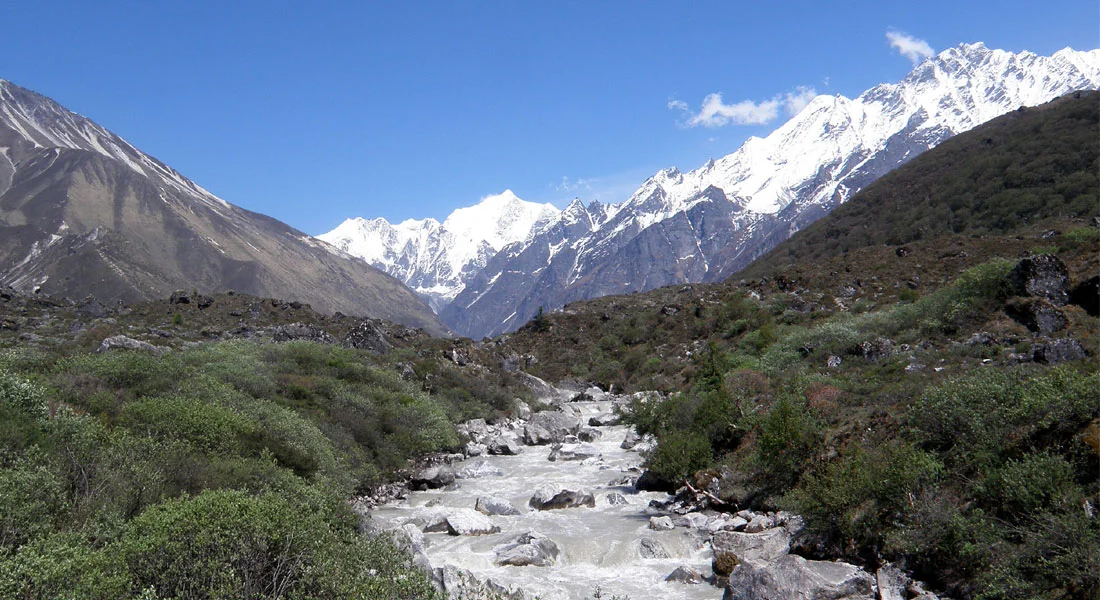
Nepal Langtang Valley for decades is high on many trekkers’ bucket list. The beautiful Langtang Valley is the third of the great trekking areas of Nepal after Everest and the Annapurna Trek.
But in recent years, Langtang Valley Nepal has become better known due to the devastation wreaked on the main village during the earthquake of 2015. Where many villages around Nepal made significant damage, high above Langtang village, part of the great peak of Langtang Lirung sheared off, and a huge avalanche of ice and rock buried homes and buildings.
Many died and, understandably, people stayed away for a time. But the surviving families have worked incredibly hard to get back on their feet. Trekking trails are open once more, lodges have been rebuilt, and the valley can once again be visited. There are some incredibly painful sights and stories, of course – a huge fan of grey rock covers the area where the village once stood, and close-knit families lost many loved ones. But that is no reason to turn away, and the people of Langtang don’t want sympathy. They just want travelers to return, as they always had before.
Langtang Valley is spectacularly beautiful
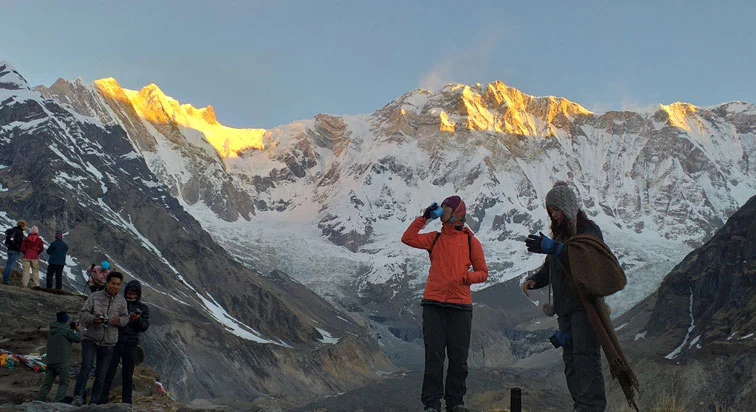
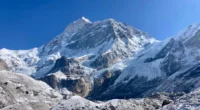
There are no 8000m peaks here, but Langtang Lirung rises well over 7000m and its east face rears up for more than 3km. The village of Kyanjin Gompa is surrounded by snowy peaks on all sides, and if you head farther up the valley to the shrines of Langshisha Kharka, you’ll have breathtaking views all around. A vast wall of peaks lies between you and Tibet and to the south Gangchenpo (Fluted Mountain) climbs gracefully into the heavens.
Easy access to Langtang Trek Nepal
You can walk there all the way from the outskirts of Kathmandu, climbing through Helambu and past the holy lakes of Gosainkund, before dropping into the Langtang Valley itself. Alternatively, a half-day jeep ride will deliver you to Syabru Besi, at the bottom of the valley – from where three days of gentle climbing will get you to Langtang Kyanjin Gompa at the head of the valley, with no high passes to cross.
Diverse cultures and landscapes
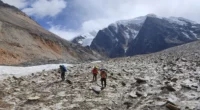
As you rise through Helambu, or the lower part of the Langtang valley, you’ll pass through rich forests filled with birds and the occasional monkey. Tamang villagers grow their crops on steep terraces. Slowly you’ll pass through to thin pinewoods split by waterfalls. And then it’s on to the high valley with yak pastures, open skies and glaciers, and the homes of the Langtang people. Throughout the Langtang/Helambu region you’ll find some of the best flower displays in Nepal and a blend of cultures from Newari, Hindu, Tamang, Bhotia and Sherpa communities.
Langtang Valley is quiet – so you can experience much more than elsewhere
Going on a Langtang Trek means you’ll escape the busy trails and teahouses of Annapurna and Khumbu, which can, at certain times of year, make you feel like just a face in the crowd. In Langtang, local Nepali people are incredibly keen to see trekkers come back – and the welcome you receive will be genuinely warm and occasionally emotional.
Even if you know nothing of its recent history, Nepal’s Langtang is a special part of the world. By choosing to spend time in Langtang and with its people, you can perhaps gain richer insights into what life is really like here, beneath the great snow mountains of Nepal. Interested in a Langtang trek yourself. Mission Eco Trek organizes several Langtang Valley Treks in Nepal.
The Langtang Valley Trek
Langtang Valley Trek is a unique hike in the Himalayas of Nepal. While shorter than many other popular treks in Nepal, the adventurous day-hikes throughout this route make it one of your favorites. After three days of trekking, you will reach Kyanjin Gompa. From this small mountain town, there are several incredible day-hikes with fantastic views.
The short 3-day trek into Kyanjin Gompa makes this trek shorter, cheaper but arguably more beautiful than other treks such as Manaslu Circuit, Everest Base Camp Trek, and the Annapurna Circuit.
A Trek Guide to Langtang Valley Nepal
In this guide, you will find all of the valuable information you need to plan your trek including the Kyanjin Ri Viewpoint, Tserko Ri Viewpoint, and Yala Peak climb.
Langtang Trek Difficulty
The Langtang Valley Trek is much shorter than Everest Base Camp or the Annapurna Circuit although relatively similar. You will reach an altitude of 5000m, which will challenge many. Altitude sickness can be common. The route ascends quite quickly with several days having more than 1000m of altitude gain. These days of ascent are tiring and also require the body to adjust quickly. It is a good beginner trek in Nepal but not one to be taken lightly.
Permits for Langtang Valley Trek
You will need a TIMS card and Langtang National Park Entrance Permit, both can be purchased when entering the park.
Guide for Langtang Trek
A guide is required on this trek. However, the guide manages all of the logistics, distances, directions, and tea houses for your group. If it’s your first time trekking in Nepal, I would suggest having a guide.
Accommodation in Langtang Valley
Guest Houses, also known as Tea Houses, are available along the way where you will sleep in a comfortable bed and have access to showers (extra charge) and restaurant facilities. It has very comfortable accommodation and great after a long day of hiking. Most of the villages are Tibetan, which gives you a great insight into their unique culture.
Key Points about the Langtang Valley Trek
Langtang Valley is way less crowded than Everest Base Camp Trek or the Annapurna Circuit. It is growing in popularity but it’s still a great time to trek to Langtang valley before it hits the mainstream.
There are teahouses in each village along the way so each night you get a great sleep in a bed with blankets, have access to showers, eat great meals in a restaurant, and can charge your electronics and cameras.
The trailhead can be reached by bus and jeep so there is no need to pay for expensive domestic flights. It is important to base in Kyanjin Gompa for at least two nights so you can hike up to Kyanjin Ri and Tserko Ri, which are the highlight of the trip.
Langtang Valley Elevation(Height)
Langtang Valley is one of the popular trekking destinations near Kathmandu valley. It is situated at an elevation of 3,430 meters above sea level. The Langtang Valley Trek in Nepal is moderately difficult, both beautiful and challenging at the same time. The steep and narrow trails make the journey physically demanding.
Climate and Temperature in Langtang Valley
The Langtang Valley temperature ranges from 10°C to 20°C (50°F to 68°F) during the spring and autumn season, which starts in March and lasts until May. Nights get colder, with temperatures dropping from -10°C to -1°C. The winter season in Langtang is quite cold and snowy, with temperatures of 4°C to 10°C during the day.
Packing List for Langtang Valley Trek in Nepal
Pack light and managed to wash most of my clothes each afternoon/night for the first half of the trip. In the latter stages of the trip, it is pretty cold so you are not sweating as much and wear your warm gear basically nonstop while at the teahouses. There is no real need for multiple outfits.
This is just a guide and it works quite well for you with no complaints from your set-up. You won’t need a sleeping bag as there are blankets in each guesthouse and when it get cold you just wear your down jacket to bed. This meant you don’t have to carry a sleeping bag for the entire trek. All of the below items should fit into a backpack no bigger than 50L and should be less than 14kg.
1 pair of pants that maybe convert to shorts
1 pair of shorts
1 Warm or thicker pair of hiking pants
1 Long sleeve quick-dry shirt
1 Long-sleeve thermal shirt
2 Short-sleeve t-shirts
1 Thermal long underwear
4 pairs of quick-dry underwear
1 Lightweight down jacket
1 Heavy-duty summit down jacket
1 Beanie
1 Cap
1 pair of warm summit socks
2-3 pairs of regular socks
1 Neck Buff
Sunglasses
Gloves
Hiking boots
Headtorch
Sunscreen
Trekking poles
Water filter
Power bank
Wifi and Electricity Available on Langtang Valley Trek in Nepal
Wifi-Costs anywhere from free to $4 to use wifi at the guesthouses. Buy an NTC Sim before you go. It worked in most spots after Lama Hotel with a weak signal but we were able to send emails, watch Youtube, and message friends from Langtang and Kyanjin Gompa.
Electricity-You will have to pay anywhere from $free at low elevation to $5 to charge your power banks, cameras, and phones. The key is to get a big power bank. Pay to charge it then charge everything from your power bank. My power bank lets me charge my phone and four camera batteries before it dies. Most of the places we stayed let us charge our gear for free but when it is busy they usually charge a fee as many teahouses run off gas or solar.
Drinking Water on the Langtang Valley Trek
You don’t need to buy bottled water at every tea-house contributing to large amounts of plastic waste and costing you $4+ per day. Along the Langtang Valley Trek, fill up at tea-houses, rivers, and local village taps. Unlike aqua purification tablets which require you to wait 30 minutes before drinking, you can have rehydrated yourself immediately with the Grayl Ultralight Water Purifier.
Travel Insurance for Langtang Valley Trek
Nepal can be a dangerous place for trekking and hiking because the high altitude can lead to many illnesses, weakness in trekkers, and misjudgments. There is also a risk on trails for falls, avalanches, or other mishaps. Your regular travel insurance probably won’t cover you at high altitude and won’t cover a helicopter evacuation. There is a solution though.
Best Time and Seasons for Langtang Valley Trek
The peak season for the Langtang Valley Trek is March to April and October to November. The time to avoid this trek is during the rainy season from June to August. During the winter from December to February, this region gets very cold and there will be snow cover in the higher parts of the trek.
Many of the guesthouses actually close up for the winter and re-open in late February to March. However, it is possible to hike the Langtang Valley Trek in Winter and it can be quite beautiful with snow cover. Langtang Valley Trek in early March and it is warm during the day and got pretty cold at night. You may experienced some heavy snow on Tserko Ri and Yala Peak but the trekking routes is clear.
How to get to Langtang Valley in Nepal
There are two main ways to reach Syabrubesi, which is the small town at the starting point of the trek. Despite the distance from Kathmandu to Syabrubesi only being 125km, the journey takes a long time due to the traffic and quality of the road.
You can reach there by jeep and bus ride. Jeep costs about $180 to hire the vehicle out for the drive so can be split between your group. It’s not cheap but much less brutal than the lengthy bus journey.
The bus costs about $15 USD and can take anywhere from 7-10 hours depending on the traffic and if there are any roadworks or landslides recently. The bus leaves every day from Kathmandu to Syabrubesi at 6 am and 8 am as well as other defined times.
The Langtang Valley Trek is quite unique. You get an incredible experience once you reached Kyanjin Gompa and hikes in Tserko Ri and Kyanjin Ri as well as the Yala Peak climb. Trek into Kyanjin Gompa is relatively mild.
About Kyanjin Gompa
Kyanjin Gompa is the end of the trek for most people. It’s a beautiful town with an incredible backdrop of snow peaks in all directions. The biggest mistake you can make on the Langtang Valley Trek is to stay one night and turn around and hike back down.
The absolute highlight of this trek is to base in Kyanjin Gompa for a few nights and spend one day hiking up Kyanjin Ri and one day hiking up Tserko Ri. You can spend some days climbing Yala Peak but that requires certain gear and experience.
Kyanjin Ri Peak Hiking
From Kyanjin Gompa there are two awesome day-hikes. The smaller and most popular hike is Kyanjin Ri. This viewpoint towers over Kyanjin Gompa and has more than 700m of vertical gain in just a few kilometers. While short in distance, don’t underestimate this hike as it is incredibly steep and reaches heights of 4,700 meters.
The trail begins directly out of the town up the nearest ridge. A series of switchbacks leads you up to Lower Kyanjin Ri, which is the first viewpoint on the route. Covered in prayer flags, this viewpoint you will have you peering down over the entire town with jaw-dropping views across the valley.
Continuing on, the ridge-line track continues higher and higher. We trekked just after winter and there was still considerable snow coverage for this trekking peak. Reaching Kyanjin Ri, we were walking across the snow at 4700m on a ridge overlooking the Langtang Lirung Glacier and the Langtang Lirung Peak (7,227m). To the right of Langtang Lirung you can find Changbu (6251m) and Yubra (6264m).
You can also spot Yala Peak (5,500m), which is the peak we ended up climbing on our trip to Kyanjin Gompa. And finally, across to the nearest peak, you can see Tserko Ri (5,000m), which will be your final objective on this trek.
Tserko Ri Peak Hiking
Tserko Ri (5,700m) is the finale for the Langtang Valley Trek. At 5,000m of elevation, this is a true test for trekkers against the elements and the altitude. It’s an optional day-hike, but highly suggest. Tserko Ri isn’t as hard as it sounds and is similar in many ways to its smaller brother, Kyanjin Ri.
The trek is about 8 kilometers in total with almost 1500m of incline throughout the day. It will definitely be a tough test and took us about seven hours to complete at a slow pace with lots of photos.
The trek takes you up a ridge all the way to the summit with very little danger to be found along the relatively wide and safe path. You may encounter snow right at the last portion of the hike that make it slow-going and difficult.
The summit of Tserko Ri is quite unique. There are so many poles and flags the summit has begun to look like a sailing ship. Many prayer flags at a summit, which makes for a colorful, vibrant setting atop the peak. The views from Tserko Ri are simply phenomenal. With panoramic views, you can expect to see Yala Peak, Langtang Ri, Langtang Lirung, Naya Khang and many more.
Yala Peak Climbing
Yala Peak is a non-technical peak near Tserko Ri, which could be a great trekking peak for those on the hunt for a challenge. Yala Peak is not commonly part of the Langtang Valley Trek and involves prior preparation. You have to carry in your 6000m boots, extra warm gear, and climbing gear and arranged your climb in advance. While a guide can be arranged in Kyanjin Gompa, there is no gear rental shop so you may need to decide if Yala Peak is on your agenda before you begin the trek.
Langtang Village
Nepal Langtang Valley is well-known for its trekking routes and natural environment. The Langtang Valley lies in Rasuwa district of the Bagmati Province in Nepal. It is situated about 80 kilometres north of the Kathmandu Valley, the valley glacier-Langtang lies within the Langtang National Park, which borders Tibet and Nepal. Prior to the 2015 earthquake, 668 people were living in Langtang Valley.
Langtang Valley Ecology
Nepal Langtang Valley of Langtang National Park contains a wide variety of climatic zones, from subtropical to alpine. The 25% of the park is forested. Trees include the deciduous oak and maple, evergreens like pine, and various types of rhododendron. Animal life includes the Himalayan black bear, Himalayan tahr, Red monkey, langur Assam macaque, snow leopard, yak, red panda and more than 250 species of birds.
Culture in Langtang Valley
Tamang people are the local inhabitants of Langtang valley. They generally follow Tibetan Buddhism, and speak a Tibetan language that is closely related to the Tibetan spoken in Gyirong, southern Tibet. Langtang valley is believed to be the Beyul Dagam Namgo, one of the many hidden valleys blessed by Guru Padmasambhava.
Economy of Langtang Valley Nepal
Tourism has grown to become an important source of livelihoods in the Langtang Valley. Swiss cheese-making was introduced in Langtang in the 1950s by Werner Schulte’s. Over time, Swiss cheese became a popular product of Langtang, and its production in the valley continues to this day.
Langtang Valley is popular for trekking and tourism
The Langtang Valley is the third most popular trek in Nepal, after the Annapurna Circuit and Everest Base Camp (EBC) treks. Several treks go through the Langtang valley and link it to nearby valleys like the Helambu valley. In most of these treks, one can stay at local ‘tea houses’, which are run by locals in nearly every village in the valley, and where one gets basic lodging and food.
Around 2000, with the support of the United Nations Development Programmed, some of these were equipped with solar panels so that hikers could shower with warm water. There are also several mountain-climbing options available in the Langtang valley, ranging from relatively easy-to-climb peaks around 5,000 m high, such as Kyanjin Ri and Tsergo Ri, to technically challenging peaks, such as Dorje Lhakpa and Langtang Lirung.
Effect of 2015 Nepal earthquake in Langtang Valley
The Langtang Village of Langtang Valley was almost completely destroyed by a massive avalanche caused by the April 2015 Nepal earthquake. The village suffered an estimated 310 deaths, including 176 Langtang residents, 80 foreigners, and 10 army personnel. More than 100 bodies were never recovered. Several other villages in upper Langtang valley were also destroyed.
The people who survived on the destruction of the earthquake were evacuated by helicopter to Kathmandu, and temporarily set up at the Yellow Gumba near Swayambhu. Many people of Langtang valley returned to the valley in the following months, and a significant amount of reconstruction was completed within the first year after the earthquake 2015. By early 2018, the centuries-old gompa at Kyanjin Gompa, which had also been destroyed in the earthquake, had been rebuilt. The Swiss-cheese factory at Kyanjin Gompa village was destroyed too, but has been rebuilt and since then become operational again.
How many days does it take to trek to Langtang Valley?
Usually, 6 to 8 days take to trek in Langtang valley from Kathmandu to Kathmandu. If you’ve more time for nature and culture. The Langtang Valley Trek also possible to combine other popular treks in Langtang such as to Tamang Heritage Trail, Ganjala Pass, Gosainkunda Lake, and Pangsang Pass too.
Can you see Everest from Langtang Valley?
No, you cannot see Mount Everest from Langtang Valley. While Langtang Valley offers stunning views of the Langtang Himal range, it’s not in the same direction as Everest and is too far away to be visible. To see Everest, you would need to trek to the Everest region, such as Everest Base Camp or viewpoints like Kala Patthar.
Now, how is Langtang Valley?
Langtang Valley looks more beautiful now and managed than it used to be before. The villagers are united not just to rebuild their houses but also to rebuild the entire trekking trail. The trekking route now has become more beautiful and safer now.
Planning a Trip? Make an Inquiry
- Langtang Valley is spectacularly beautiful
- Easy access to Langtang Trek Nepal
- Diverse cultures and landscapes
- The Langtang Valley Trek
- A Trek Guide to Langtang Valley Nepal
- Key Points about the Langtang Valley Trek
- Packing List for Langtang Valley Trek in Nepal
- Wifi and Electricity Available on Langtang Valley Trek in Nepal
- Drinking Water on the Langtang Valley Trek
- Travel Insurance for Langtang Valley Trek
- Best Time and Seasons for Langtang Valley Trek
- How to get to Langtang Valley in Nepal
- About Kyanjin Gompa
- Kyanjin Ri Peak Hiking
- Tserko Ri Peak Hiking
- Yala Peak Climbing
- Langtang Village
- Langtang Valley Ecology
- Culture in Langtang Valley
- Economy of Langtang Valley Nepal
- Langtang Valley is popular for trekking and tourism
- Effect of 2015 Nepal earthquake in Langtang Valley
- How many days does it take to trek to Langtang Valley?
- Can you see Everest from Langtang Valley?
- Now, how is Langtang Valley?
 Talk to Expert