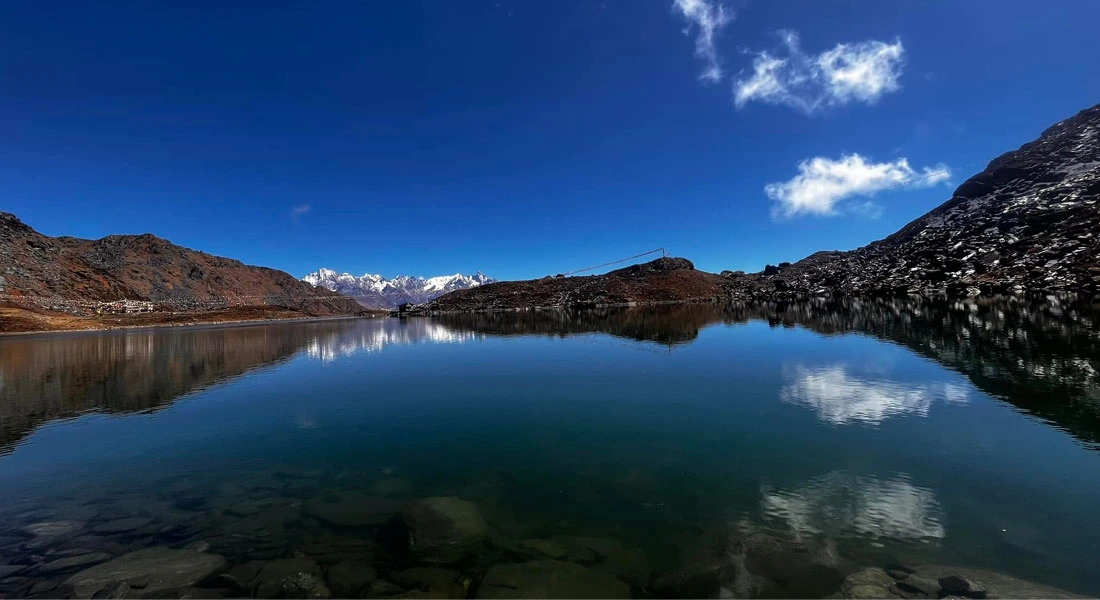
Best Time Trek to Bhairav Kunda
The Spring (February, March, April, May) and Autumn(October, November) are best season trek to Bhairav Kunda. The monsoon(June, July) is affected by a heavy rain but summer trek will be an advantage for an enthusiastic botanist. The walking trails are crowded in the spring and autumn, but the routes are not packed in rainy and winter season and really can enjoy the nature.
Bhairav Kunda Trek Difficulty
The Bhairav Kunda Trek has moderate level trek difficulty. No previous experience in mountaineering require. The past hiking experience will be helpful. Physical preparation at least 2 weeks prior to the trek are advised. Stairs climbing, jogging, cardio exercises and squats would be the best practice. Before you start your journey, our travel specialists will provide you, a brief training idea.
Meals on Bhairav Kunda Trek
This is a camping Trek. Food will be prepared in a camp kitchen, while guide, porters and cook prepare high-energy, nutritious and tasty food. All meals-breakfast, lunch and dinner are inclusive in the trek. The lunch and dinner in Kathmandu are not included.
Telephone and Internet
Since, this is a camping trek, it is unlikely that you would have access to Wi-fi and internet connection from data pack may not be efficient unless you are in city areas or villages. There are telephones in some villages along the trekking routes from which you can make international calls. Our guide carry local sim cards both Nepal Telecom and N-cell in order to update the situation of our client in the trek.
Charging of your devices
It is unlikely that you would have access to the electricity to charge your most gadgets unless you are in city areas or villages. It would be advisable for you to carry a power bank.
Drinking Water on the trek
The sufficient amount of water need to carry in a day trek. Filling up water is quick. Taps in, out or in guesthouses mean that there are plenty of places to fill up your bottles and your water bladder where you stay, a lunch stop, and a shared public tap used by locals wherever possible. Use an efficient sterilization method to make sure your water is safe and not contaminated in anyway.
You have to manage yourself for the drinking water. There are two good options for having proper drinking water during the trek. You can bring water purification tablets or fill your bottle for a nominal fee from the recognized and regulated “pure water” stations along the trek. As the alternative, you can also easily purchase bottled water at the lodges. The bottled water costs USD 2$ – 4$ per litre. It is very important that you drink at least 3 liters of water daily during the trek.
Bhairav Kunda Trek Permit
You will need permit and TIMS Card for this trek. We will arrange these permit for you. Please do not forget to bring 4 passport size photos for them.
Travel Insurance
Travel insurance is compulsory for this trip. Your insurance should cover at least medical and emergency evacuation. In emergency situations, helicopter evacuation is provided but you must ensure that the evacuation cost is covered by your travel insurance. Of course, you also want cover for personal losses or damages, cancellation of flight or trip, etc.
Equipment and Luggage limit for the trek
Each porter carries between 15 kg and 20 kg on average in the mountain region for trekking. There is up to 30 kg of a camping pack. We usually assign one porter for two trekkers. The 15 kg of luggage is allowed per person on the trek. The health of our porter crew is strictly guarantee.
Clothing
Trekking boots
Short-sleeved Trekking shirts
Trekking pants and jackets
Thermals underwear
Long-sleeved Trekking shirts
Insulating down jackets
Woolen cap
Trekking Gloves
Raincoats
First Aid
Diamox tablets
Sanitary pads / Tampons
Anti-nausea Medicines
Band-aids
Mosquito and insect repellents
Toiletries
Soap
Toilet Paper
Shampoo
Sunscreen
Moisturizer
Hand sanitizer
Accessories
Sunglasses
Sleeping bag
Cameras
Batteries
Water Bottle
Solar Chargers
Hot water Thermos
Important Documents
Passport
Travel Permits
Nepal Visa
You can get Nepal visa upon arrival at Kathmandu Airport at USD 30 for 15 days visa, USD 50 for a 30 days visa and USD 125 for a 90 days multiple entry visas and also extend it later on if you wish. They have newly installed technology (visa machine) which makes it no longer necessary to have a passport photo. Please bring 3 photos for your trekking permit and TIMS.
Money Matter
Some major currencies (USD, AUD, Pound and EURO) are accepted for both visas and in general. There are plenty of ATM’s in both Kathmandu, Pokhara and Namche. The credit cards are accepted in limited shops and many restaurants. Please note that only Nepali rupees are accepted on the trek.
It’s difficult to give an exact amount of money that you should bring. Costs will vary according to how much you want to spend for shopping and meals (lunch and dinner). Trekkers find that around $30 (for lunch and dinner) a day is reasonable for the trekking days. You may have to pay for Wi-Fi, electricity and hot showers too (up in the mountains during the trek). Hence allocating the allowance for each day accordingly would suffice.
Group size
For each trip departure, there will be several separate groups. Each group will have a maximum of 14 people with its own experience English speaking guide. During the trek, there will be a suitable number of porters to carry your luggage.
Trip cost
The cost of our trip is based on a twin-sharing basis so there will be two people accommodated in each room or tent during the tour. If you prefer private accommodation or you are a solo traveler, you’ll find the option for “single supplement”. Additional cost will be applicable as a Single Supplementary Charge for the single room during the trip.
Trip Extension
If you would like to book extra activities such as Paragliding (110 pp), Bungy jump (80 pp), Mountain flight (USD 230 pp), Heli Tour (USD 1500 pp –based on 5 pax. Bhaktapur Sightseeing and many more programs.
Tipping
A general rule of thumb for tipping is USD 90-150 for porter and guide if you are fully satisfied with their service. So we suggest you a minimum of USD 70 for tipping. This is just a guideline and you may tip whatever /how much you think is appropriate for the services which made your trek a memorable one.
Porter’s Luggage Limit
For the trek, we’ll have one porter for two people as per group size. The porter will carry 12 kg-15 kg per person luggage during the trek. You need to carry your day pack to keep your personal belongings such as wallet, camera, water bottle, dry snack, headlight, gadgets, etc. The safety and concerns of our porters is our collective responsibility. We take our responsibilities towards them and their safety concerns strictly. On your part, please carry only things that are of absolute necessities.
Buying Gear and Equipment
If you are considering to donate, School supplies (pens, notebooks, colored pencils, etc). These gifts can be directly turned over to our company when you arrive in Kathmandu. And we will manage them to distribute through our proper channels. As for your need of much of your trekking clothes and tour supplies and gears, they can be easily purchased in Kathmandu at good prices. Bring hiking boots/shoes from your country. The Nepali ones are not recommended. Your guide will assist you to get anything you may need here.
The Risk and Liabilities
We are committed to providing the best services which will give you a once in a lifetime journey. We perform our duties honestly and seriously to make your trek very smooth and pleasant. However, the entire programs in Nepal are conducted strictly under rules and regulation of their policies. So in this case, we will give options to choose a different itinerary for an enjoyable holiday. If you have any questions please don’t hesitate to contact us.
Sleeping Bag
You will need a good quality sleeping bag for this trip. It helps you sustain the colder climate in Nepali mountains up to -25 degree Celsius of temperature. However if you need the one of your own, you can buy one here. Your guide shall assist you to get it here. Keep the track of the weather forecast of the area and pack your clothes accordingly. This would help you be prepared for the type of weather Nepali Mountains are accustomed to. It is also possible to rent sleeping bag here in Kathmandu too.
Electricity Device
Remember to bring TWO and THREE pin travel adapters! You can also buy the adapters in the supermarkets or electronic shops in Kathmandu. Our guide can help you with it.
Luggage Storage Facility
The hotel in Kathmandu provides free storage services. So you can store your luggage and clothing that are not required for trekking and you can collect it after the trek.
Weather and Temperature
The width of Nepal is only about 200 km on an average, but within this short distance, the altitude of the land rises from 60 m up to 8,848 m. Hence the weather depends upon the altitude of the place in Nepal.
However, in general, Nepal has four climatic seasons: Spring, Summer, Autumn, and Winter. Spring starts from March to May. The temperature of this season fluctuates between 20 C to 30 C (68 F to 86 F). Summer starts from June last to August. These are also the monsoon months with occasional evening-thunderstorms and hot temperature. Autumn starts from late September and ends by November. During this period, the climate is generally dry and mild with temperature fluctuating between 20 C to 30 C (68 F to 86 F). Winter starts from December until February. The morning and evening are very cold while the afternoon is pretty sunny. The temperature during these months rises from 10 C to 20 C (59 F to 68 F). At higher altitudes, it is cold during the winter months.
Vegan Meals
There will not be any problem for vegetarian, most of the lodges serve vegetarian meals. We always recommend our clients to eat vegetarian meals to avoid food poisoning, eating heavy meals and non-vegetarian meals at a high altitude is not really safe for the stomach.
Refund Policy in case of not completing the trip
Sometimes travelers are unable to finish the scheduled trek due to the various reasons. They ended up not completing the trek for health or personal reasons. In this case please realize that we cannot offer you any refund for unused days on the trek/tour. You have to understand that our costs are the same as we have an obligation to pay our guide and porter for time they have committed.
Cancellation Policy of Trip
No refund will be made for 20% deposit amount in case of cancellation of trip for any other else reason. Having paid the full amount of any trip, you will get your money back but still, cancellation charge (20%) is invoiced to you. And for the voucher holders, since you have purchased the voucher from the deal companies, we have to follow their cancellation policy. But for both the conditions, we are flexible to postpone your trip in any later days. Written notification of your cancellation should be made to cancel any trip.