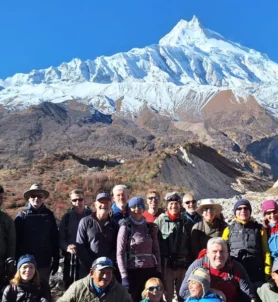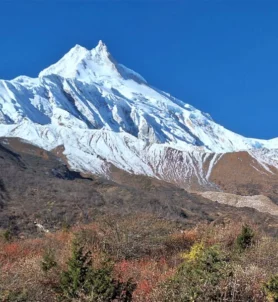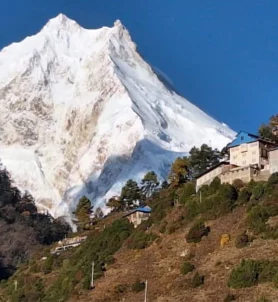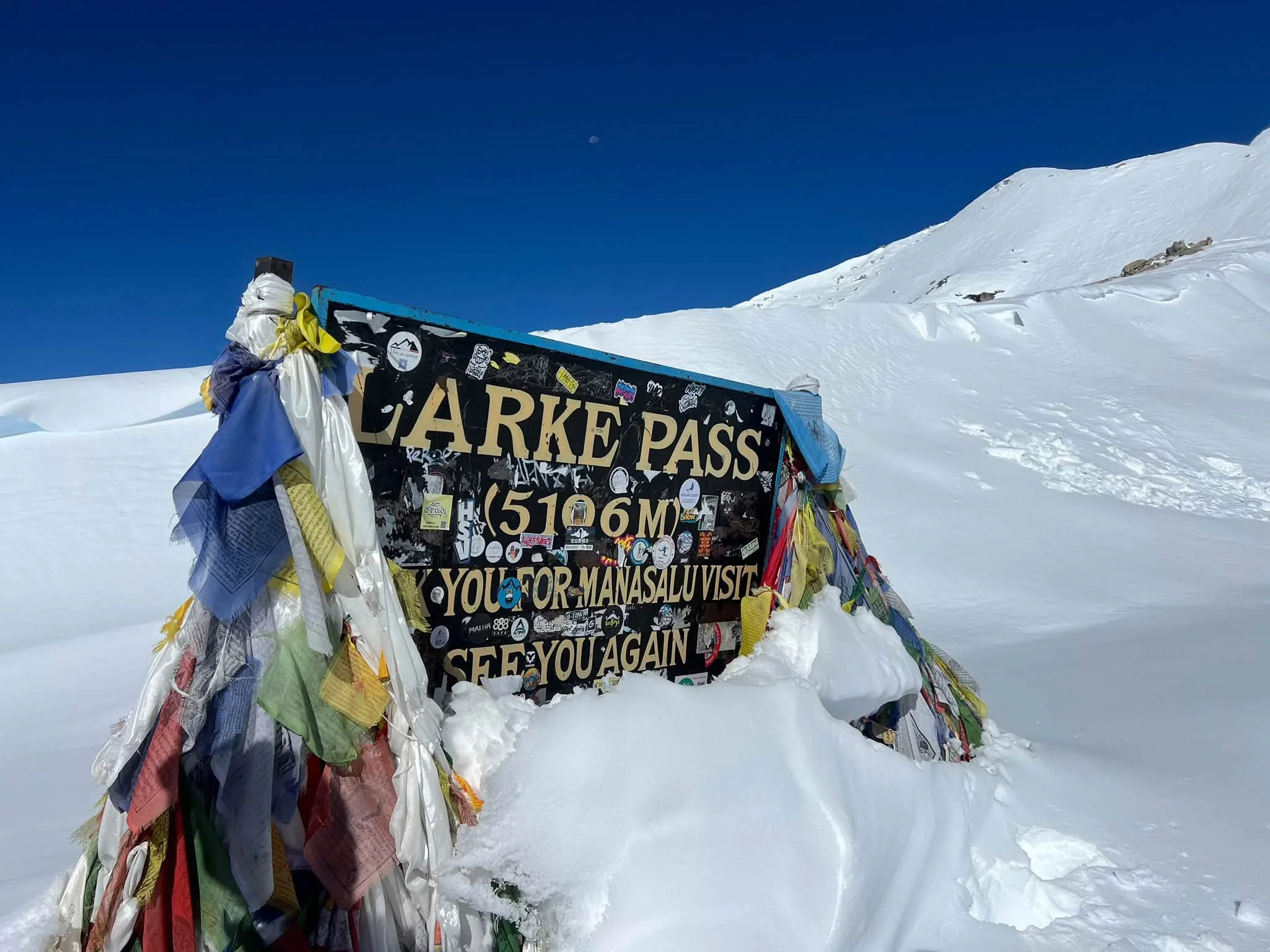
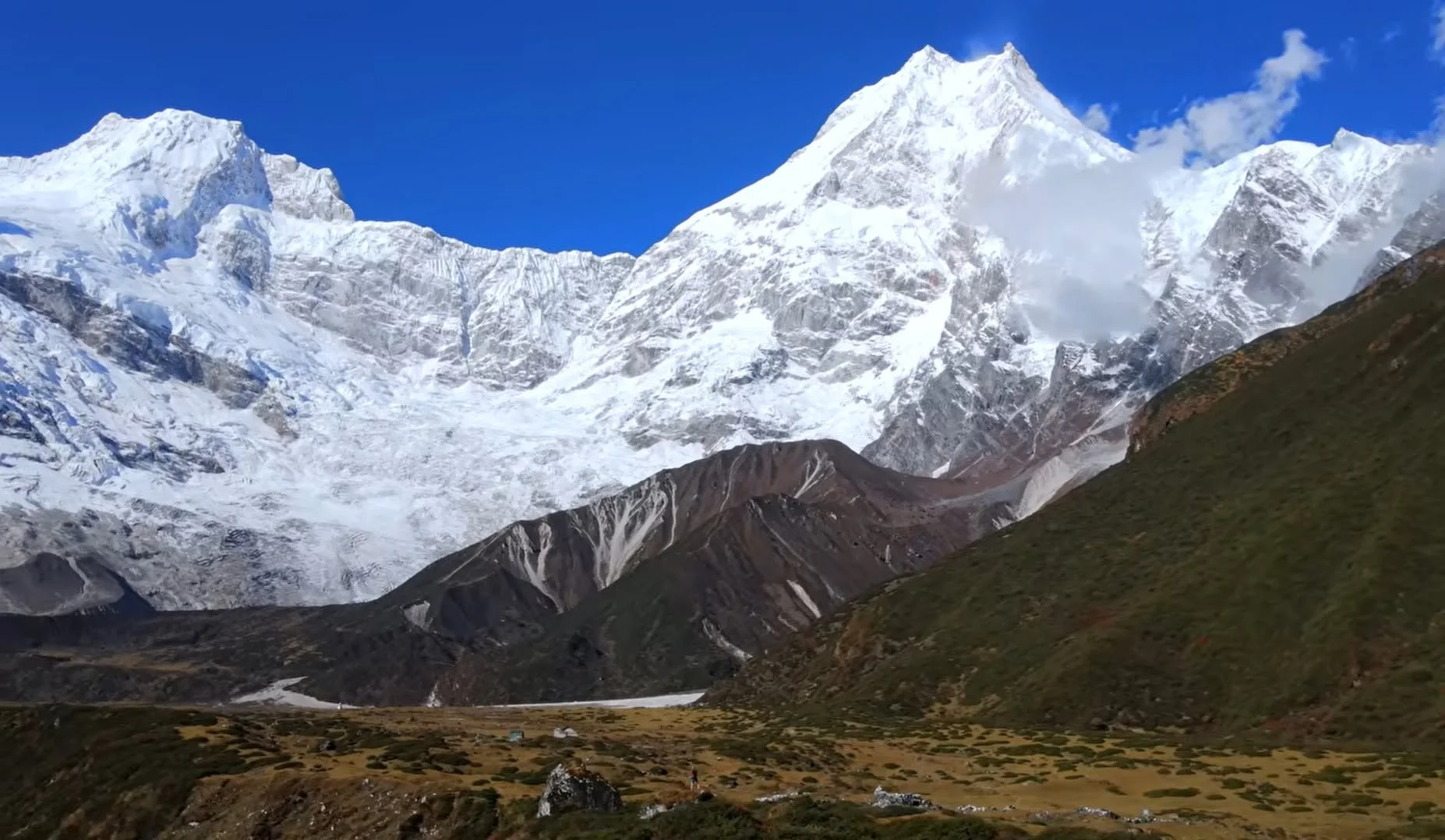
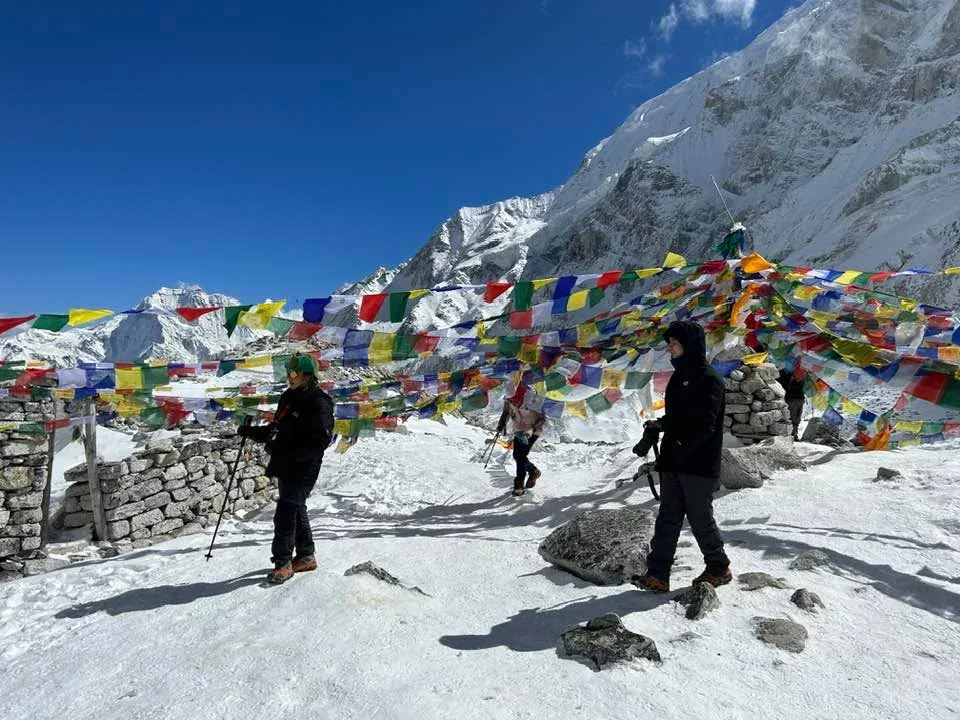


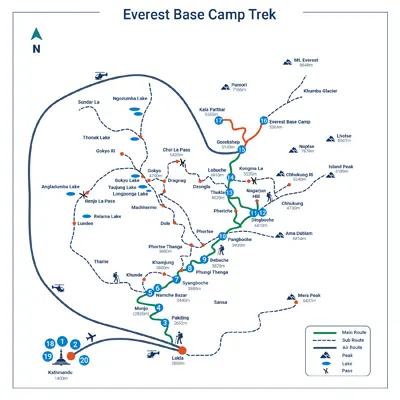
Manaslu Circuit Nepal Trek is a stunning, and remote trek around Mount Manaslu, the world’s eighth-highest peak (8,163 meters). You will reach to Larkya La Pass at 5,106 meters (16,752 feet), the highest point of the trek. Manaslu Circuit Trek is typically a 12-day to 14-day of hiking. The total trek distance is around 180 km.
Nepal Manaslu Circuit Trek is quieter and less crowded than the Annapurna and Everest Base Camp trails. The Manaslu Circuit Trek in Nepal features deep gorges, suspension bridges, and Tibetan-influenced mountain villages.
Restricted Area Permit (RAP), Manaslu Conservation Area Permit (MCAP) and Annapurna Conservation Area Permit (ACAP) are necessary. These permits are all inclusive in the escorted Manaslu Circuit Trek Package cost.
A Solo Manalsu trekking without guide is not allowed. You must hire a government-licensed guide through a registered trekking agency-Mission Eco Trek. The guide costs $30 to $40 USD per day.
Manaslu Circuit Trek best seasons are Autumn (September–November) offers table weather, clear blue skies, and great mountain views. Also, Spring (March–May) offers warmer days and blooming rhododendron forests.
Manaslu Circuit Trek is a teahouse based trek. You stay in local lodges along the route, except for one night in a tented camp at Dharmasala before crossing the high pass.
Manaslu Circuit Nepal Trek Cost
Manaslu Circuit Nepal Trek Package Cost ranges from $850 and $1,500 USD per person for budget options and the premium price ranges significantly higher from $2,000 to $3,500 USD.
Restricted Area Permit (RAP):
- Peak Season (September to November): $100 USD for the first 7 days, plus $10 USD per day for any additional days.
- Off-Peak Season (December to August): $50 USD for the first 7 days, plus $7 USD per day for any additional days.
- Manaslu Conservation Area Permit (MCAP): $30 USD ($20 approx. plus government fees, totaling ~$30).
- Annapurna Conservation Area Permit (ACAP): $30 USD (Required because the trek finishes in the Annapurna region).
- Tsum Nubri Local Fee: NPR 1,000 (~$7 USD) collected at the Jagat checkpoint.
Guide and Porter Wages:
- Licensed Guide: $25 to $40 USD per day. This rate generally includes their food, accommodation, and required field insurance.
- Porter (Optional but Recommended): $20 to $30 USD per day. A single porter can carry a maximum weight of 20–25 kg and can often be shared between two trekkers.
Transportation (Kathmandu to Trailhead and Return)
- Local Public Bus: $15 to $25 USD per person each way. (Cheap, but highly crowded and bumpy).\
- Private 4×4 Jeep: $150 to $200 USD total per way. Jeeps accommodate 6 to 7 people, meaning a group can split this down to about $30 to $50 USD per person.
Daily Expenses (Teahouses and Meals)
- Food and Lodging: $40 to $50 USD per day if paying out of pocket. This covers a basic teahouse twin-share room and three hot meals (mostly traditional Dal Bhat, pasta, or potatoes).
- Hot showers: $3 to $5 USD one time
- Device charging / Power banks: $2 to $5 USD.
- Wi-Fi: $3 to $ 4 USD.
- Bottled boiled drinking water and snacks: $5 to $ 8 USD.
Gear and Equipments for Manaslu Circuit Nepal Trek
Proper gear and equipment for the Manaslu Circuit Trek range from lightweight clothing for low-altitude subtropical areas to heavy insulation and microspikes for crossing the snowy, 5,160-meter Larkya La Pass.
Clothing (Layering System)
- Base Layer: 2–3 moisture-wicking thermal tops and bottoms (merino wool or synthetic) to keep sweat away from your skin.
- Mid Layer: A lightweight fleece jacket or pullover for reliable core insulation.
- Outer Layer: A waterproof, windproof shell jacket and breathable rain pants.
- Down Jacket: A high-quality, expedition-weight down/puffer jacket rated for freezing sub-zero temperatures at higher elevations like Dharmasala.
- Trekking Trousers and Shorts: 2–3 pairs of quick-drying hiking pants; convertible or zip-off pants work well.
- Headwear: A sun hat/cap, a warm fleece or wool beanie, and a multi-purpose buff or neck gaiter to block dust and wind.
- Handwear: Thin inner fleece gloves and waterproof, insulated outer gloves/mittens.
Footwear
- Trekking Boots: Sturdy, waterproof hiking boots with reliable ankle support and deep tread, thoroughly broken in before your trip.
- Camp Shoes: Lightweight sneakers, sandals, or slip-ons to let your feet breathe at the teahouses.
- Socks: 4–5 pairs of moisture-wicking hiking socks and 1–2 pairs of thick thermal wool socks for cold nights.
- Gaiters: Optional, but useful for keeping out dust, mud, or late-season snow.
- Sleeping Bag: A four-season sleeping bag rated down to at least −15°C.
- Sleeping Bag Liner: Optional, adds extra warmth and keeps the main bag clean.
Backpacks and Bags
- Duffle Bag: A large 90L waterproof duffel bag if you are hiring a porter (porters usually manage a shared 10–12 kg limit per bag).
- Daypack: A comfortable 15–25L daypack to carry your personal daily essentials (water, layers, valuables, snacks).
- Dry Bags / Stuff Sacks: To organize and waterproof your gear inside your packs.
Technical Gear and Accessories
- Trekking Poles: Adjustable poles to protect your knees on steep rocky descents.
- Headlamp: A reliable headlamp with extra backup batteries for early morning pass crossings.
- Microspikes / Light Crampons: Essential grip aids for icy or snowy trail sections near the pass.
- Water Purification: Purification tablets, UV sterilizer, or a filtered bottle (like LifeStraw) since single-use plastics are discouraged and unavailable.
- Sunglasses and Sunscreen: High-UV-protection glacier glasses and SPF 50+ sunscreen.
Documents, Money and First Aid
- Permits and Passport: Your valid passport and arranged Manaslu Restricted Area Permit (RAP), MCAP, and ACAP permits.
- Cash: Sufficient Nepalese Rupees (NPR) in small denominations, as there are no reliable ATMs past Soti Khola.
- First Aid Kit: Blister treatment (Compeed), basic painkillers, rehydration salts (ORS), and altitude sickness medication (Diamox/Acetazolamide).