banner-image

Three Passes Trek with Everest Base Camp 22 days

5.00/5 from 310 reviews
Confirm Your Trip
@ USD 294
  • visa-icon
  • mastercard-icon
  • american-express
  • discover-network
  • Everest EBC Three Passes Trek.
  • Everest EBC Three Passes Trek.
destination-icon
Destination Nepal Himalayas/Everest Base Camp
difficulty-icon
Trip Difficulty Difficult Trip
trip-duration
Duration 22 days
activities-icon
Activities Trekking
accommodation-icon
Accommodation Hotel and Teahouse Lodge
max-altitude-icon
Max altitude 5300 m
group-size-icon
Group Size 1-20 Pax
meals-icon
Meals Breakfast/Lunch/Dinner
vehicle-icon
Vehicle Bus/Car/Jeep or Flight
Price starts from
$1470 - $2880
  • Best Price Guarantee
  • Secure & easy online
  • Discount for groups
Confirm You Trip
@ USD 294
  • visa-icon
  • mastercard-icon
  • american-express
  • discover-network

Highlights of Three Passes Trek with Everest Base Camp 22 days

  • Three Passes Trek is the longest trek in Nepal.
  • Three Passes Trek through many beautiful and diverse section of Sagarmatha National Park.
  • The challenging trekking crosses 3 high passes before reaching to Everest basecamp.
  • A complete trek that covers almost all places of Everest region as you are hiking the route.
  • The three passes trek is not for beginners
  • Offering a very basic(budget) to luxury trekking package from Kathmandu.
  • The best trekking company in Nepal for Everest Base Camp and Three Passes Trek.

Overview of Three Passes Trek with Everest Base Camp 22 days

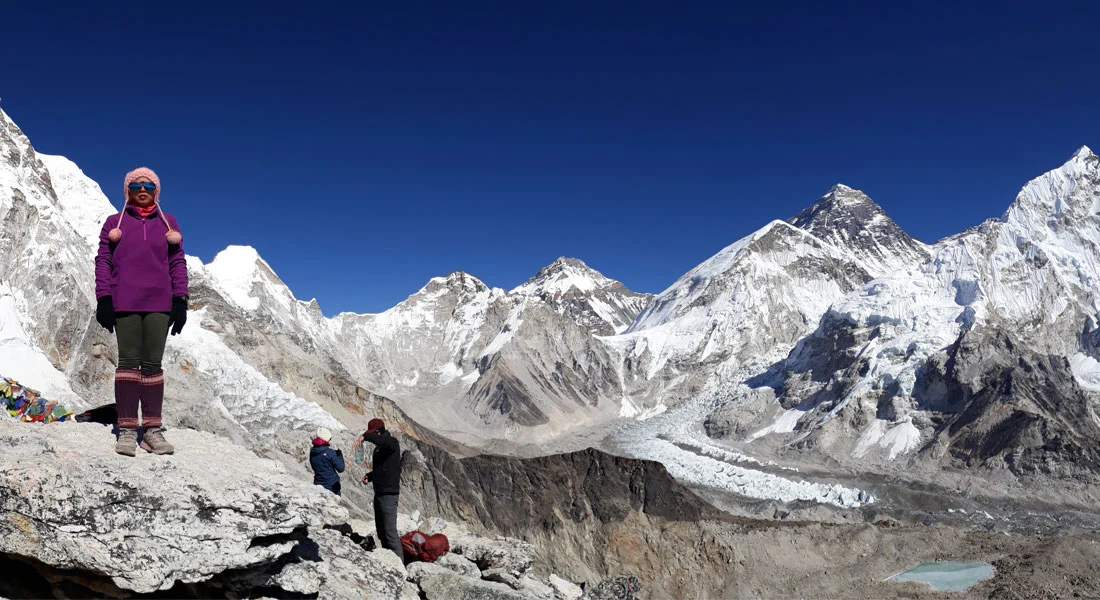
Three Passes Trek with Everest Base Camp 22 days trek conquer three high mountain passes-Renjo La, Cho La and Kongma La Pass in Everest. This  is a very popular and challenging trekking route in Everest Nepal. The 22-day Everest Three Passes Trek offers stunning views of Mount Everest, Lhotse, Makalu, and Cho Oyu. You will get an opportunity to experience a unique culture of the Sherpa people.

The Everest three passes trek offers panoramic views of Khumbu Glacier and surrounding mountain peaks. It connects Chhukung to Lobuche. The Cho La Pass (5,420 meters is steep and icy pass that requires a careful navigation. It connects Dzongla to Gokyo, and provides stunning views of Cholatse and Ama Dablam. Renjo La Pass (5,340 meters)-The westernmost pass with breathtaking views of Everest and the Gokyo Lakes. It connects Gokyo to Thame, and trail is less crowded compared to the other two passes.

The Three Passes Trek is considered strenuous due to the high altitude, long days of trekking, and the technical difficulty of crossing the passes. The proper acclimatization is helpful to avoid altitude sickness. Spring (March to May) and Autumn (September to November) are best seasons because of the stable weather, clear skies, blooming rhododendrons, dry weather, excellent visibility, and moderate temperatures.

It is nice to ensure you are physically fit and have prior trekking experience. The three passes trek with guide and porter for navigation and support, especially for crossing the passes. Carry proper gear, including warm clothing, sturdy trekking boots, and crampons for icy sections. Stay hydrated and acclimatize properly to avoid altitude-related issues.

Three Passes to Everest Base Camp Trek is a rewarding adventure for experienced trekkers seeking a challenging and less-crowded alternative to the classic Everest Base Camp trek. The 22-day Three Passes Trek  is a long and tough trek as you will cross over 3 high pass-Renjo La, Cho La and Kongma La pass above 5000m, and finally to Everest Base Camp.

For the ultimate Everest experience, it is a good trek to enjoy mountain views and the local Sherpa culture. The trail is untouched and less crowded than the Everest Base Camp. Three Passes Trek with Everest Base Camp discovers almost all the beautiful places of Everest. These are the most adventure trekking destinations in world.

The 22 days trip is more challenging than the Everest Base Camp Gokyo Trek and less challenging than Island Peak and Mera Peak climbing. Hence, please be physical fit and mental prepared for this challenging Everest Base Camp Three Passes Trek. The  best treks in Nepal, three passes to Everest Base Camp Trek offers an amazing scenery and views. The trip itinerary is safe and flexible where you can walk on your own pace.

Three Passes Trek 22 Days Itinerary

Day 01:Kathmandu (1,300m/4,264 ft)-Arrival
Day 02:Fly Kathmandu to Lukla (2,840m). Trek to Phakding (2,610 m, – 3 to 4 hours)
Day 03:Trek to Namche Bazaar (3,450 m– 4½ to 5½ hours)
Day 04:Acclimatization in Namche Bazaar
Day 05:Namche Bazaar to Thame (3,844 m- 4 to 5 hours)
Day 06:Acclimatization day in Thame
Day 07:Thame to Lungde (4,380m)
Day 08:Cross the Renjo La (5,388m) to Gokyo Lakes (4,790m – 9 hours)
Day 09:Rest day at Gokyo Lakes (4,790 m)
Day 10:Ascent of Gokyo Ri (5,357m – 2 hours). Trek to Dragnag (4,700m – 2 to 3 hours)
Day 11:Cross Cho La (5,380m) to Dzongla (4,830m – 8 to 9 hours)
Day 12:Dzongla to Lobuche (4,910m – 2½ to 3 hours)
Day 13:Lobuche to Gorakshep (5,220 m – 3 hours). Climb Kala Patthar (5,545m – 2 to 3 hours)
Day 14:Trek to Everest Base Camp (5,600m) and back – 5 to 6 hours)
Day 15:Descend to Lobuche – 2½ hours
Day 16: Cross Kongma La (5,535 m) to Chhukung (4,720 m)
Day 17:Climb Chhukung Ri (5,550m – 5 hours). Trek to Dingboche (4,410m – 3 hours)
Day 18:Trek to Kyangjuma (3,550m)
Day 19:Trek to Phakding (2,610 m– 5 to 7 hours)
Day 20: Trek to Lukla (2,840m – 3 to 4 hours)
Day 21:Fly Lukla to Kathmandu
Day 22:Kathmandu Airport

Detail Itinerary of Three Passes Trek with Everest Base Camp 22 days

01

Day 01: Arrival in Kathmandu and trip preparation(1,300m/4,264 ft)

On arrival at Kathmandu, receive you at TIA airport and transfer to hotel. Overnight at Hotel

02

Day 02: Fly Kathmandu to Lukla (2,840m). Trek to Phakding (2,610 m, – 3 to 4 hours)

Wake up early in the morning, transfer to airport, fly to Lukla and trek for 4 hours to Phakding.

03

Day 03: Trek to Namche Bazaar (3,450 m– 4½ to 5½ hours)

Breakfast and begins 7 hours a long day trek to Namche Bazaar. The trail going steep uphill along the Dudh Koshi river.

04

Day 04: Acclimatization in Namche Bazaar

Acclimatize day hike to Everest View Hotel and Khumjung Village. Stay night at Namche Bazaar.

05

Day 05: Namche Bazaar to Thame (3,844 m- 4 to 5 hours)

Breakfast and trek for 6 hour to Thame, the beautiful Sherpa village and the fertile valley.

06

Day 06: Acclimatization day in Thame

Breakfast and acclimatize day hiking around Thamu and Thame village.

07

Day 07: Thame to Lungden (4,380m)

Breakfast and trek to Lungde for 6 hours, the base camp of Renjo La Pass.

08

Day 08: Cross the Renjo La (5,388m) to Gokyo Lakes (4,790m – 9 hours)

Wake up early in the morning, have breakfast and pack breakfast and continue trek to Gokyo Lake. Today trek is steep uphill and downhill trail, the tough trek.

09

Day 09: Rest day at Gokyo Lakes (4,790 m)

It is timely to take a well earned rest day today considering yesterdays exploits and we have tough days ahead. Gokyo is a great place to relax with time to soak up the breathtaking scenery. For those who want to stretch their legs after a leisurely breakfast a wander down to one of the lakes is one option, or take a gentle stroll up and onto the moraine at the edge of the vast Ngozumpa Glacier.

10

Day 10: Ascent of Gokyo Ri (5,357m – 2 hours). Trek to Dragnag (4,700m – 2 to 3 hours)

Wake up early in the morning, climb up Gokyo Ri peak, return to Gokyo Lake, lunch and continue trek to Thangna.

11

Day 11: Cross Cho La (5,380m) to Dzongla (4,830m – 8 to 9 hours)

Wake up early in the morning, breakfast and back lunch and begins the second toughest day trek to Dzongla crossing Cho La Pass.

12

Day 12: Dzongla to Lobuche (4,910m – 2½ to 3 hours)

There are more superb views today, including a great view of the north face of Ama Dablam. After leaving Dzongla the trail descends slightly, then contours steadily around on to reach the main Khumbu Valley trail and to Lobuche. It will probably feel like a bustling city arriving in Lobuche, it is a busy place where all base camp trekkers stay en route to Everest.

13

Day 13: Lobuche to Gorak Shep (5,220 m – 3 hours). Climb Kala Patthar (5,545m – 2 to 3 hours)

Today to Gorak Shep would be fairly short around three hours if it were not for the climb of Kala Pattar – the Black Rock. This is best tackled in the late afternoon enabling us to be on the top in the early evening to catch sunset over the mighty Everest with the perfect light for photographs. Time to truly reflect on the experience so far before a journey back to camp and a warm bowl of soup before dinner.

14

Day 14: Trek to Everest Base Camp (5,600m) and back – 5 to 6 hours)

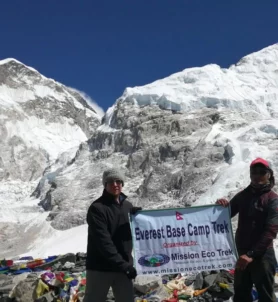
We Contour along the side of the valley and up on to the moraine of the Khumbu Glacier that weaves between mounds of rubble reaching base camp near the foot of the Khumbu icefall in around three hours. Base Camp is spread over quite a wide area, we spend some time wandering through it soaking up the atmosphere and getting a sense of what it must be like for the mountaineers camped there for two whole months, whilst attempting the mountain. We take lunch here before we make the return trek to Gorak Shep.

15

Day 15: Descend to Lobuche – 2½ hours

In the morning there is still time to make another side trek to Kala Pattar as there is no need to rush it is an easy day as we retrace our steps back to reach Lobuje for the night. Tomorrow we have another big day, as we plan to tackle the third of the High Passes for the last of our 3 Peaks.

16

Day 16: Cross Kongma La (5,535 m) to Chukkung (4,720 m)

Breakfast and begins the trek with pack lunch for the third and last high pass  trek to Chhukung Village.

17

Day 17: Climb Chukkung Ri (5,550m – 5 hours). Trek to Dingboche (4,410m – 3 hours)

Breakfast and climb Chhukung Ri Peak and return trek to Pangboche.

18

Day 18: Trek to Kyangjuma (3,550m)

Breakfasts and down hill trek to Kyangjuma, visiting Thyangboche Monastery offers great view of Everest and Ama Dablam.

19

Day 19: Trek to Phakding (2,610 m– 5 to 7 hours)

We continue on the path that leads back to Namche Bazaar. There is enough time in Namche to relax here spend time in the local bakery, or even to check the Internet. We journey down a steep descent of Namche Hill and on to the suspension bridge over the Dudh Koshi to the small village of Monjo. We are now back on familiar paths, there is no rush with perhaps a tea whenever we fancy a break. We arrive in Phakding for our last tented camp.

20

Day 20: Trek to Lukla (2,840m – 3 to 4 hours)

The trail today flattens out we need to cross the river twice before a climb up the hillside, past numerous teahouses to Lukla. Our last day is very steady trekking and what appeared to be thin air a couple of weeks back now feels positively normal with energy for our party this evening with our Nepalese crew.

21

Day 21: Fly Lukla to Kathmandu

An early morning flight back to the big city. You are met at the domestic airport in Kathmandu for the transfer to our hotel. The afternoon is free with time to explore the temples, or simply browse the bookshops and shop in the Thamel area. Evening is free.

22

Day 22: Kathmandu Airport

Breakfast and free day for last minutes shopping until airport time. Final transfer to the airport to get your flight back to home.

Not Happy with this itinerary?

Includes / Excludes

What's Included ?

  • Transfer-Airport to Hotel to Airport
  • Domestic flight tickets (Kathmandu – Lukla – Kathmandu).
  • Twin sharing teahouse accommodation during the trek.
  • Three times meals-Breakfast, Lunch and Dinner on the EBC trek.
  • Government Licensed English Speaking guide and 1 porter for every two trekkers and all their expenses(wages, meals, insurance, lodging, transportation, flight, and other necessary equipment).
  • Water purification tablets for safe drinking water
  • Sagarmatha National Park Entry permit fee
  • Khumbu Pasang Lhamu Rural Municipality fees
  • Snacks (cookies) and seasonal fresh fruits every day
  • All government, local taxes, and official expenses
  • Assistance in arranging rescue operation in case of emergency(paid by your travel insurance)
  • Farewell dinner at the end of the trek

What's Excluded ?

  • International flight costs
  • Nepal Entry Visa Fees for multiple entries on arrival at Kathmandu-TIA Airport (USD 50 for 30-day stay)
  • Excess baggage charges (Luggage limit-9 kg per person) on the trek
  • All accommodation and meals in Kathmandu, before and after the trek.
  • Extra night accommodation in Kathmandu due to an early arrival or late departure(early return) from the trek.
  • Personal expenses such as (shopping, snacks, bottle(boiled) of water, hot (Tea/ Coffee) and cold drinks, hot shower, alcohol, Wi-Fi, telephone call, battery re-charge fee, hot shower and an extra porters etc.
  • Personal(equipment) clothing and gear
  • Travel insurance that covers emergency high-altitude rescue and evacuation (compulsory)
  • Tips for guides and porters (recommended)
  • Additional costs incurred due to the unforeseen causes that beyond our control like landslides, weather conditions, itinerary modifications due to safety concerns, illness, change of government policies, strikes, etc.
  • All the other expenses not mention on price includes.
private-trip

Note: We operate private trip everyday.

We can operate private trip for solo, group, family, students as per your requirements.

Trip Information - Three Passes Trek with Everest Base Camp 22 days

Three Passes Trek-Difficulty

Everest Base Camp Trek is a challenging trek. The mountain sickness problem, you may face on this trek. Some previous trekking experience is helpful. The regular exercise and hill walking is a good physical preparation for the trek. You will reach to a height at 5,545 m. You need to walk 6 to 7 hours a day, distance between 12 km to 18 km. The trail goes uphill and downhill frequently.

Accommodation on Three Passes Trek

Everest Base Camp Trek is no more remote now. You will find basic and budget teahouse lodges to luxury hotel along the trail to Everest Base Camp. In our package price, we do provide basic-twin sharing room in the teahouses. The twin beds have foam mattresses, bed sheets and a pillow. The rooms are unheated and cold at nights, so please bring a good sleeping bag. Most lodges have only one or two basic toilets inside and outside the main tea house lodge building.

Toilets-Toilets are usually Asian ’squat’ style; although many lodges have ‘western style’ seated one now. Toilet paper is not provided so you should bring your own or buy it locally (please dispose it in the bin provided – do not put it in the bowl). If there is not a flush handle, there should be a container of water to pour down – if it is empty (or frozen) please either refill it or ask the lodge too.

Hot Shower-Mostly lodges have hot showers, price charges from Rs 250 to Rs 500 per shower. Sometimes hot shower is simply a bucket of hot water and not a shower head. As a general rule, the higher you go, the lodges are more basic and the more expensive food and services become. However, we discourage our groups from using water heated by wood as the lack of firewood in the alpine villages. It is a big environmental concern in Nepal. Access to electricity point for charging devices will charge an extra price. WIFI is available most of the hotels, but connection is poor.

Meals on Three Passes Trek

Everyday, three meals-breakfast, lunch and dinner are provided. You will have choices of meals consist of noodles, porridge, bread, eggs, Dal Bhat (rice and lentils), vegetables, noodles, potatoes, soup, pizza, pasta and French fries. Also hot and cold drinks like tea, coffee, bottle of water, beer, whisky, coke and fanta.

Although meat is also available in the tea houses, we advise you not to eat meat on the trek. The meat has often been carried from lower altitude for several days before reaching to the lodges. So, meat can cause stomach upsets and illness. Germs can also be spread by handling dirty money – we recommend using hand sanitizer.

Breakfast and Dinner you have to eat at the same tea house where you spend night, lunch will be eaten at some teahouse restaurant on the trail.

Wi-Fi and Internet Access

Hotels in Kathmandu generally have excellent Wi-Fi connections. Most hotels offer free Wi-Fi in public areas. While trekking Wi-Fi may be available in tea houses and lodges for a small cost. The higher you go the use of Wi-Fi and internet will be extra cost and likely the slower the speed. Your tour leader will be able to offer some advice on communications in remote areas of the country. Please note that most tea houses do not have electrical outlets in rooms to charge devices but are shared in the main dining area with an additional cost. Past travelers have found portable solar chargers to be very useful.

Electricity on Three Passes Trek

Almost all lodges have electricity but it is not wholly reliable and lighting may not be bright enough to read. Buy a torch is essential. Electrical charging facilities are generally available only in the dining room(It charges from NPR 150 to NPR 350 per hour per device). Many of the lodges use solar power, so sometimes there is not enough electricity for charging. Many lodges have Wi-Fi now – in some areas it works well but in others, it is slow and temperamental. It also an additional price from NPR 200 to 500 from evening to the next morning.

The Three Passes Trek: Seasons and Weathers

The main trekking season to Everest Base Camp Trek is from September to mid-June. The daytime weather at the most altitude are generally comfortable for walking, the sky is clear, rain and snow are occasional occurrence. Daytime temperature will vary from 15ºC to 35ºC in the Kathmandu Valley to 10ºC at 3,600 m and progressively lower the higher we go. Different seasons offer different advantages for trekking.

Post Monsoon/Autumn Season
Mid-September to November is the main trekking season in Nepal. Day temperatures in Kathmandu are approximately above 20ºC. Skies are usually clear and days on trek are sunny and mild with clear mountain views. Nights will be colder with temperature dropping down to minus 10ºC at the highest altitudes.

Winter Season
December to end February is an ideal time to trek to Everest Base Camp although it is colder. Skies are usually very clear especially in December and the mountain views are at their best. Nights will be very cold with temperature goes down to minus 15ºC to minus 20ºC at the highest altitudes but days are pleasant and sunny. The trails are also much less busier at this time of year. In Kathmandu maximum daytime temperatures are 19ºC.

Pre-monsoon/Spring Season
March to May holds both day and night temperatures will be warmer in general but often a haze will build up in the afternoon. It is very hot in the lowland and temperature rise to 35ºC in Kathmandu. Flowers bloom in this season and this is one of the reasons people choose to trek in spring. Snow can be expected on any departure, usually at the higher altitudes. Please remember that in any mountain area, the weather is never wholly predictable and you should be prepared and equipped to deal with any difference in weather beyond the conditions described above.

Drinking Water

Staying rehydrated is important when undertaking any physical activity but particularly to an altitude where it is generally recommended to drink at least 3 to 4 liters of water in a day.

Strongly encourage you not to buy bottled water on trek as this contributes to grow problem of plastic pollution in Nepal. The tea houses sell boiled water, cost ranges from Rs 150-300 per liter (the price increases the higher you trek) which should not require treating. This is also perfect for a bedtime refill as it can double up as a hot water bottle.

Alternatively, all tea houses will provide cold water free of charge, if request. Although this should not be drunk untreated, we recommend that you bring a reusable bottle with you and use an effective form of water treatment.

Handheld UV filters such as a ‘Ste Ripen’ are very effective, can treat 1 liter of water in a couple of minutes and the water is ready immediately – look for lightweight lithium battery models and remember that you will need to bring a wide-mouthed bottle (e.g. Nalgene) for use with these devices. The water purification tablet is also the best way to treat water on the trek.

Equipment for Three Passes Trek

Please kindly pack basic clothing and accessories on your baggage taking to Everest Base Camp Trek. You can store the excess luggage at our office in Kathmandu without any charge(free). Two each to one means for every two trekkers, we appoint one porter to carry luggage, but the weight limit is 9 kg per person. Pack your luggage in a duffle bag(rucksack) of 70 liters. Moreover, you need to carry a small backpack with your valuables and important documents while on day trek. Below is the list for you to help you pack for the trek.

  • Head
    Sun hat or scarf
    Winter hat or insulating hat or Wide-brimmed hat
    Headlight with extra batteries
  • Face
    Sunscreen
    Sunglass with UV protection
    Face/body wipes
  • Hands
    Lightweight gloves
    Heavyweight winter gloves
  • Body
    Hiking shirts
    Long-sleeved shirt
    Hooded rain jacket
    Fleece jacket
    Lightweight cotton pants
    T-Shirt (bring Lightweight wool)
    Polypropylene underwear
    Down jacket (available in rent in Kathmandu)
    Sweater
    Waterproof jacket and pants
  • Footwear
    Hiking Boots
    Thick wool socks (Take an extra pair)
  • Essential Gears
    Backpack or daypack (Size depends on whether you take porter or not).
    Thermal bottle
    Water purification
    Trekking pole
    Sleeping bag
  • Toiletries
    Medium size drying towel
    Tooth brush
    Tooth paste
    Deodorant floss
    Biodegradable bar soap
    Nail clippers
    Small mirror
  • Personal Accessories
    Money
    Watch
    Cell phone
    Camera
  • Extra Items
    First aid kit
    Extra passport photos and photocopies of passport
    Notebook and pen
    Binoculars

Why booking Three Passes Trek Nepal?

  • Free transfer: Kathmandu-TIA airport to hotel to airport.
  • Easy booking and reservation system by email, WhatsApp, Facebook, WeChat, Viber, Skype, Zoom)
  • 24/7 Communication at +977-9851023742
  • Easy Payment System.
  • Sleeping bags and down jacket arrangements, if you do not have your own.
  • Free excess luggage storing service while on trekking.
  • Team of highly experienced experts
  • No Booking or Credit Card Fee
  • Hassle-Free Booking
  • Your Happiness Guaranteed
  • Best Price Guarantee

Trek Briefing

The trip briefing will clear your all doubts about the trek such as the equipment checklist, itinerary and what expect on the trails. We do conduct trip briefing before the trek departures. The flight between Kathmandu and Lukla may get delay due to weather. In such cases, we re-schedule flights to the next available flight. So, we suggest you all guests add at least 2 extra days as a caution to avoid international flight delays back to home country.

Lukla Flight Information

In the peak trek seasons(March, April, May, October and November), flight to Lukla run from Ramechhap/Manthali instead of Kathmandu due to air traffic in Kathmandu airport. At the other times than this months, the flight will be from Kathmandu. You need to leave at around 1:30 AM from Kathmandu for Ramechhap to catch up flight to Lukla. The drive will take around five hours from Kathmandu to Ramechhap.

On Arrival at Kathmandu-TIA Airport

Your guide and our company representative will be waiting you at the opposite of Kathmandu-TIA airport arrival entrance. They will show your name with flight arrival details(Airlines Name, Flight No and Estimate Flight Arrival Time). Once receive, you will drive to hotel. We also book tourist standard hotel to luxury hotel in Kathmandu as per your kind advice.

Luggage for Three Passes Trek

We apply one porter for two trekkers. The porters carry no more than 18 kg of luggage. Please carry your valuables and essential documents on your daypack. It is possible to store your luggage at our office in Kathmandu for free.

Typical day

The day in the trek, begins with morning breakfast at 7:00 AM to 8:00 AM, and after walking 3-4 hours, we stop for lunch in the afternoon for an hour. We walk for 1 to 2 hours to our next teahouse after lunch. Free day in the afternoon, walk around the area. Dinner will serve at around 7:30 PM, and your guide will give you about the next day trip plan like time to breakfast and beginning of the trek. It is also possible to play cards, reading books and learn Nepali words after dinner.

Tipping for 22 days Three Pass Trek

Nepali culture accepts tipping. We advise you to tip according to the trip length, cost, and quality of service. Further, we recommend you tip collectively at the end of the trek.

Trip Extension

If you have extra time in Nepal, we do organize trip extension activities to sightseeing tour in Kathmandu, Chitwan National Park, rafting, canoeing and bungee jumping.

Travel Insurance Compulsory for Three High Pass Trek

Travel insurance is mandatory for the EBC trek. All trekkers must provide a copy of their comprehensive travel insurance policy certificate to us before your trekking departure. The policy must cover medical and emergency repatriation- including helicopter rescue and evacuation expenses at high altitudes (up to 5,500m). If you want, we do recommend insurance providers. However, we are not selling insurance. We request all our valuable clients to send your insurance documents to once once you book the trek. In emergency, we will use your insurance and informational documents for a quick rescue operation. Your insurance must cover mountain rescue service at high altitudes (6000m).

Group and Private trek

We run both group and private treks. If you have your own group, you are eligible for discounts proportional to your group size. However, you will not get discounts for the groups we assemble. For groups of 12 people and more, we also add an assistant guide.

Nepal Visa and Passport

All visitors except the Indian nationals must hold a valid passport of a minimum of 6 months validity remaining and valid visa. Visa can be obtained at the Nepalese diplomatic missions and consulates abroad. Visa is also issued at the entry points. It can be extended at the Department of Immigration, Kathmandu. Children under 10 years need not pay any visa fee. People willing to get entry Visa at the Kathmandu-TIA airport or any of the land entry points are required to fill a visa form with passport photograph. The following visa fee to be paid at the airport as per your stay in Nepal.

  • Multiple Entry 15 Days: US$ 25 or equivalent convertible currency
  • Multiple Entry 30 Days: US$ 40 or equivalent convertible currency
  • Multiple Entry 90 Days: US$ 100 or equivalent convertible currency

Responsible Travel, Tour and Trekking Operator

The beautiful environment of the Himalayas is also an extremely fragile one. We are extremely conscious about the environment and aim to minimize the detrimental impact on the environment as much as possible.

Cares for Porter and Guides

We make sure that all porters and guides are provided with adequate clothing and equipment. We also ensure that the porters and guides are insured. We run the trek according to the guidelines of the International Porter Protection group.

Price starts from
$1470 - $2880
  • Best Price Guarantee
  • Secure & easy online
  • Discount for groups
Confirm You Trip
@ USD 294
  • visa-icon
  • mastercard-icon
  • american-express
  • discover-network

Similar Trips

Few reasons to choose mission eco trek for your next holiday

Read Reviews on Three Passes Trek with Everest Base Camp 22 days

5.00/5 from 310 reviews
trip-advisor-icon
trip-advisor-rating
310 reviews
22 days
Three Passes Trek with Everest Base Camp 22 days
Price starts $1470 - $2880
Free Trip Planner
kathmandu package trips.
Jitendra Gurung Tour Leader
Request for Assistance ⮞