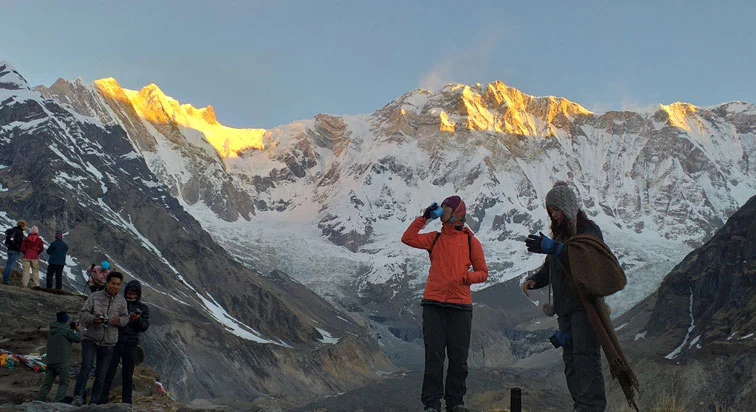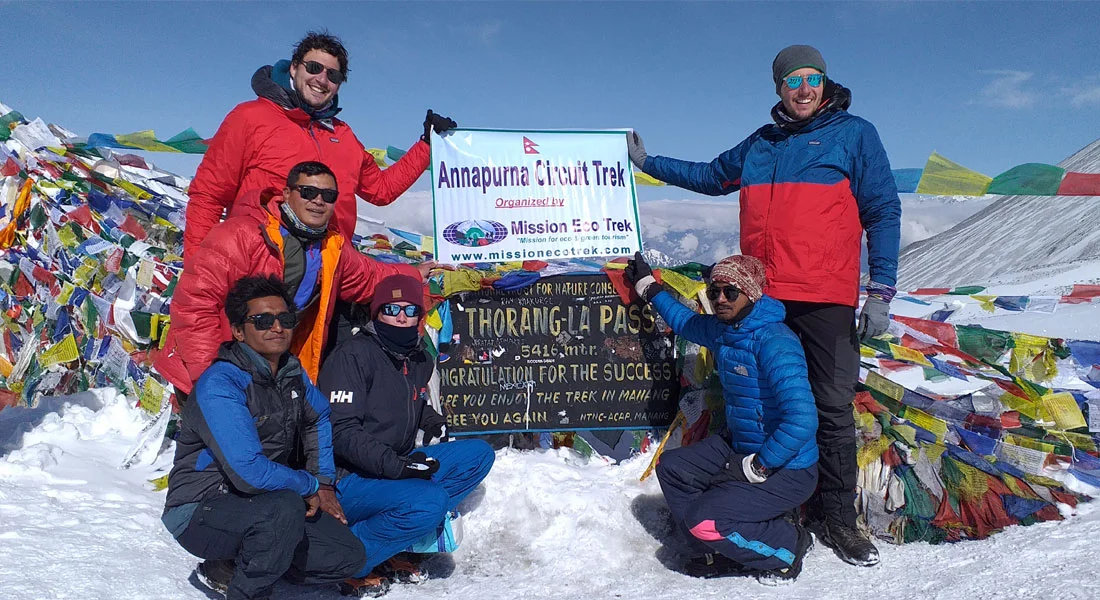
Nepal Annapurna Circuit is located in the Annapurna Conservation Area Project (ACAP) in the central Nepal. The route varies in length depending on the starting and ending points, typically between 160-230 km. The trek usually takes 8-21 days to complete. The trek involves significant elevation changes, reaching the Thorong La Pass at 5,416 meters.
Annapurna Circuit offers diverse landscapes, from subtropical forests and paddy fields to high-altitude passes and arid regions. The trek provides opportunities to experience the diverse cultures of the Thakali, Manangi, and Gurung people. The trek is challenging, requiring good physical fitness and acclimatization to high altitudes. The Annapurna Circuit is one of the most popular treks in Nepal, known for its beauty and adventure
Annapurna Circuit is one of the most immersive ways to experience the mountains of Nepal. If you’re planning a trip to Nepal with remarkable high mountain views and deep mountain valleys, it is the best as you’ll be walking the Annapurna Circuit to Annapurna Base Camp also known as the Annapurna Sanctuary.
The Annapurna massif is home to some of the highest mountains in the world, while the legendary Annapurna Circuit is the best known trekking route. It circles the entire the Annapurna Massif and also consider the 10 best treks in the world. The Annapurna Circuit is a long-distance trekking route in Nepal.
A very popular trekking trails with the total length of 160–230 km, depending on the starting and ending point of the trek. Annapurna Circuit expands in two different river valleys and the Thorong La Pass at (5416m). Most trekkers do the circuit trek anticlockwise, as the daily altitude gain is slower, and crossing Thorong La pass is easier and safer.
Annapurna Circuit Trek begins at Besisahar/Bhulbhule in the Marshyangdi river valley and concludes in the Kali Gandaki Gorge. A seven-hour bus ride from Kathmandu takes you to Besishahar. The Annapurna Circuit trail passes through paddy fields and subtropical forests, past several waterfalls and gigantic cliffs, and through various villages.
The Annapurna Circuit has cultural variety from Hindu villages at the low foothills to the Tibetan culture of Manang Valley and lower Mustang. The Besisahar-Manang road has been built which passes through the trekking trail much of the time. With the construction of roads, mountain biking is becoming so popular.
The Annapurna Circuit Trek usually takes about 8–20 days, leaving from Kathmandu with a stopover in Pokhara before returning to Kathmandu. The trail is moderate to fairly challenging and makes numerous river crossings over steel and wooden suspension bridges.
It is also possible to continue from Ghorepani to Tadapani, Ghandruk, Landruk, and then to Phedi, which follows the old Annapurna Circuit from the time when the road was not yet extended to Beni. The circuit can also be extended to visit Annapurna Base Camp also called Annapurna Sanctuary. The original Annapurna Circuit route has been impacted by the construction of new roads linking the region’s villages.
Nepal Annapurna Circuit Trek-Seasons
While trekking in the Himalayas in the wet season is generally not possible. The Annapurna circuit sits within a rain shadow area, so it is possible to trek around the Annapurna circuit year-round, including during the monsoon period. However, the days are often damp and many of the views are obscured by clouds.
Annapurna Circuit in October – November
This is the most popular hiking season in Nepal. Though the weather is generally warm, nighttime temperatures drop below freezing. This is the busiest period on the circuit and tea houses book up very quickly.
Trek to Annapurna Circuit in December – March
This is the coldest period on the circuit. Depending on the altitude, daytime temperatures will be cold and nighttime temperatures drop well below freezing. Thorung La Pass, which stands at over 5,400 meters, is often blocked with snow and may be closed for days on end. Clouds prevail more frequently, but clear days are still common. Towards March the rhododendrons start flowering. This period is also when avalanches are most common.
Annapurna Circuit in April – May
Because of the warming weather, April to May is the second most popular trekking season on the circuit. Most of the snow has melted. As the monsoon period builds toward the end of May, the days become hotter and more humid.
Annapurna Circuit in June – September
This is the monsoon period. Whilst the south section of the Annapurna Circuit near Pokhara gets a lot of rain, the northern parts often receive less than 10% of the precipitation due to their location within a rain shadow.
A 23-day full Annapurna Circuit Trek has only 2 sections of 2-3 walking days in the length of the trek are now without a motor road, namely the Thorong La pass and the section over Ghorepani/Poon Hill. In some places, new trails and routes have been marked so that the road can be partly avoided. The existence of the road has nevertheless changed the area, appearance, and atmosphere of the villages. The road facilitates transport, increasing the popularity of mountain biking in the area.
New Trekking trails in Annapurna have been opened for trekkers in the past years, such as Upper Mustang, Nar-Phu Valley, Manaslu, and Tsum Valley. Currently, trekking in these areas is restricted and subject to extra permits, costs, and other limitations.
The shortest Annapurna Circuit Trek-Records
In October 2014, Seth Wolpin achieved the fastest known time in 72 hours and 4 minutes, the full Annapurna Circuit. He started in Besisahar and finished in Nayapul, following all the New Annapurna Trekking Trails. It is reported that time has been recently surpassed by Greek athlete and philanthropist Lefteris Paraskevas, who, in May 2017 completed the classic route of the Circuit, from Besisahar to Nayapul, in 68 hours and 22 minutes.
2014 Disaster in Annapurna Circuit
In October 2014, a sudden blizzard killed over 43 people, half of whom were Nepalese. It was caused by the tail end of a dying cyclone that had ravaged the eastern coast of India; there were about 350 hikers caught in the blizzard.
How difficult is the Annapurna Circuit Trek?
The Annapurna Circuit is a tough but totally doable and rewarding multiday trek in a remote part of the Himalayas. If you’re thinking of doing it, you probably should. Stay physically fit for the Annapurna Circuit Trip. The most difficult section during the Annapurna Round Trek is when trekkers cross the Thorong La Pass (5416 m). In order to cross this longest high altitude pass, trekkers have to start their journey very early in the morning. Moreover, it requires lots of uphill and downhill walking.
Is Annapurna Circuit harder than Kilimanjaro?
In summary, Annapurna is harder than Kilimanjaro due to its unpredictable weather, technical difficulty, high avalanche risk, and severe altitude sickness challenges. These factors combined make it one of the most daunting peaks for climbers worldwide. In a nutshell, Everest Base Camp is a bit harder than Annapurna Circuit, for a couple of reasons: Firstly, the average altitude is lower, which makes trekking a bit easier.
The trek is located in the Annapurna Conservation Area Project (ACAP) in central Nepal. The route varies in length depending on the starting and ending points, typically between 160-230 km. The trek usually takes 12-21 days to complete. The trek involves significant elevation changes, reaching the Thorong La Pass at 5,416 meters.
The trek offers diverse landscapes, from subtropical forests and paddy fields to high-altitude passes and arid regions. The trek provides opportunities to experience the diverse cultures of the Thakali, Manangi, and Gurung people.
The trek is challenging, requiring good physical fitness and acclimatization to high altitudes. The Annapurna Circuit is one of the most popular treks in Nepal, known for its beauty and adventure
What to bring on the Annapurna Circuit?
The equipment list of what to bring on the Annapurna Circuit are as below:
Clothes
Waterproof jacket with hood
Mid-weight down jacket
Waterproof trousers
Lightweight trekking trousers
Hiking shorts (if trekking in the summer)
Thermals (top and bottom, merino ideal)
2-3 trekking t-shirts/shirts
Fleece or warm mid-layer
Waterproof thick gloves
Glove liners
Hiking socks and lighter walking socks
Wool hat
Sun hat
Spare underwear
Buff or similar
Shoes
Worn in waterproof hiking boots
Lightweight trainers (for the evenings)
Flip-flops or sandals
Sleeping
4-season sleeping bag
Sleeping bag liner
Pillow case (optional)
Other
Trekking poles
Travel towel
Sun protection (sunscreen, sunglasses)
2 water bottles (1 litre each)
Headtorch
First aid kit and/or personal medication
Water purification tablets/system
Hand gel
Biodegradable wet wipes
Small biodegradable bags to take toilet tissue off the mountain
Toilet paper/tissues
1 x passport photo for trek permit
Power bank
Universal plug adaptor
Book/kindle/cards for downtime
Winter departures only (end Nov until Mar)
Gaiters
Extra warm layers (add an extra warm item to all key items above)
Extra set of thermals (pair to walk in, pair to sleep in)
Merino trekking socks
Merino glove liners
How cold does it get on the Annapurna Circuit?
During the winter months, the average daytime temperature of the Annapurna Circuit trek is 5-10°C, but it can go as low as -20°C in higher altitudes, and even lower at night. During the warmer months, you’ll likely experience temperatures from 15-23°C at the lower altitudes on the trek (below 2,500m). But as you climb up above 4,000m it’ll drop below 10°C. And the highest point of the trek, Thorung La, may well be below freezing. So even during summer time, you’ll need warm clothes.
Annapurna Circuit Height/Altitude
The highest altitude on the Annapurna Circuit is Thorung La Pass, at 5,416 meters (17,769 feet). The trek starts at Besisahar, which is at an elevation of 760 meters (2,493 feet).
Cost/Price for Annapurna Circuit Trek Packages
The cost of the Annapurna Circuit trek varies from $800 to $1500, and it includes guide and porter fees, meals, accommodation, and transportation. Permits such as the Annapurna Conservation Area Permit and TIMS card, also includes in the overall cost.
Meals/Food on Annapurna Circuit Trek
The Annapurna Circuit Trek offers a variety of meals in teahouse lodges, with staples like Dal Bhat (rice and lentils) and international options like pizza, pasta, and noodles. Breakfast typically includes porridge, pancakes, Tibetan bread, eggs, and hash browns. For lunch and dinner, expect to find Dal Bhat, rice with curry, fried rice, noodles, and momos (dumplings).
Breakfast-Porridge, Pancakes(plain, banana, apple, chocolate), Tibetan Bread or Toast (with butter, jam, honey), Eggs (boiled, scrambled, fried, omlette), Chapati or Paratha (Indian-style bread), Hash brown potatoes.
Lunch and Dinner-Dal Bhat(rice, lentil soup, vegetable curries, and sometimes pickles), Rice with chicken or vegetable curry, fried rice (egg, veg, mixed), Fried noodles (veg, egg, mixed), noodle soup (Thukpa), Pasta/Spaghetti with cheese, tomato sauce, vegetables, or meat; and Spaghetti with similar ingredients.
Momos(Vegetable, chicken, or buff (momo) dumplings, Pizza-Chicken, mushroom, mixed pizza, and other-Hash brown potatoes, muesli, Dhindo gundruk (traditional Nepali dish), apple pie. Many teahouses also offer a variety of hot and cold drinks, including tea, coffee, and Nepali soda.
Accommodations on Annapurna Circuit Trek
The most common accommodation on the Annapurna Circuit Trek are teahouses, which are basic lodges with communal dining areas and simple rooms. You’ll also find guesthouses and lodges, with varying levels of comfort.
Teahouses-Teahouses are the most prevalent type of accommodation on the trek. They are often family-run and offer a basic, yet comfortable, experience. Rooms-Rooms are typically twin-sharing and may be gender-specific. Most teahouses have basic amenities like a dining area, toilets, and sometimes hot showers or charging points (for a fee).
Electricity-Electricity is available, but charging electronic devices may incur extra costs. Hot Showers-Hot showers are available in some teahouses and lodges, but may be a small fee. Toiletries-Toilet paper is not typically provided, so it’s a good idea to bring your own.
Teahouse accommodation is basic, but it’s a great way to experience the local culture and interact with other trekkers. If you’re looking for more comfort, guesthouses and lodges are good options, and camping offers a more adventurous experience.
How is Wifi and Electricity on Annapurna Circuit Trail?
Wifi-Costs anywhere from $0 to $4 to use wifi at the guesthouses. Buy an NTC Sim before you go. It worked in some spots but after Pisang, the service dropped and it was mostly WiFi until we got across the pass to Muktinath.
Electricity-You will have to pay anywhere from $0 at low elevations to $5 to charge your power banks, cameras, and phones. The most rooms had free electricity PowerPoints in the room. The key is to get a big power bank. Pay to charge it then charge everything from your power bank.
Travel Insurance for the Annapurna Circuit Trek
Nepal is a dangerous place for trekking and hiking because the high altitude can lead to many illnesses, weakness in trekkers, and misjudgments. There is also a risk on trails for falls, avalanches, or other mishaps. Travel insurance is necessary and make sure that your travel insurance that cover helicopter evacuation and medication in the hospital.
Annapurna Circuit Packages
The Annapurna Circuit trekking package typically offers a 8-21 day adventure through Nepal’s stunning Annapurna range, featuring diverse landscapes, teahouse accommodation, and the iconic Thorong La Pass. Discover the more Annapurna Circuit Trek Packages here in below.
Annapurna Circuit Trek 9 days
Annapurna Circuit Trek 10 days
Annapurna Circuit Trek 11 days
Annapurna Circuit Trek 12 days
Annapurna Circuit Trek 13 days
Annapurna Circuit Trek 14 days
Annapurna Circuit Trek 15 days
Annapurna Circuit Trek 16 days
Annapurna Circuit Trek 17 days
Annapurna Circuit Trek 18 days
Annapurna Circuit Trek 19 days
Annapurna Circuit Trek 20 days
Annapurna Circuit Trek-Permits
For the Annapurna Circuit trek, you need the Annapurna Conservation Area Permit (ACAP) and the TIMS card. That, cost is around USD 50. To get a TIMS card (trekkers information management system card) and a permit, your passport, travel insurance, a contact person in Nepal, and 4 photos. The TIMS card and the permit are valid only for a single entry.
Is guide necessary trekking to Annapurna Circuit?
A guide is not really necessary but it is nice to trek with guide and the guide manages all of the logistics, distances, directions, and tea houses. The directions weren’t always very clear like on Annapurna Circuit Trek and having the guide manage all of the logistics is great.
Annapurna Circuit is a top 10 best trekking trails in the world. A must do trek in the Himalayas for the once in a life time experience.
Planning a Trip? Make an Inquiry
- Nepal Annapurna Circuit Trek-Seasons
- The shortest Annapurna Circuit Trek-Records
- 2014 Disaster in Annapurna Circuit
- How difficult is the Annapurna Circuit Trek?
- What to bring on the Annapurna Circuit?
- How cold does it get on the Annapurna Circuit?
- Annapurna Circuit Height/Altitude
- Cost/Price for Annapurna Circuit Trek Packages
- Meals/Food on Annapurna Circuit Trek
- Accommodations on Annapurna Circuit Trek
- How is Wifi and Electricity on Annapurna Circuit Trail?
- Travel Insurance for the Annapurna Circuit Trek
- Annapurna Circuit Packages
- Annapurna Circuit Trek-Permits
- Is guide necessary trekking to Annapurna Circuit?
 Talk to Expert