Everest Base Camp Trek Trail Guide
Everest Base Camp Trek Trail Guide to EBC Trek is located in the northeastern Himalayas of Nepal’s Khumbu region, inside the Sagarmatha National Park. The Everest Base Camp Trek is a famous 8-to-20 day hiking journey in Nepal that takes you to the foot of Mount Everest at an altitude of 5,364 meters(17,598 feet).
The EBC trip usually starts with a short flight from Kathmandu to Lukla, then follows a roughly 53 km (33-mile) trail each way through the Khumbu region. You pass through Sherpa villages like Namche Bazaar, visit the Tengboche Monastery, and hike up to Kala Patthar(5,545m) for panoramic views of Everest.
Trekkers sleep and eat along the way in local mountain lodges called tea houses. You do not climb the peak itself; Everest Base Camp is a high-altitude walking route rather than a technical climbing expedition.
Facts of Everest Base Camp Trek
The Everest Base Camp trek in Nepal reaches to a maximum elevation of 5,364 meters (17,598 feet) at the southern base camp on the Khumbu Glacier.
Total Distance: Around 130 kilometers (80 miles) round-trip.
Duration: Typically 8 to 19 days.
Starting Point: Tenzing-Hillary Airport in Lukla (2,846 meters / 9,337 feet), reached via a short flight from Kathmandu or Ramechhap.
Key Stops: Namche Bazaar, Tengboche Monastery, and Gorak Shep.
Surprising Facts
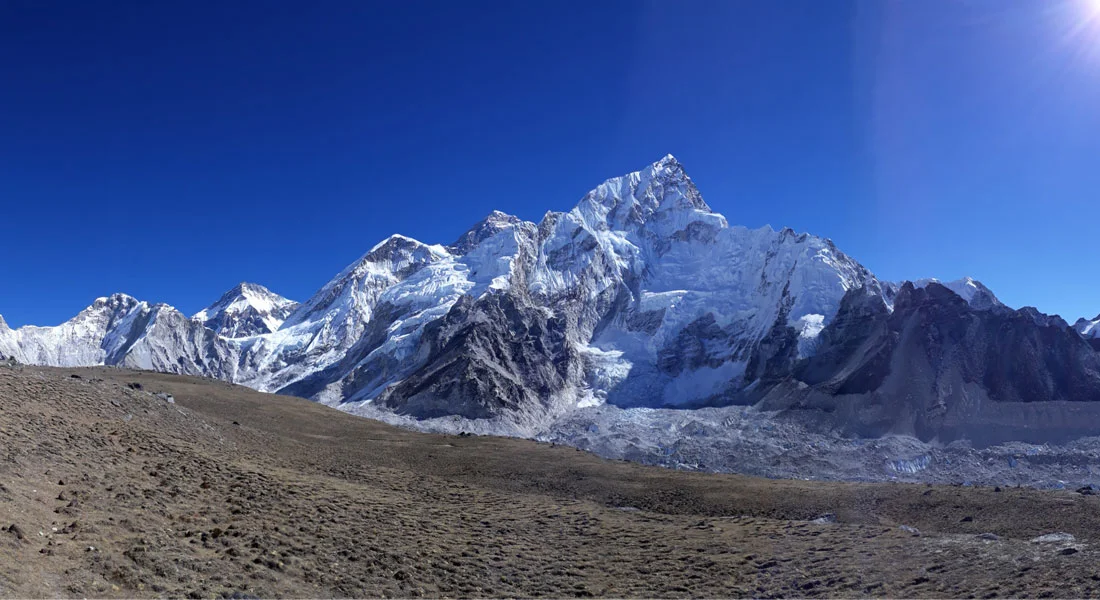
You Can’t See Everest From Base Camp: Mount Everest is hidden behind the mountain ridge of Nuptse and Lhotse from the southern base camp. You must climb the nearby Kala Patthar viewpoint (5,644 meters / 18,520 feet) for the classic view of Everest’s peak.
The Camp Moves: Because Everest Base Camp sits directly on the shifting Khumbu Glacier, the physical camp moves slightly every year.
No Technical Climbing Needed: The trek is a high-altitude hike on dirt and rock trails, meaning you do not need ropes, ice axes and mountaineering skills to reach Everest Base Camp.
Best Seasons: The best times to go to EBC are spring (March to May) for blooming flowers and clear mornings, and autumn (September to November) for stable weather.
Highlights of Everest Base Camp Trek Trail Guide
- Destination Elevation: Everest Base Camp sits at 5,364 meters (17,598 feet) above sea level at the foot of the Khumbu Glacier.
- Namche Bazaar: The central Sherpa hub at 3,440 meters (11,290 feet).
- Tengboche and Dingboche: High-altitude villages used for cultural sights and acclimatization.
- Gorak Shep: The final flat staging area before reaching the base camp.
Everest Base Camp Trek Itinerary
The classic Everest Base Cam (EBC) trek is a 8 to 19-day journey reaching a maximum altitude of 5555 m at Kalapatthar and Everest Base Camp. For your kind notice, we are happy to bring you the amazing itineraries of Everest Base Cam(EBC) Trek from Kathmandu via Lukla.
A 8 day Everest Base Camp Trek
A 7 day Everest Base Camp Trek
A 9 day Trek Everest Base Camp
A 10 day Everest Base Camp Trek
An 11 day trekking Everest Base Camp
A 12 day Everest Base Camp Trekking
A 13 day trekking to Everest Base Camp
A 14 day trek to everest Base Camp
A 15 day Everest Base Camp Trek
A 16 day Mt Everest Base Camp Trek
A 17 day Mount Everest Base Camp Trek
A 18 day EBC Trek
Breakdown Cost for Everest Base Camp/EBC Trek
- An Everest Base Camp trek typically costs between $1,250 and $25,00 per person for a standard 9 to 20-day guided package.
Standard Package: $1,250 to $2,000 per person (includes teahouse lodging, meals, domestic flights between Kathmandu and Lukla, permits, a licensed guide, and porters). - Independent / Budget Trek: $600 to $1,200 per person if you manage your own logistics, skip a guide, and take a shared jeep instead of flying to Lukla.
- Luxury / Helicopter Return: $2,500 to $5,000 plus for luxury lodges and an options featuring a return helicopter flight from Gorak Shep/Base Camp.
Permit and Documentation
For Everest Base Camp Trek, a proper documents and permits are required. Without permits, you are not eligible to trek Everest Base Camp/EBC in Nepal. You can obtain EBC Trek Permits in Kathmandu and Lukla paying the below fee through Mission Eco Trek, a government registered trekking company in Nepal. You need a Sagarmatha National Park entry permit and local regional permits.
- Permits: Around US$60 total for the Sagarmatha National Park entry permit and the Khumbu Pasang Lhamu rural municipality fee.
- Insurance: $100 – $300 USD for specialized travel medical insurance that covers high-altitude emergency helicopter evacuation up to 6,000 meters.
- Daily Extras: $25 to $50 USD per day for hot showers, Wi-Fi, device charging, bottled water, and snacks along the trail.
Accommodation and Meals
Everest Base Camp Trek is a teahouse lodge based trek like other ABC, Manaslu and Langtang Trek in Nepal. We are happy to let you know a breakdown cost of accommodation and meals, offered by teahouse lodges in Everest Base Camp trails.
- Accommodations: Accommodations on the Everest Base Camp trek primarily consist of family-run teahouses and mountain lodges that offer basic twin-sharing rooms and communal dining areas
Teahouse Room Accommoation: USD 10 to 15 USD per night on twin sharing basis. Basic lodges along the trail offer twin-sharing beds, meals, and blankets.
Types of Accommodations
- Standard Teahouses: Basic wooden or stone srooms with two single beds, foam mattresses, pillows, and blankets. Toilets and showers are usually shared and transition from flush systems in lower villages to basic squat or pit toilets at higher altitudes. There is no overnight lodging available at Everest Base Camp itself; trekkers sleep in Gorakshep on the final night before reaching the base camp.
- Luxury Lodges: Available in lower altitude hubs like Lukla, Phakding, and Namche Bazaar (such as Yeti Mountain Home and Everest Summit Lodge) featuring upgraded rooms, attached western bathrooms, and electric heating.
- Room Rates: Basic teahouses cost between NPR 1000 and NPR 1,5000 (approx. USD 10 to USD 15) per night, and prices can rise to USD 25–$35 at higher elevations. Luxury options range from USD 200 to USD 500 per night.
- Extra Amenities: Hot showers cost USD 1 to USD 5 (higher at altitude), device charging ranges from USD 2 to USD 5 per hour, and Wi-Fi access costs USD 3 to USD 10 via scratch cards or network providers like Everest Link.
Lukla and Phakding: Plentiful options with reasonable pricing, good food menus, and occasional attached bath upgrades.
Namche Bazaar: A larger commercial hub with bakeries, coffee shops, and advanced luxury hotel choices alongside standard teahouses.
Tengboche and Dingboche: Simple family-run lodges with communal stoves in the dining room; crucial stops for altitude acclimatization.
Lobuche and Gorakshep: Primitive, high-altitude alpine lodges where rooms are scarce, unheated, and crowds may require sharing dining hall spaces during peak seasons.
- Meals: You will eat a mix of traditional Nepali, Tibetan, and simple Western dishes freshly prepared at local teahouses along the Everest Base Camp Trek.
Daily Meals(Breakfast, Lunch and Dinner): USD 25 to USD 35 per day that covers simple breakfast, lunch and dinner.
Budget: Expect to spend about $25 to $50 per day on food and hot drinks if meals are not part of your booked trekking package. Food prices double or triple as you gain altitude due to transport costs.
- Daily Meal Options
Breakfast: Porridge or Oatmeal: Cooked with water or milk, often mixed with peanut butter or honey for slow-burning morning energy.
Eggs: Prepared boiled, fried, scrambled, or as an omelet.
Tibetan Bread: A deep-fried, golden round dough best paired with honey or jam.
Chapati or Pancakes: Served with peanut butter, jam, or chocolate.
- Lunch and Dinner:
Dal Bhat: Steamed rice, lentil soup, vegetable curry, and pickle; it is the ultimate trail meal because it comes with unlimited refills.
Noodles and Rice: Fried noodles, vegetable chowmein, and egg or vegetable fried rice.
Soups and Stews: Thukpa (noodle soup), Thenthuk (hand-pulled noodle soup), Sherpa stew, and Garlic Soup, which is widely used to help with acclimatization.
Dumplings and Western Comforts: Veg or potato momos, plus simple pastas, pizzas, and potatoes at lower elevations.
Safety and Budget Tips
- Go Vegetarian: Meat is carried up by porters or yaks without refrigeration, so eating vegetarian higher up is strongly advised to avoid food poisoning.
- Hydration: Drink 3 to 4 liters of water daily, using boiled water or purification tablets rather than untreated tap water.
- Electricity and Wi-Fi: Available in most teahouses for a small extra charge, though connections become limited at higher elevations.
- Cash: ATMs are unavailable past Pokhara, so you must carry enough Nepali Rupees for all your expenses.
Cost For Transports and Logistics
Reaching Everest Base Camp requires two main transport choices: flying versus driving and organizing on-trail logistics like permits, guides, and luggage carriers.
- Flights: $500 to $600 round-trip from Kathmandu to Lukla.
Transportation Options
- By Air(Classic Route): Fly 35 minutes from Kathmandu’s Tribhuvan International Airport or Ramechhap’s Manthali Airport to Tenzing-Hillary Airport in Lukla. Flights cost about $250–$330 USD each way. During peak seasons, flights to Lukla often operate out of Manthali Airport in Ramechhap (a 4–5 hour drive from Kathmandu) due to heavy air traffic.
- By Land (Road Alternative): Take a shared or private 4WD jeep from Kathmandu departing early in the morning to Salleri, Phaplu, and Surke. The drive takes 8 to 16 hours depending on your final trailhead. This option avoids flight cancellations and aids acclimatization, though it adds several days of walking.
Cost for Guide and Porter
Guided trekking is required by local authorities, meaning you must hire a registered guide or go through an authorized agency and a porter is an option of your choice.
- Guide: Solo trekking without a licensed guide and agency is prohibited in Nepal. You must hire a licensed local guide. A Licensed English Speaking Guide: USD 25 to 35 per day(covering his meals, insurance, and accommodation)
- Porter: Everest Base Camp trek costs between $20 and $30 USD per day, which generally covers their daily wage, food, accommodation, and insurance.
- Weight Limit: A single porter typically carries up to 20 to 25 kg (44 to 55 lbs), which is usually shared between two trekkers.
- Tipping: It is customary to tip your porter roughly 10% to 15% of their total earned wages at the end of the trek.
All Inclusive Everest Base Camp Trek Package
- All-Inclusive Packages (Flights, Permits, Teahouses, Guide, Porter): $1,200 to $2,500 USD per person depending on the agency, group sizes and inclusions. Planning logistics independently is stressful. So, we also offer exclusive EBC trek package on your request.
- On-Trail Expenses: Extra cash (in Nepali Rupees) is required for Wi-Fi, hot showers, device charging, and bottled water at tea houses
Gears and Equipment for an amazing Everest Base Camp Trek
You need a comprehensive layering clothing system, a -10°C to -20°C sleeping bag, and broken-in hiking boots for the Everest Base Camp trek.
Clothing and Layering
Base Layer: Moisture-wicking thermal tops and bottoms (Merino wool or synthetic; avoid cotton).
Middle Layer: Warm fleece jacket and an insulated down jacket (essential for cold high-altitude nights).
Outer Shell: Windproof and waterproof Gore-Tex jacket and pants.
Trousers and Shorts: Two pairs of comfortable trekking pants and convertible shorts or trousers.
Head and Hands: Warm beanie, sun hat or cap, neck buff, lightweight liner gloves, and thick insulated windproof/waterproof gloves or mittens.
Socks and Underwear: 4–5 pairs of merino wool hiking socks and moisture-wicking underwear.
Footwear
Hiking Boots: Sturdy, broken-in waterproof boots with good ankle support.
Teahouse Shoes: Comfortable slip-ons, sandals, or Crocs for relaxing indoors.
Gear and Equipment
Bags: A 30–40L comfortable daypack for your daily essentials and a larger duffel bag (carried by porters, adhering to flight weight limits).
Sleeping Bag: 4-season sleeping bag rated to roughly -10°C to -20°C (0°F to -4°F).
Trekking Poles: Adjustable telescoping poles to protect your knees on descents.
Hydration: Two 1-liter water bottles (like Nalgene) and reliable water purification tablets or a filter.
Headlamp: With extra batteries for dark mornings and lodge evenings.
Sunglasses: Category 3 or 4 UV protection sunglasses.
Health and Toiletries
Sun Protection: High-SPF sunscreen and SPF lip balm.
First Aid and Meds: Personal blister-repair kit (moleskin, tape), basic painkillers, stomach medication, water purification tabs and altitude sickness pills (Diamox).
Extras: Personal toilet paper (rolls can also be bought along the route), quick-dry microfiber towel, and hand sanitizer. Rent heavy items like down jackets and sleeping bags affordably in Kathmandu if you prefer not to buy them beforehand.
Acclimatization Tips for Everest Base Camp Trek
Proper acclimatization on the Everest Base Camp trek requires ascending gradually, following the climb high, sleep low rule, and staying well-hydrated to prevent altitude sickness.
Key Acclimatization Rules
Climb High, Sleep Low: Hike to a higher elevation during the day, then return to a lower altitude to sleep.
Ascend Slowly: Limit your sleeping elevation gain to 300 to 500 meters (1,000 to 1,600 feet) per day once you pass 3,000 meters (9,800 feet).
Take Rest Days: Schedule dedicated acclimatization days in key stops like Namche Bazaar (3,440m) and Dingboche (4,410m).
Daily Habits on the Trail
Hydrate Constantly: Drink 3 to 4 liters of water every day to combat dry air and reduce altitude sickness symptoms.
Avoid Alcohol and Smoking: Skip alcohol, smoking, and sleeping pills, as they slow down your body’s ability to absorb oxygen.
Eat High-Carb Foods: Choose carb-rich, hygienic meals to keep your energy levels steady.
Stay Warm: Prevent cold stress by layering up in the evenings and mornings, which helps your body conserve energy for adaptation.
Monitoring Health
Listen to Your Body: Watch for early signs of Acute Mountain Sickness (AMS) like headaches, dizziness, nausea, and fatigue.
Consider Diamox: Talk to a doctor about taking Diamox (Acetazolamide) to help your body adapt faster if recommended.
Trek with a Guide: Hire a licensed local guide who monitors your oxygen saturation with a pulse oximeter daily.
Seasons for Everest Base Camp Trek
The best seasons for the Everest Base Camp trek are Spring (March to May) and Autumn (September to November), offering the most stable weather, clear mountain skies, and comfortable daytime temperatures.
- Spring(March to May): Stable weather, blooming rhododendrons, and clear mountain views.
- Autumn (September to November): Peak season with crisp skies, stable temperatures, and optimal visibility.
Avoid: Winter (freezing nights down to -20°C) and Monsoon (June to September, heavy rain and muddy/obstructed trails).
Frequently Asked Questions(FAQS)
How hard is the trek?
It is considered moderate and does not require technical climbing skills, but you need good cardiovascular endurance to walk 4 to 8 hours daily over rugged terrain.
When is the best time to go?
The optimal months are March to May (spring) and September to November (autumn) when skies are clear and weather is stable.
Do I need a guide?
Yes, independent solo trekking in Nepal’s trekking regions is restricted; hiring a licensed local guide is mandatory for safety and logistics.
How do I deal with altitude sickness?
Acute Mountain Sickness (AMS) is a real risk. Follow a slow ascent schedule, include proper acclimatization rest days (usually in Namche Bazaar and Dingboche), and stay hydrated.
Is there a permit required for the EBC Trek?
Yes, trekkers are required to obtain permits for the Everest Base Camp Trek. However, when you trek with TTH, all the necessary permit arrangements are taken care of on your behalf. This means you can focus entirely on enjoying your journey without the hassle of paperwork. TTH ensures that everything is in order, so you can embark on your adventure worry-free.
Is it necessary to have prior trekking experience for the EBC Trek?
While prior trekking experience is not mandatory, it is highly recommended. The trek involves long days of walking at high altitudes, so a good level of fitness and some trekking experience can be beneficial. It is important to prepare well with physical fitness and exercise before going on the EBC trek.
What are the accommodations like?
You will stay in local teahouses or lodges. Rooms are basic and unheated, and hot showers or device-charging usually cost an extra fee.
How is the weather and temperature on the EBC Trek?
At higher altitudes, weather conditions can be highly variable and unpredictable. You should be prepared for cold temperatures, as well as the possibility of snow and rain.
The temperature at Everest Base Camp (EBC) varies significantly depending on the time of year. During the summer months, from March to May, temperatures at EBC are generally mild, ranging from 15-16°C during the day. However, nighttime temperatures can drop considerably, falling to around 0°C to -2°C, and sometimes even lower.
During the autumn months, from September to November, temperatures at EBC can plummet to around -7°C, and in some cases, they can be even colder. These lower temperatures can make the environment quite challenging, especially for those unprepared for the cold.
Given these temperature variations, trekkers must be well-prepared with appropriate warm clothing and gear. Layered clothing, including thermal base layers, insulated jackets, and high-quality gloves and hats, will help ensure comfort and protection against harsh conditions. Additionally, having proper sleeping gear and thermal liners will make nights at the base camp more bearable. Being prepared for these temperature extremes will enhance your trekking experience and help you enjoy more.
How do I deal with Altitude Mountain Sickness when on Everest Base Camp Trek?
Altitude Mountain Sickness can be a major issue during the Everest Base Camp trek. To minimize the risk of AMS, it is crucial to acclimatize properly, which is why the itinerary includes acclimatization days. Staying well-hydrated, maintaining a steady pace, and listening to your body are also key to staying safe and healthy on this challenging trek. If you experience symptoms like headache, nausea, or dizziness, inform your trek leader immediately to avoid serious health risks.
How should I prepare for the trek?
Preparation includes physical training, obtaining necessary permits, packing appropriate gear, and acclimatizing to high altitude.
What are the essential points to keep in mind when preparing for the Everest Base Camp Trek?
Some essential points to keep in mind while preparing for the Everest Base Camp (EBC) Trek:
Physical Fitness: Ensure you are in good physical condition. Engage in regular cardio, strength training, and endurance exercises to prepare your body for the trek.
Acclimatization: Allow time for proper acclimatization to high altitudes to prevent Acute Mountain Sickness (AMS). Follow a gradual ascent plan and adhere to rest days.
Permits: Obtain all necessary permits and documents. We typically handle these permits for you.
Packing: Pack appropriate gear, including warm clothing, waterproof layers, sturdy trekking boots, a high-quality sleeping bag, and trekking poles.
Hydration and Nutrition: Stay hydrated and maintain a balanced diet. Carry energy-boosting snacks like protein bars and keep up with regular water intake.
Health and Safety: Inform your trek leader if you feel unwell at any point. Follow their advice and be aware of AMS symptoms
Weather Conditions: Prepare for varying weather conditions. Even during favourable seasons, temperatures can drop significantly, especially at higher altitudes.
Carry Sufficient Cash: There are no ATMs in Lukla, so it’s crucial to bring enough cash for emergencies. Additionally, Kathmandu offers some of the best and most affordable options for purchasing trekking equipment, so ensure you have sufficient funds for both emergencies and any gear you may need.
Can there be additional charges during the trek?
There can be some additional charges during the trek. Services like hot water, WiFi, and phone charging are available at camps or lodges, but they are not included in the package. These can be availed on a direct payment basis wherever available. In general, any service not mentioned under inclusions will be considered an extra cost.
Is it possible to trek solo?
While solo trekking is possible, it’s recommended to trek with a guide or as part of a group for safety reasons. Guides provide support, navigation, and help with local regulations and permits.
Is trek insurance mandatory?
Yes, having travel insurance is mandatory for the Everest Base Camp trek. Your insurance should cover high-altitude trekking (up to 6,000 meters), emergency helicopter evacuation, and medical expenses in case of illness or injury during the trek. This is important for your safety, as the trek takes you to remote and high-altitude areas.
What kind of food is provided during the trek?
We provide simple, tasty, and nutritious vegetarian meals during the trek. Non-vegetarian food is not recommended at high altitudes. You can choose one dish per meal (breakfast, lunch, and dinner) from the available menu:
Breakfast: Porridge, muesli, toast, chapati with jam, Tibetan bread, pancakes, omelet, etc.
Lunch and Dinner: Dal Bhat, noodles, momos, pizza, burger, rice with curry, fried rice, soups, and more.
We highly recommend trying the Nepali Dal Bhat Thali, it’s healthy, filling, and usually comes with unlimited servings!
Is airport pickup provided?
Yes, complimentary airport pickup and drop services are included in the package to ensure a hassle-free experience. However, if your arrival is after 6 PM, an extra charge will apply for the pickup service.
Is there a tip culture in Nepal?
Yes, tipping is a common practice in Nepal, especially in the trekking community. It’s a nice way to show appreciation for the hard work of porters and guides. We recommend tipping around ₹3,000–₹4,000 per trekker for the porters. Of course, the amount is up to you and can be based on your experience and satisfaction with the service.
Is extra luggage allowed on the trek?
While trekking, it’s best to keep your main backpack around 12 kg and your handbag around 3 kg. For the Lukla flight, there’s a 15 kg luggage limit per person. If your bags weigh more than that, you’ll need to pay extra for the extra weight. So, try to pack smart and carry only what you really need.
Are flights included in the Everest Base Camp trek package?
Yes, round-trip flights from Ramechhap to Lukla are included in the package. During the busy trekking season (April to June), flights to Lukla are shifted from Kathmandu to Ramechhap Airport due to crowding and limited space at Tribhuvan Airport. Since the number of flights increases during this time, you’ll be flying in and out of Ramechhap instead of Kathmandu.
Do I need prior permissions from local authorities?
No, you don’t need to get any permissions on your own. Our team will take care of all the required permits and trekking documents before the trek begins. You just need to carry a valid ID (like a passport or Aadhaar) and a few passport-size photos for the paperwork.
Do I need any special permits or NOC to do the trek?
A NOC (No Objection Certificate) is only needed for Indian trekkers holding an official passport who are coming from a third country and plan to go to another third country after the trek. If you’re traveling directly from India and returning to India, then a NOC is usually not required.
Will there be mobile network coverage on this trek? Are there electricity charging points available along the way?
On this trek, you will have proper mobile network coverage up to Namche if you have international roaming, or you can buy an N Cell or Nepal Telecom SIM. Throughout the trek, Wi-Fi and charging facilities are available, but they come at an additional cost, and availability may vary depending on the campsite.
How difficult is the EBC trek?
The Everest Base Camp trek comes under the difficult category that is achievable for the trekkers with a good level of fitness. While you do not need any technical climbing skills, it is physically demanding because you walk over rocky and steep terrain sections.
The biggest challenge is the high altitude, where the air makes it a little harder to breathe and can cause headaches or tiredness. You will walk about 5 to 8 hours every day, carry a small backpack, and stay in tea houses. Nevertheless, by walking slowly, drinking plenty of water, following guidelines and training with cardio exercises before you go, you will successfully reach the base of the world’s highest mountain.
Conclusion of Everest Base Camp Trek Free Online Guide Trek to EBC
The Everest Base Camp trek concludes with a 3 to 4-day descent from the high-altitude trails back to Lukla, followed by a scenic mountain flight to Kathmandu. Reaching an altitude of 5,364 meters at base camp tests your personal endurance and mental strength. You leave with deep appreciation for Sherpa culture, snowy mountain views, and quiet monastery trails.
Summary of the return journey
Retracing Steps: Trekkers walk back down from Gorak Shep and Base Camp through familiar stops like Pheriche, Dingboche, and Namche Bazaar.
Pacing the Descent: Walking downhill is faster than climbing up, but you must still watch your step to protect your knees.
Reaching Lukla: The hiking portion of your adventure officially ends when you return to the village of Lukla.
Flight to Kathmandu: You board a short, 30-to-45-minute morning flight from Lukla back to Kathmandu or Ramechhap.
Celebration: You spend your final day in the city resting, shopping, and celebrating your successful journey with your guide and team.
A Quick Contact for Everest Base Camp Trek
For Everest Base Camp Trek Inquiry, you could contact the Mission Eco Trek Company at Thamel Marg, Thamel, Kathmandu Nepal via:
Phone/WhatsApp/Viber: +977 9851023742
Email: [email protected]/[email protected]
Website: www.missionecotrek.com
 Talk to Expert