Annapurna Base Camp Trek Trail Guide 2027
Annapurna Base Camp Trek is known as ABC Trek, located in the Gandaki Province of central Nepal. Nestled in a glacial basin known as the Annapurna Sanctuary is sitting at an altitude of 4130m, roughly 40 km north of Pokhara and 200 km northwest of Kathmandu.
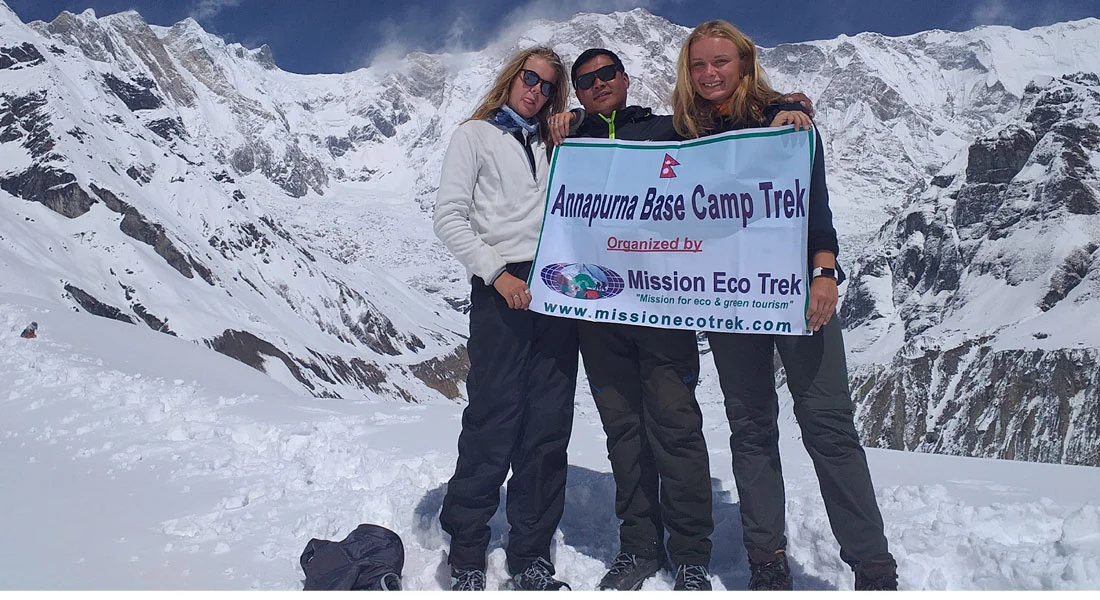
The Annapurna Base Camp is surrounded by a 360-degree natural amphitheater of towering Himalayan giants, including Annapurna I (8,091m), Annapurna South (7,219m), and Machhapuchhre (Fishtail).
The Annapurna Base Camp Trek journey typically begins with a short drive from the tourist city of Pokhara to trailheads like Nayapul, Phedi and Jhinu Danda.
The trail ascends alongside the Modi Khola river valley, passing through traditional Gurung villages like Ghandruk and Chhomrong, and through Machhapuchhre Base Camp (MBC) before reaching ABC.
The Annapurna Base Camp (ABC) trek is a famous 6 to 14-day hiking journey in Nepal that leads to the base camp of the massive Annapurna mountain range.
Check Facts of Annapurna Base Camp Trek
- Maximum Altitude: Annapurna Base Camp at 4,130 meters(13,550 feet).
- Location: Inside the Annapurna Conservation Area Project in Nepal.
- Duration: Usually 6 to 14 days depending on the starting point and side trails like Poon Hill(shorter 5-day options from Pokhara are also possible via road extensions).
- Difficulty: Moderate and beginner-friendly, requiring decent physical fitness but, requiring no technical climbing and prior mountaineering skills.
- Best Seasons: Annapurna base camp trek is a four Season Trek but Spring (March to May) and Autumn (September to November). The Spring from March to May offers blooming rhododendrons and clear morning views. The Autumn from September to November provides stable weather and crisp mountain visibility.
- Total Distance: Roughly 60 to 115 kilometers depending on the starting trailhead.
- Daily Walking: Averaging 5 to 6 hours per day on rugged stone stairs and mountain paths.
Route and Highlights of Annapurna Base Camp Trek
- The Trail: The trek typically starts from Pokhara via a short drive to points like Nayapul, Phedi, Kande and Jhinu Danda. It passes through terraced farmlands, dense rhododendron forests, and traditional Gurung and Magar villages like Ghandruk and Chomrong.
- The Annapurna Sanctuary: The path enters a high glacial basin surrounded by towering peaks like Annapurna I (8,091 m), Hiunchuli, and the distinctive fish-tail peak Machhapuchhre (fishtail).
- Amenities: Trekkers stay in local Tea Houses along the route, which offer basic rooms and hot meals.
- Permits: You need an Annapurna Conservation Area Permit (ACAP) and a Trekkers’ Information Management System (TIMS) card.
A Complete Manaslu Circuit Itinerary
The classic Annapurna Base Camp (ABC) trek is a 6 to 16-day journey reaching a maximum altitude of 4,130 m at Annapurna Base Camp. For your kind notice, we are happy to bring you the amazing itineraries of Annapurna Base Camp(ABC) Trek.
A 5-Day Trekking Annapurna Base Camp/ABC
A 6-Day Annapurna Base Camp/ABC Trekking
A 7-day Annapurna Base Camp Trek
An 8-day Annapurna Base Camp Trek via Poon Hill
A 9-day Annapurna Base Camp Trek Nepal
A 10-day Annapurna Base Camp Trek in Nepal
An 11-day Annapurna Base Camp Trek in Nepal
A 12-day ABC Trek
A 14-day ABC Trek
A 15-day ABC Trek
A 16-day ABC Trek
A 17-day ABC Trek
A 18-day ABC Trek and Mardi Himal Trek
A 19-day ABC Trek and Chitwan National Park Tour
Cost for Annapurna Base Camp Trek Trail Guide
Permits and Documents
For Annapurna Base Camp Trek, a proper documents and permits are required. Without permits, you are not eligible to trek Annapurna Base Camp/ABC in Nepal. You can obtain ABC Trek Permits in Kathmandu and Pokhara paying the below fee through Mission Eco Trek, a government registered trekking company in Nepal.
- ACAP Entry Permit: NPR 3000(USD 25) per person.
- TIMS Card: NPR 2000(USD 15) per person.
Accommodation and Meals
Manaslu Circuit Trek is a teahouse lodge based trek like other ABC, EBC and Langtang Trek in Nepal. We are happy to let you know a breakdown cost of accommodation and meals, offered by teahouse lodges in Manaslu Circuit trails.
- Teahouse Room Accommoation: USD 10 to 15 USD per night on twin sharing basis. Basic lodges along the trail offer twin-sharing beds, meals, and blankets.
- Daily Meals(Breakfast, Lunch and Dinner): USD 25 to USD 35 per day that covers simple breakfast, lunch and dinner.
- Electricity and Wi-Fi: Available in most teahouses for a small extra charge, though connections become limited at higher elevations.
- Cash: ATMs are unavailable past Pokhara, so you must carry enough Nepali Rupees for all your expenses.
Cost For Transports and Logistics
You have choices of sharing public and private jeep and bus transportations. Please check the breakdown cost for both the public and private transportation cost for ABC Trek.
- Kathmandu to Pokhara by tourist bus and v.v: USD 30 to USD 50 per person one way.
- Pokhara to Ulleri by Private Jeep: USD 90 each way.
- Pokhara to Nayapul by sharing jeep v.v: USD 30 per person.
- Pokhara to Jhinu Danda by private Jeep: USD 100 per person.
- Pokhara to Kande by sharing bus: USD 15 to USD 20 per person.
- Pokhara to Kande/Phedi by private car/jeep: USD 50 to 70 per person.
- Kathmandu to Pokhara by flight: USD 125 USD per person(one way)
Cost for Guide and Porter
A government registered mountain(trekking) guide is compulsory for Annapurna Base Trek, and a porter is an option of your choice.
- A Licensed English Speaking Guide: USD 25 to 35 per day(covering his meals, insurance, and accommodation)
- A Local Porter: USD 20 to USD 30 per day(carry up to 25 kg of luggage)
All Inclusive Annapurna Base Camp Trek Package
The all inclusive Annapurna Base Camp Trek package cost comes between USD 650 and USD 1250 per person, depending on group sizes and service levels. Planning logistics independently is stressful. So, we also offer exclusive ABC trek package on your request.
What is included
- All permits(ACAP,and TIMS)
- All ground transportation by sharing public bus/jeep and private jeep/car
- All Meals: Breakfast, Lunch and Dinner.
- Hotel and Teahouse Accommodations
- A sharing English Speaking guide and all his expenses.
- All government taxes and service fees.
Packing Lists for an amazing Annapurna Base Camp Trek
For a comfortable and an amazing ABC Trek, below is the tips for clothing and gears.
- Clothing: Moisture-wicking base layers, a warm fleece mid-layer, a windproof/waterproof shell jacket, and a high quality down jacket of minus 20 degree.
- Footwear: Sturdy, broken in trekking boots with ankle support, multiple pairs of moisture wicking merino wool hiking socks.
- Hardware: A reliable 30 L to 40 L daypack, trekking poles, headlamp with extra batteries)
- Health and Water: Personal medical kit(blister tape and Diamox Tab for AMS), Water purification Tabs(or filtering water bottle) and high-SPF sunscreen.
Acclimatization Tips for Annapurna Base Camp Trek
The Annapurna Base Camp is a moderate difficutly trek in the Himalayas. The ABC Trek reaches its highest point 4200m at Annapurna Base Camp.Therefore, we kindly advise you to follow these rule to prevent Acute Mountain Sickness(AMS):
- Keep on Hydrating: Pls drink a minimum of 3 to 4 liters of water every day.
- Walk Slowly: Maintain a steady, a slow and relaxed pace, and please do not race up on the trek.
- Listen to Your body: Listen your body with early symptoms of AMS like persistent headache, dizziness, nausea, do not climb any higher and inform your guide immediately.
- Altitude Sickness: Lower risk than the Everest Base Camp trek, though mild symptoms can still occur as you ascend past 4,000 meters.
Frequently Asked Questions(FAQ)
- How long is the trek?
The standard route covers roughly 95 to 115 kilometers and takes 7 to 12 days depending on your starting point and pace. - What is the difficulty level?
It is considered moderately difficult and beginner-friendly, though it features continuous stone staircases that require good endurance. - Do I need a guide?
Yes, a licensed trekking guide is mandatory for trekking in the Annapurna region through a registered agency. - What permits are required?
You need an Annapurna Conservation Area Permit (ACAP) and a TIMS Card, which can be arranged in Kathmandu or Pokhara. - When is the best time to go?
The ideal seasons are spring (March to May) and autumn (September to November) for clear skies and stable weather. - What Makes the Annapurna Base Camp Trek Special?
The Annapurna Base Camp Trek offers stunning views of the Annapurna range, Machapuchare, and other Himalayan peaks right from the start. Accommodation in classic teahouses run by locals adds a unique charm to the trekking experience. The trek passes through protected areas teeming with floral and faunal species. Immerse yourself in the rich traditions of the Gurung and Magar communities, and visit traditional villages along the trail. Relax and rejuvenate in the soothing geothermal waters of Jhinu Danda, surrounded by the beauty of the Annapurna region. - Who Can Participate in the Annapurna Base Camp Trek?
The Annapurna Base Camp trek is suitable for individuals aged 12 years and above. While previous trekking experience is appreciated, first-timers are welcome to join. Participants should be physically fit, and able to cover 5 km in 30 minutes without stress. - What Is the Level of Fitness Required for the Annapurna Base Camp Trek?
The Annapurna Base Camp Trek requires a moderate level of fitness, with daily trekking durations ranging from 4 to 8 hours over varied terrain. Trekkers should be comfortable walking on uneven trails, ascending and descending steep sections, and carrying a daypack with essential items. Regular cardiovascular exercise and strength training prior to the trek can help improve endurance and reduce fatigue. - Are There Electricity Charging Facilities Along the Trek Route?
Many teahouses along the Annapurna Base Camp Trek route offer electricity charging facilities, either through solar power or generators. However, electricity availability may be limited or unreliable in remote areas, so it’s advisable to carry a portable power bank or solar charger for backup. - Are There Restroom Facilities Along the Annapurna Base Camp Trek Route?
Teahouses and lodges along the trekking route typically have basic restroom facilities, including squat toilets or pit toilets. It’s advisable to carry your supply of toilet paper and hand sanitizer as restroom amenities can vary in cleanliness and availability. - What Wildlife Can I Expect to See During the Annapurna Base Camp Trek?
The Annapurna Conservation Area is home to a diverse range of wildlife, including Himalayan tahr, musk deer, snow leopards, langur monkeys, and various species of birds. While encounters with larger mammals are rare, trekkers may spot smaller wildlife such as birds, butterflies, and marmots along the trail, especially in forested areas and alpine meadows. - Can I Trek to Annapurna Base Camp Independently or Do I Need a Guide?
While it’s possible to trek to Annapurna Base Camp independently, hiring an expert trekking company is highly recommended for safety, navigation, and cultural insights. The expert Trek guides are familiar with the terrain, weather conditions, and emergency procedures, enhancing the overall trekking experience and minimizing risks. - What is the accommodation like during the trek?
Accommodation during the Annapurna Base Camp Trek is primarily in teahouses or guesthouses along the trail. Teahouses offer basic but comfortable amenities, including dormitory-style or private rooms with shared bathrooms. - Is Travel Insurance Necessary for the Annapurna Base Camp Trek?
Travel insurance is highly recommended for the Annapurna Base Camp Trek to cover unexpected medical emergencies, trip cancellations, and evacuation services. Ensure that your insurance policy includes coverage for high-altitude trekking and activities such as helicopter rescue if needed. - Are There Any Health Risks Associated with the Annapurna Base Camp Trek?
Altitude sickness is a potential risk due to the trek’s elevation, with Annapurna Base Camp situated at over 4,000 meters above sea level. To minimize the risk of altitude sickness, it’s essential to acclimatize properly, stay hydrated, and ascend gradually. Trekkers should be aware of symptoms such as headache, nausea, dizziness, and difficulty breathing and inform their guide if they experience any discomfort.
Conclusion
The Annapurna Base Camp (ABC) trek concludes as a life-changing journey that blends physical challenge, deep cultural immersion, and awe-inspiring alpine scenery within the Annapurna Sanctuary.
Summary of the Experience
• The Destination: Reaching the final pinnacle at 4,130 meters (13,550 feet) rewards trekkers with a 360-degree panorama of towering snow-capped peaks, including Annapurna I (8,091m) and Machhapuchhre (Fishtail, 6,993m).
• The Trail: Spanning roughly 7 to 12 days (and 70 to 110 km depending on the route), the path guides you through vibrant rhododendron forests, stone staircases, suspension bridges, and traditional Gurung and Magar villages.
• The Takeaway: It stands out as one of the world’s premier moderately challenging treks, offering an accessible yet dramatic Himalayan adventure that leaves every traveler with a lasting sense of accomplishment.
A Quick Contact for Annapurna Base Camp Trek
You can contact us by below means for a stunning Annapurna Base Camp Trek.
Phone/WhatsApp/Viber: 977 9851023742
Email: [email protected]/[email protected]
Website: www.missionecotrek.com
Location: Thamel Marg, Thamel, Kathmandu, Nepal.
Company: Mission Eco Trek and Expedition Pvt. Ltd.
 Talk to Expert