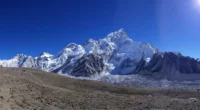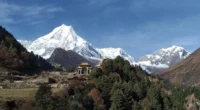
The Annapurna Circuit Trek is a classic, long-distance hiking route that circles around the Annapurna Massif in the central Nepal, offering a diverse journey through subtropical forests, deep river gorges, and high alpine passes.
The Annapurna Circuit Trek is located in the north-central part of Nepal, looping around the massive Annapurna mountain range within the Annapurna Conservation Area.The trail spans across several districts in Gandaki Province, Nepal.
The traditional trek starts in the market town of Besisahar or further up the road at Dharapani. The trail climbs up the Marsyangdi River valley through villages like Chame and Manang.
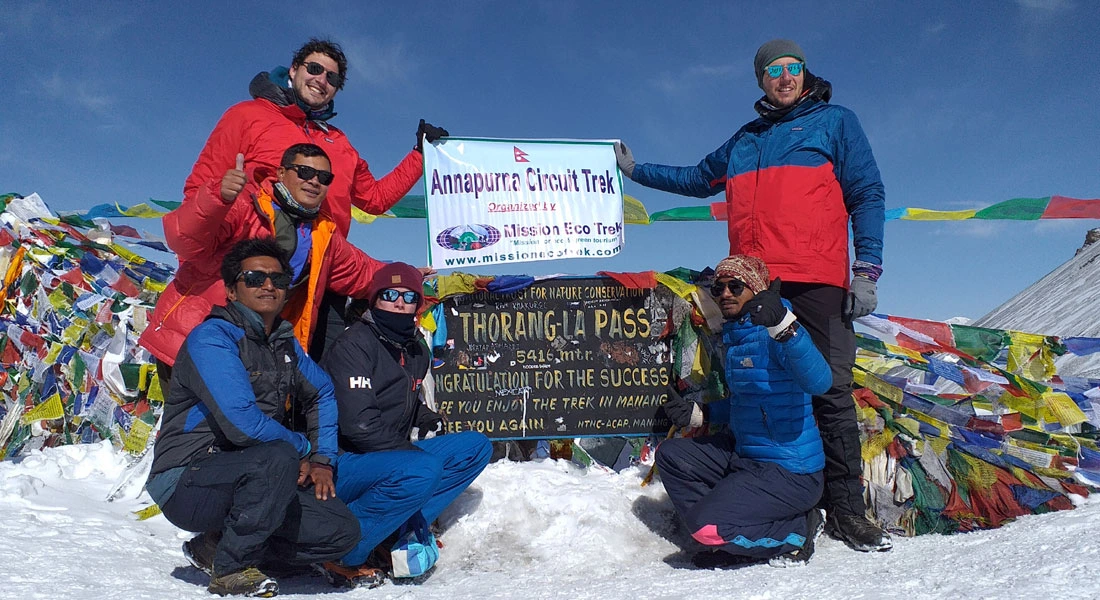
The route crosses the high-altitude Thorong La Pass (5,416 meters / 17,769 feet) and descends past the sacred Muktinath Temple. The lower end of the circuit typically wraps up toward Jomsom, Tatopani, Ghorepani Poon Hill and eventually back to Pokhara via Nayapul.
A Brief Facts of Annapurna Circuit Trek
Open: Since 1977 to foreign trekkers.
Distance: 160 to 230 km (100 to 145 miles), varying based on starting and ending points.
Duration: 9 to 22 days.
Highest Elevation: Thorong La Pass at 5,416 meters (17,769 feet).
Direction: Hiked counter clockwise for safer and slower altitude acclimatization.
Best Seasons: Autumn (October to November) and Spring (April to May).
Required Permits: Annapurna Conservation Area Permit (ACAP) and TIMS.
Guide: A licensed guide is mandatory for foreign trekkers.
Starting Point: Typically begins after a drive from Kathmandu to trailheads like Dharapani or Besisahar.
Landscapes: Passes through lush lowlands, pine forests, and transitions into the dry, Tibetan-influenced rain shadow of Manang and Mustang.
Major Attractions: Thorong La Pass, Muktinath Temple, and the Kali Gandaki Gorge.
Accommodation: Teahouses operated by local communities along the path.
Highlights of Annapurna Circuit Trek Complete Guide
The Annapurna Circuit Trek is a classic Himalayan journey featuring dramatic shifts from lush subtropical valleys to high-altitude arid deserts and ancient mountain cultures.
Diverse Scenery: Changes from subtropical rice terraces and waterfalls to pine forests, alpine meadows, and arid high-altitude deserts.
River Valleys: Crosses through the Marshyangdi and Kali Gandaki river valleys.
Highlights: Passes near Tilicho Lake (one of the world’s highest lakes) and overlooks the deep Kali Gandaki Gorge.
Thorong La Pass (5,416m / 17,769ft): The highest point of the trek, offering a challenging and rewarding crossing surrounded by massive snow peaks.
Diverse Landscapes: Trails transition from green Marsyangdi River forests and waterfalls to the high alpine meadows of Manang and the rain-shadow desert of the Mustang region.
Sacred Muktinath Temple: A revered pilgrimage site featuring 108 water spouts and an eternal natural flame at 3,800 meters.
Rich Cultural Heritage: Villages showcase distinct ethnic traditions, from Gurung and Manangi communities to Tibetan-influenced Buddhist monasteries and colorful prayer flags.
Marpha and Local Flavors: Known as the apple capital, where trekkers can taste fresh apple pies, cider, and traditional Thakali Dal Bhat.
Gangapurna and Ice Lake: High-altitude side trips near Manang featuring turquoise glacial lakes and panoramic Himalayan vistas.
Tatopani Hot Springs: Natural mineral hot springs providing a relaxing recovery stop on the lower descent.
Diverse Landscapes: Walk from subtropical green forests and rice terraces up to high, dry alpine deserts.
Cultural Experience: Meet diverse ethnic groups like the Gurung, Magar, and Thakali people, and visit ancient Buddhist monasteries.
Major Landmarks: Cross the high Thorong La Pass, visit the sacred Muktinath Temple, and look down into the deep Kali Gandaki Gorge
A Complete Annapurna Circuit Trek Itinerary
The standard Annapurna Circuit Trek takes about 9 to 21 days to complete, starting from Kathmandu and reaching an altitude of 5,416 meters at the Thorong La Pass.
Annapurna Circuit Trek 9 days
Annapurna Circuit Trek 10 days
Annapurna Circuit Trek 11 days
Annapurna Circuit Trek 12 days
Annapurna Circuit Trek 13 days
Annapurna Circuit Trek 14 days
Annapurna Circuit Trek 15 days
Annapurna Circuit Trek 16 days
Annapurna Circuit Trek 17 days
Annapurna Circuit Trek 18 days
Annapurna Circuit Trek 19 days
Annapurna Circuit Trek 20 days
Cost for Annapurna Circuit/AC Trek
An organized Annapurna Circuit Trek costs between $650 and $1,900 USD per person for a standard 9 to 21-day package.
Independent/Budget Trek: $600 – $900 USD if you travel without a guide, paying local teahouse prices, public transport, and meals as you go.
Guided Package: $900 – $1,800 USD covering a licensed guide, porter, permits, local land transport, meals, and teahouse accommodation.
Luxury/Private Package: $1,500 – $3,500+ USD for premium private services, high-end city hotels, and comprehensive safety protocols.
Daily On-Trail Expenses (Excluded in Packages)
Meals and Drinks: $20–$30 USD per day (prices rise as you gain altitude).
Hot Showers and Wi-Fi: NPR 100 to 500 per use ($1–$4 USD).
Charging Devices: NPR 100 to 300 per hour.
Tips: Budget about $10–$15 USD total per day to share for your guide and porter.
Permits and Documents
You need an Annapurna Conservation Area Permit (ACAP) and a Trekking Information Management System (TIMS) card.
ACAP Permit: Required Annapurna Conservation Area Permit costs $30 USD.
TIMS Card: A Trekking Information Management System (TIMS) card costs $20 USD.
Documents
Valid Passport and Visa: Your passport must have at least 6 months of remaining validity, along with a current Nepalese tourist visa. (Indian nationals can use a voter ID card instead of a passport).
Passport-Sized Photos: Bring 2 to 4 recent color photographs for your permit applications.
Accommodation and Meals
Accommodation on the Annapurna Circuit Trek consists mainly of locally run tea houses and mountain lodges, providing simple shelter, shared social areas, and meals along the entire trail.
Types of Accommodation
Tea Houses: Family-owned mountain lodges offering twin-share rooms with wooden beds, foam mattresses, pillows, and blankets.
Guesthouses and Lodges: Found in larger lower-altitude towns like Chame, Manang, and Jomsom, occasionally featuring upgraded rooms or attached bathrooms.
Homestays: Available in select rural settlements, offering a more direct cultural immersion inside a local family’s home.
Facilities and Comfort Levels
Rooms: Uninsulated twin rooms with thin plywood walls. A warm personal sleeping bag is strongly recommended for higher altitudes.
Dining Hall: A heated communal indoor space featuring a central stove or heater where travelers gather to eat and socialize.
Toilets and Showers: Flush toilets and hot showers are common at lower elevations, while higher or remote stops transition to basic communal squat or drop toilets and bucket showers.
Electricity and Wi-Fi: Hydro or solar charging outlets and basic Wi-Fi are available in common areas for a minor extra fee (roughly $1 to $5 per service).
Room Rates: Typically cost between $10 and $15 per night at lower elevations, increasing to $15 to $20 near high-altitude areas like Manang or Thorong Phedi.
Reservations: Most stays operate on a walk-in basis, but advance coordination or early arrival is necessary during peak trekking months (October–November and March–April).
Meals:
Meals on the Annapurna Circuit Trek consist of a mix of hearty local Nepali dishes and familiar international comfort foods served at teahouses along the route.
Daily Meal Options
Breakfast (USD 10 to 12): Start the day with eggs (fried, boiled, or omelets), porridge (oatmeal or tsampa barley), pancakes with honey or jam, or Tibetan bread.
Lunch (USD 10 to 12): The ultimate trail fuel is Dal Bhat (steamed rice, lentil soup, vegetable curry, and pickles), famous for providing unlimited free refills. Western alternatives like fried rice, chow mein, spaghetti, and simple pizzas are also widely available.
Dinner (USD 10 to 15): Evenings call for warm, easy-to-digest comfort foods like garlic soup (to help with acclimatization), Thukpa (spicy noodle soup), momos (dumplings), or another round of Dal Bhat.
Costs and Practical Tips
Daily Cost: Expect to spend about USD 25 to 35 per day on three meals and basic hot drinks. Prices rise significantly as you gain altitude because supplies are carried up manually or by mules.
Meat vs. Vegetarian: Meat is often frozen and transported from lower areas, increasing the risk of illness at high altitudes. Most trekkers and locals on the Facebook Group Community agree that sticking to a fresh vegetarian diet higher up on the trail is much safer.
Hydration: Avoid single-use plastic bottles for environmental reasons. Drink boiled water from teahouses (USD 1 to 2 per bottle) or use purification tablets in tap/stream water. Ginger-lemon-honey tea is also a popular daily choice to stay warm and soothe the throat.
Transports and Flights
The main transport for the Annapurna Circuit involves taking a local bus or jeep from Kathmandu to Besisahar, continuing by a shared 4WD jeep to higher trailheads like Chame or Dharapani, and returning via jeep or a flight from Jomsom to Pokhara after crossing the pass.
Kathmandu to Besisahar
Public/Local Bus: Departs daily from Gongabu Bus Park (New Bus Park) taking 6 to 7 hours for the 190 km drive. Costs around $8 to $15 USD per person.
Private Car/Jeep: More comfortable and flexible, taking about 5 to 6 hours. Costs significantly more it costs $ 150 to $200 USD one way.
Besisahar to Chame / Dharapani (Trailhead)
Sared 4WD Jeep: Bumpy, unpaved mountain roads take about 3 to 3.5 hours to Chame. Costs roughly $35 to $40 USD per person on a sharing basis.
Jomsom to Pokhara
Local Bus or Shared Jeep: Takes 8 to 10 hours along a rough mountain road. Costs about $30 to $ 45) shared.
Flight: A 25-minute scenic mountain flight from Jomsom to Pokhara, running during clear morning weather. Costs around USD 160 per person.
Guide and Porter
Hiring a guide and porter for the Annapurna Circuit Trek costs roughly $45 to $65 USD per day combined, covering their daily wages, food, accommodation, and insurance.
Daily Costs
Guide: $30 to $40 per day depending on experience and certification.
Porter: $25 to $30 USD per day to carry up to 18kg–20kg of luggage.
Porter cum Guide: $30 USD per day if you want one person to handle both basic navigation and bag-carrying.
Tips: Expected at the end of the trek (roughly $10 to $15 per day total pooled from your group).
Roles and Benefits
- Guides manage trail navigation, monitor altitude sickness symptoms, handle emergency medical responses, and share local cultural insights.
- Porters carry your heavy gear so you can hike comfortably with just a daypack across high-altitude terrain like Thorong La Pass.
- Insurance: Ensure your staff has proper local insurance covering high-altitude rescue and medical care.
All Inclusive Annapurna Circuit Trek Package
An all-inclusive package for the Annapurna Circuit Trek typically costs between USD 870 and USD 1,850 per person for a 12- to 21-day trip, depending on group size and service level. Usually Included
Permits and Fees: Annapurna Conservation Area Permit (ACAP) and Trekkers’ Information Management System (TIMS) card.
Accommodation: Teahouse lodges during the trek and 3-star hotel nights in Kathmandu/Pokhara before and after the hike.
Meals: Three full meals a day (breakfast, lunch, and dinner) while on the trail.
Staff: An experienced English-speaking licensed guide and porters (usually one porter shared between two trekkers).
Transport: Airport pickups/drops and ground transportation (local buses or private jeeps) to and from the trailheads.
Major Exclusions on the Package
- International flights to and from Nepal.
- Nepal entry visa fees (USD 30–125 depending on duration).
- Compulsory high-altitude travel insurance (covering up to 5,416m).
- Personal extras like Wi-Fi, hot showers, device charging, and alcoholic drinks at teahouses.
- Tips for your guide and porters.
Gear and Equipment
Packing for the Annapurna Circuit Trek requires a layered clothing and reliable high-altitude gear to handle conditions ranging from humid subtropical lowlands to freezing alpine temperatures at Thorong La Pass (5,416m).
Clothing
Base Layer: Moisture-wicking merino wool or synthetic thermal tops and bottoms (no cotton) to keep sweat away from your skin.
Mid Layer: Warm fleece jacket or lightweight insulated pullover for cool evenings.
Outer Layer: Waterproof and windproof shell jacket and pants (Gore-Tex or equivalent).
Down Jacket: A high-quality heavyweight down jacket for freezing temperatures at high altitudes.
Lower Body: Two pairs of quick-dry trekking pants and one pair of comfortable thermal leggings for sleeping.
Accessories: Warm beanie or fleece hat, sun hat, UV-blocking buff or neck gaiter, and waterproof gloves.
Footwear
Trekking Boots: Well-broken-in, waterproof hiking boots with reliable ankle support and good grip.
Camp Shoes: Lightweight sandals or Crocs to let your feet breathe inside teahouses.
Socks: Four to five pairs of merino wool or heavy synthetic trekking socks, plus a clean, warm pair dedicated strictly for sleeping.
Sleeping and Technical Gear
Sleeping Bag: Comfort-rated down sleeping bag (-10°C to -15°C), plus a silk or fleece liner for extra warmth and
Backpacks: A 50–65L internal frame duffel or main backpack (if using a porter) and a 20–30L daypack for carrying daily water, snacks, and layers yourself,
Trekking Poles: Adjustable trekking poles to save your knees on steep descents.
Hydration and Purification: Two 1L water bottles or a bladder, paired with reliable water purification tablets or a portable filter.
Electronics: High-capacity power bank (10,000 to 20,000 mAh) and a durable rechargeable headlamp. (Note: Electricity in teahouses costs extra to charge devices at higher elevations).
Documents, Money and First Aid
Permits and ID: Valid passport, Nepal tourist visa, TIMS card, and your Annapurna Conservation Area Permit (ACAP).
Cash: Plenty of Nepalese Rupees (NPR) in cash, as there are no reliable ATMs past Manang. Budget roughly 3,000 to 4,000 NPR per day minimum.
First Aid: Diamox for altitude sickness prevention, blister care (compeed/moleskin), rehydration salts, painkillers, and basic stomach medications.
Mountain Sickness and Acclimatization TipsTo prevent mountain sickness on the Annapurna Circuit Trek, ascend gradually by limiting your sleeping elevation gain to no more than 500 meters per day once you cross 3,000 meters.
Understanding Mountain Sickness
Acute Mountain Sickness (AMS): Happens when you climb faster than your body can adapt to lower oxygen levels, typically starting above 2,500 meters (8,202 feet).
Warning Signs: Early symptoms include a throbbing headache, dizziness, nausea, fatigue, and trouble sleeping.
Severe Risks: Untreated AMS can progress to life-threatening conditions like High-Altitude Pulmonary Edema (fluid in lungs) or High-Altitude Cerebral Edema (swelling of the brain).
Acclimatization Strategies
Climb High, Sleep Low: Hike to higher viewpoints during the day, but return to a lower altitude to sleep and let your body adapt.
Take Rest Days: Spend at least 1 to 2 acclimatization days in Manang (3,540m) before pushing higher toward Thorong La Pass (5,416m). Do active rest hikes, such as walking up to Ice Lake or Gangapurna Lake, during these stops.
Pace Yourself: Walk slowly and steadily. Maintain a conversational pace where you are not completely out of breath.
Essential Tips for Prevention
Hydrate Aggressively: Drink 3 to 4 liters of water daily, adding electrolytes to replace minerals lost from faster breathing.
Avoid Triggers: Skip alcohol, smoking, and sleeping pills, as they depress breathing and impair oxygen absorption.
Eat Well: Focus on high-carbohydrate meals and warm soups, even if your appetite drops.
Consider Medication: Consult your doctor about Acetazolamide (Diamox) to help your body adapt faster, but treat it as a supplement rather than a cure or shortcut.
What to Do If Symptoms Appear
Stop Ascending: Never climb higher if you feel early signs of AMS.
Descend Immediately: If symptoms do not improve after resting or grow severe (confusion, severe breathlessness at rest), descend 300 to 1,000 meters right away. Descent is the most effective cure.
Seasons for Annapurna Circuit Trek
Annapurna Circuit Trek are Autumn (September to November) and Spring (March to May), which offer stable weather, clear mountain views, and safe trail conditions.
Autumn (September to November) – Peak Season
Weather: Clear blue skies, crisp visibility, and moderate daytime temperatures (10°C to 22°C).
Highlights: Considered the absolute best time to cross the 5,416-meter Thorong La Pass. Post-monsoon rains wash away dust, leaving sharp mountain panoramas.
Drawbacks: Trails are very busy, and teahouses fill up quickly.
Spring (March to May) – Second Best Season
Weather: Warmer days, longer daylight hours, and milder temperatures at higher altitudes.
Highlights: Lower and mid-altitudes feature blooming rhododendrons and vibrant wildflowers. Snow melts off the high paths, making the route safer.
Drawbacks: Lower valleys can get hazy by late May as the pre-monsoon humidity builds.
Off-Season Options
Monsoon (June to August): Heavy rain causes muddy paths, leeches, and landslide risks in lower regions, though parts of Manang and Mustang sit in a rain shadow.
Winter (December to February): Trails are quiet and peaceful, but extreme sub-zero cold often closes the Thorong La Pass due to heavy snow.
Weather and Temperature
The weather and temperature on the Annapurna Circuit Trek depending on the altitude and the season, ranging from a balmy 30°C in the low foothills to a freezing -20°C at high passes.
Seasonal Weather and Temperature
Autumn (September to November – Peak Season)
Weather: Stable, dry, and clear skies with great mountain views.
Temperature: Lower regions range from 15°C to 20°C during the day. High altitudes and Thorung La Pass drop to -4°C to -5°C (or lower at night).
Spring (March to May – Peak Season)
Weather: Mild days, blooming wildflowers, and clear morning views with occasional afternoon haze or light rain in late May.
Temperature: Lower regions range from 10°C to 25°C. Higher elevations stay around 0°C to 14°C during the day, dropping below freezing at night.
Monsoon (June to August – Off-Peak)
Weather: Heavy rain, muddy trails, leeches, and obstructed mountain views in the southern areas, though the upper Mustang rain-shadow region stays drier.
Temperature: Lower regions are warm and humid at 16°C to 30°C, while high elevations drop below freezing.
Winter (December to February – Off-Peak)
Weather: Extreme cold, heavy high-altitude snow, icy paths, and occasional pass closures, but very clear skies and fewer crowds.
Temperature: Lower regions range from 2°C to 12°C, while high-altitude areas and Thorung La plunge between -14°C and -20°C.
Conclusion
The Annapurna Circuit Trek traditionally concludes by descending from the high-altitude Thorong La Pass (5,416m) into the spiritual sanctuary of Muktinath, followed by travel through the Kali Gandaki Valley to Jomsom and a return flight or drive to Pokhara.
Conquering Thorong La: Reaching the summit mark at 5,416 meters stands as the ultimate physical milestone and high point of the trek.
Descent to Muktinath: Trekkers drop down to Muktinath (3,760m) to rest and visit the sacred temple featuring 108 water spouts and an eternal flame.
Jomsom and Kagbeni: The route passes through the arid, windswept Kali Gandaki Valley—the deepest gorge in the world—stopping at traditional villages like Kagbeni before reaching Jomsom.
Final Return to Pokhara: From Jomsom, most travelers take a short flight or a scenic jeep drive back to the lakeside city of Pokhara to officially finish the journey.
Frequently Asked Questions(FAQ)
The Annapurna Circuit Trek is a classic 9 to 21-day long-distance route in central Nepal covering 130 to 230 kilometers and crossing the high Thorong La Pass at 5,416 meters.
What is the duration and distance?
The trek spans 12 to 22 days and covers about 130 to 230 km, depending on your start point and side trips like Tilicho Lake.
How difficult is it?
It is considered a moderate to challenging trek due to the rugged terrain and high altitude.
Can beginners do it?
Yes, beginners can complete it with good physical fitness, proper training, and slow acclimatization, though prior hiking experience helps.
What are the best seasons?
Autumn (September to November) and Spring (March to May) offer the clearest skies, stable weather, and blooming flora.
What permits do I need?
You need the Annapurna Conservation Area Permit (ACAP) and a Trekkers’ Information Management System (TIMS) Card, which cost around USD 50 each.
How much does it cost?
Total costs range from USD 1,000 to USD 2,000, covering food, basic tea house lodging, permits, and optional guides or porters. Guides charge about USD 30–45 daily, and porters cost USD 25–30 daily.
A Quick Contact for Annapurna Circuit Trek
You can contact and plan your trip through Mission Eco Trek, a licensed local operators at
Phone/WhatsApp/Viber: +977 9851023742
Email: [email protected]/[email protected]
Website: www.missionecotrek.com
Planning a Trip? Make an Inquiry
- A Brief Facts of Annapurna Circuit Trek
- Highlights of Annapurna Circuit Trek Complete Guide
- A Complete Annapurna Circuit Trek Itinerary
- Cost for Annapurna Circuit/AC Trek
- Permits and Documents
- Accommodation and Meals
- Meals:
- Costs and Practical Tips
- Transports and Flights
- Guide and Porter
- All Inclusive Annapurna Circuit Trek Package
- Major Exclusions on the Package
- Gear and Equipment
- Understanding Mountain Sickness
- Seasons for Annapurna Circuit Trek
- Weather and Temperature
- Conclusion
- Frequently Asked Questions(FAQ)
- A Quick Contact for Annapurna Circuit Trek
 Talk to Expert